


Cup positioning and its effect on polyethylene wear of vitamin E- and non-vitamin E-supplemented liners in total hip arthroplasty: radiographic outcome at 5-year follow-up
- PMID: 35397656
- PMCID: PMC9957849
- DOI: 10.1007/s00402-022-04424-2
Cup positioning and its effect on polyethylene wear of vitamin E- and non-vitamin E-supplemented liners in total hip arthroplasty: radiographic outcome at 5-year follow-up
Abstract
Background: Aseptic loosening remains a challenging problem after total hip arthroplasty. Accurate cup placement and supplementation of antioxidants in acetabular liners might reduce material failure rates. The aim of this study is to assess the effect of the cup position on the wear behaviour of UHMWPE-XE and UHMWPE-X liners in vivo using virtual radiographs.
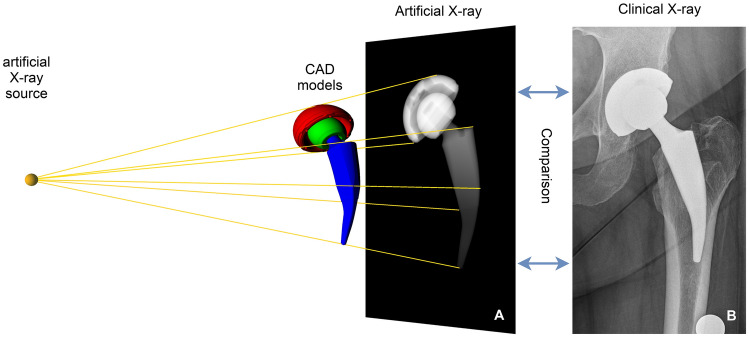
Methods: We conducted a prospective, randomized, controlled, multicenter trial. Clinical data of 372 probands were analyzed. Anteroposterior pelvic X-rays of 324 patients immediately postoperatively and after 1 and 5 years were evaluated by the RayMatch® analysis software regarding cup position and wear behaviour.
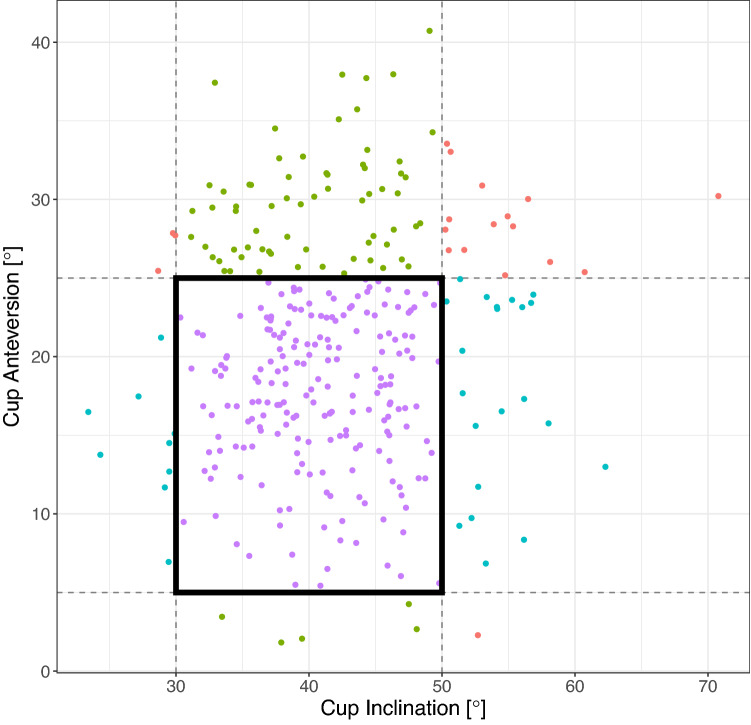
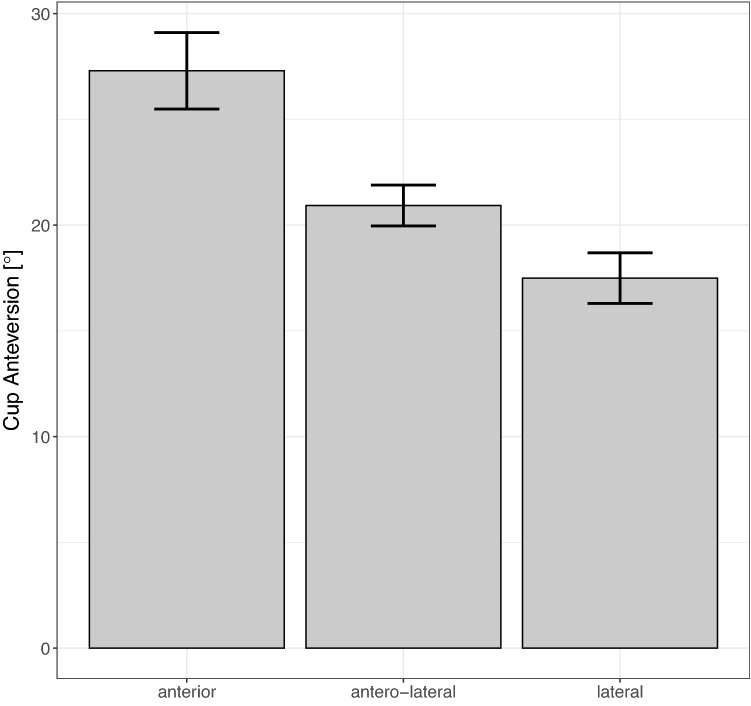
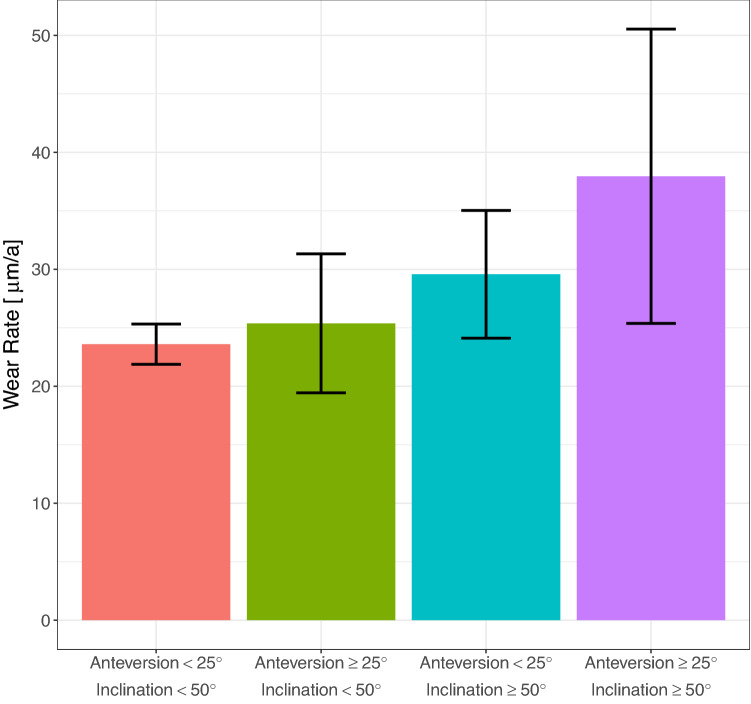
Results: Mean cup anteversion was 20.3° (± 7.4) and inclination was 41.9° (± 7.0) postoperatively. 62.3% of all patients had an anteversion and inclination within the Lewinnek safe zone. Anterior and anterolateral approaches led to significantly higher cup anteversion compared to lateral approaches (27.3° ± 5.5; 20.9° ± 7.2; 17.5° ± 6.6; p < 0.001 and p = 0.001, respectively). Mean anteversion increased to 24.6° (± 8.0) after 1 year (p < 0.001). Only one revision occurred because of implant dislocation. Wear rates from UHMWPE-X and UHMWPE-XE did not differ significantly. Anteversion angles ≥ 25° correlated to increased polyethylene wear (23.7 µm/year ± 12.8 vs. 31.1 µm/year ± 22.8, p = 0.012) and this was amplified when inclination angles were ≥ 50° (23.6 µm/year ± 12.8 vs. 38.0 µm/year ± 22.7, p = 0.062).
Conclusion: Anterior approaches lead to the highest inaccuracy of cup placement, but cup positioning outside the Lewinnek safe zone does not necessarily cause higher dislocation rates. Moreover, mean anteversion increased by approximately four degrees within the first year after operation, which is expected to be functional due to a regularization of pelvic tilt after intervention. Mid-term wear rates of UHMWPE-X and UHMWPE-XE liners are comparable, but steep cup positions lead to significantly increased polyethylene wear. In summary, a re-evaluation of target zones for intraoperative cup positioning might be considered. In the long-term reduced oxidative embrittlement could lead to superior wear behaviour of vitamin E-blended liners.
Keywords: CAD-based wear analysis; Cup placement; Total hip arthroplasty; UHMWPE-XE.
© 2022. The Author(s).
Conflict of interest statement
Alexander Roth is an employee of Aesculap AG, Tuttlingen. Otherwise the authors declare that they have no competing interests to declare that are relevant to the content of this article.
Figures
References
-
- Hailer NP, Weiss RJ, Stark A, Karrholm J. The risk of revision due to dislocation after total hip arthroplasty depends on surgical approach, femoral head size, sex, and primary diagnosis. an analysis of 78,098 operations in the Swedish Hip Arthroplasty Register. Acta Orthop. 2012;83:442–448. doi: 10.3109/17453674.2012.733919. - DOI - PMC - PubMed
Publication types
MeSH terms
Substances
Grants and funding
LinkOut - more resources
Full Text Sources
Medical
Miscellaneous
