


Red-seaweed biostimulants differentially alleviate the impact of fungicidal stress in rice (Oryza sativa L.)
- PMID: 35397672
- PMCID: PMC8994781
- DOI: 10.1038/s41598-022-10010-8
Red-seaweed biostimulants differentially alleviate the impact of fungicidal stress in rice (Oryza sativa L.)
Abstract
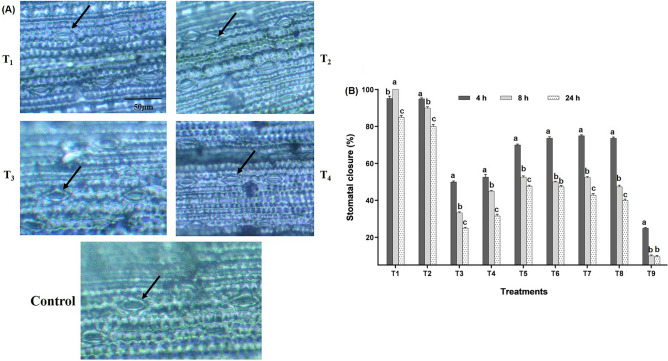
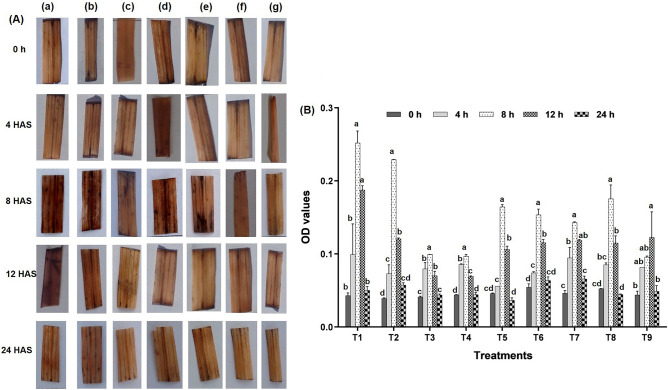
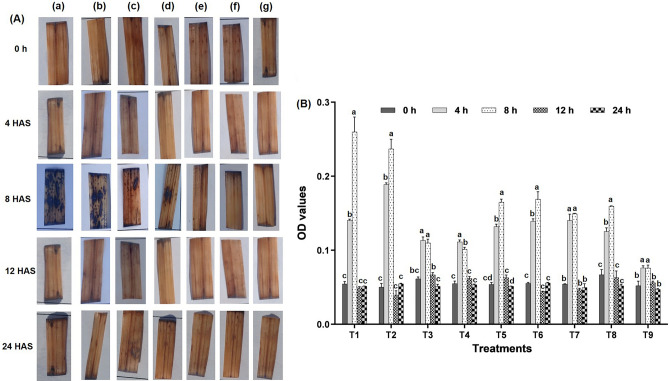
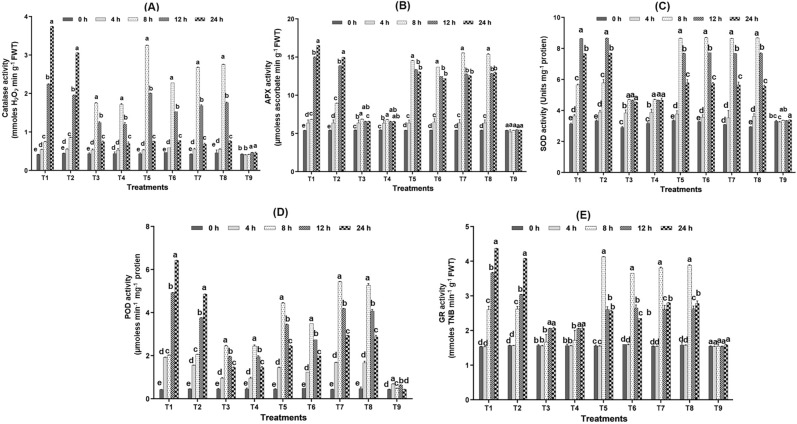
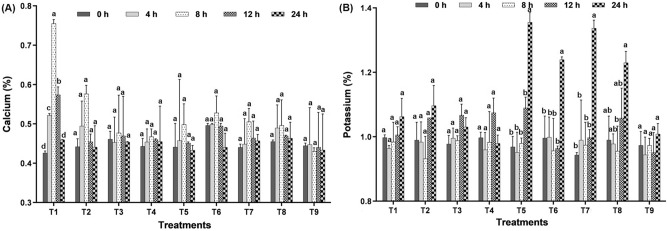
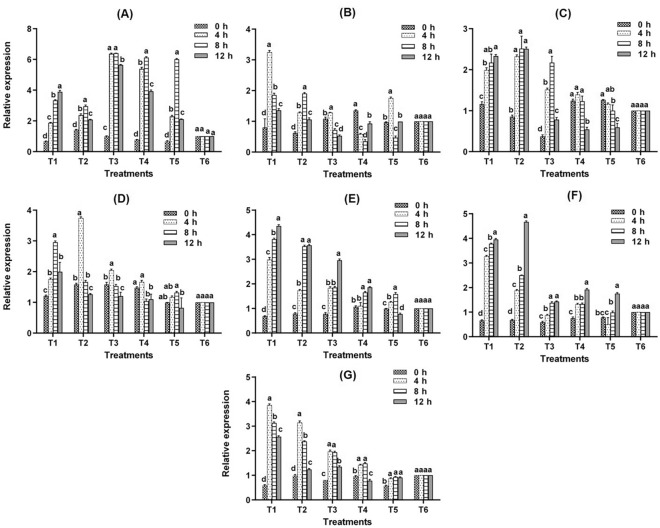
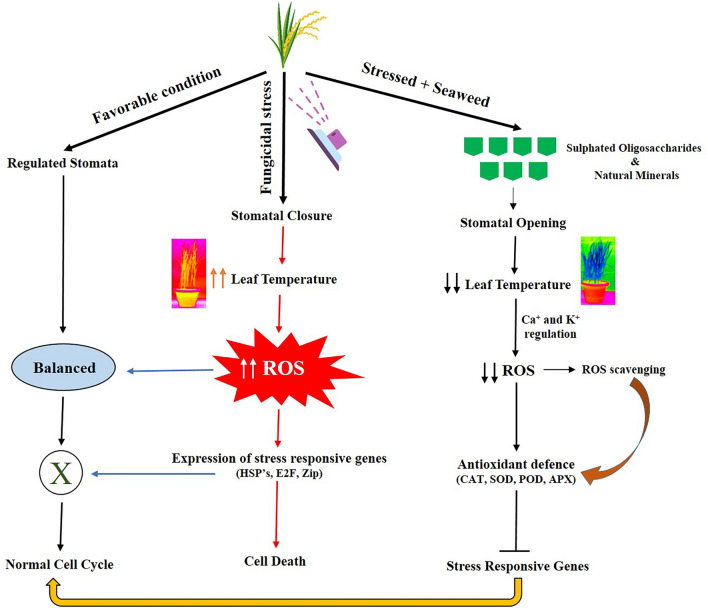
Red seaweed-derived biostimulants facilitate plant health and impart protection against abiotic stress conditions by their bioactive compounds and plant nutrients. The potency of red seaweed biostimulants (LBS6 and LBD1) on rice cv. IR-64 in response to fungicides induced stress was investigated in this study. Foliar application of LBS6 maintained the stomatal opening and leaf temperature under the fungicidal stress condition. Reactive Oxygen Species (ROS) such as hydrogen peroxide and superoxide radicals were significantly reduced in LBS6-treated stressed plants. After applying seaweed biostimulants, ROS production was stabilized by antioxidants viz., CAT, APX, SOD, POD, and GR. LBS-6 application increased the Ca+ and K+ levels in the stressed plants, which perhaps interacted with ROS and stomatal opening signalling systems, respectively. In the rice plants, fungicidal stress elevated the expression of stress-responsive transcriptional factors (E2F, HSFA2A, HSFB2B, HSFB4C, HSFC1A, and ZIP12). A decline in the transcript levels of stress-responsive genes was recorded in seaweed treated plants. For the first time, we present an integrative investigation of physicochemical and molecular components to describe the mechanism by which seaweed biostimulants in rice improve plant health under fungicidal stress conditions.
© 2022. The Author(s).
Conflict of interest statement
The authors declare no competing interests.
Figures

References
-
- Ansari MUR, Shaheen T, Bukhari SA, Husnain T. Genetic improvement of rice for biotic and abiotic stress tolerance. Turk. J. Bot. 2015;39:911–919. doi: 10.3906/bot-1503-47. - DOI
-
- Van Oosten MJ, Pepe O, De Pascale S, Silletti S, Maggio A. The role of biostimulants and bioeffectors as alleviators of abiotic stress in crop plants. Chem. Biol. Technol. Agric. 2017;4:1–12. doi: 10.1186/s40538-016-0083-3. - DOI
-
- Pal A, Dwivedi SK, Maurya PK, Kanwar P. Effect of seaweed saps on growth, yield, nutrient uptake and economic improvement of maize (sweet corn) J. Appl. Nat. Sci. 2015;7:970–975. doi: 10.31018/jans.v7i2.716. - DOI
-
- Jithesh MN, Shukla PS, Kant P, Joshi J, Critchley AT, Prithiviraj B. Physiological and transcriptomics analyses reveal that Ascophyllum nodosum extracts induce salinity tolerance in arabidopsis by regulating the expression of stress responsive genes. J. Plant Growth Regul. 2019;38:463–478. doi: 10.1007/s00344-018-9861-4. - DOI
-
- Dresselhaus T, Hückelhoven R. Biotic and abiotic stress responses in crop plants. Agronomy. 2018;8:8–13. doi: 10.3390/agronomy8110267. - DOI
MeSH terms
Substances
LinkOut - more resources
Full Text Sources
Miscellaneous
