


Components of Metabolic Syndrome in Youth With Classical Congenital Adrenal Hyperplasia
- PMID: 35399922
- PMCID: PMC8987274
- DOI: 10.3389/fendo.2022.848274
Components of Metabolic Syndrome in Youth With Classical Congenital Adrenal Hyperplasia
Abstract
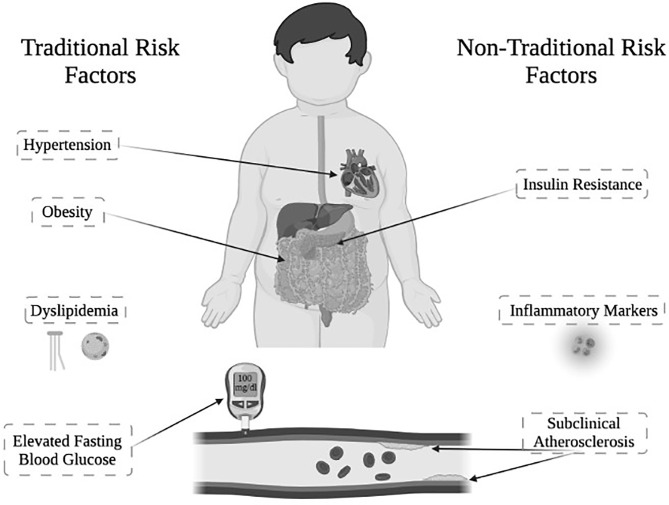
Classical congenital adrenal hyperplasia (CAH) due to 21-hydroxylase deficiency is the most common primary adrenal insufficiency in children, involving cortisol deficiency, hyperandrogenism, and cardiometabolic risk. Prior studies have reported that youth with classical CAH have a higher prevalence of the components of metabolic syndrome: obesity, hypertension, elevated fasting blood glucose, and dyslipidemia. Yet, the incidence of the complete metabolic syndrome itself in children and adolescents with CAH is relatively rare. Traditional cardiometabolic risk factors can surface early in children with classical CAH, and continue to present and evolve over the lifetime, although it is only recently that reports of Type 2 diabetes and adverse cardiac events have begun to surface in adults affected by this condition. The pathophysiology underlying the increased prevalence of cardiometabolic risk factors in patients with CAH is not well-understood, with disease treatments and androgen excess having been studied to date. The aim of this review is to evaluate the recent literature on traditional cardiometabolic risk factors in youth with classical CAH, and to consider non-traditional risk factors/biomarkers for subclinical atherosclerosis, inflammation, and insulin resistance. A better understanding of these traditional and non-traditional risk factors in youth with CAH could help guide treatment options and prevent the onset of metabolic syndrome in adulthood, reducing overall patient morbidity.
Keywords: adolescents; cardiovascular disease risk; children; congenital adrenal hyperplasia; metabolic syndrome; pediatric obesity; pediatrics.
Copyright © 2022 Kim, Fraga, Minaeian and Geffner.
Conflict of interest statement
MG receives research support from Novo Nordisk, Adrenas Therapeutics, Neurocrine Biosciences, and Spruce Biosciences. MG serves on advisory boards or as a consultant for Adrenas Therapeutics, Ascendis, Eton Pharmaceuticals, Novo Nordisk, and Pfizer; serves on data safety monitoring boards for Ascendis and Saniona/Medpace; serves as an adjudication committee member for ICON Clinical Research, LLC/Aeterna Zentaris; and receives royalties from McGraw-Hill and UpToDate. MK receives research support from Neurocrine Biosciences and Spruce Biosciences. The remaining authors declare that the research was conducted in the absence of any commercial or financial relationships that could be construed as a potential conflict of interest.
Figures
References
Publication types
MeSH terms
Grants and funding
LinkOut - more resources
Full Text Sources
Medical
