


Reproductive decision-making of Black women living with HIV: A systematic review
- PMID: 35404192
- PMCID: PMC9006353
- DOI: 10.1177/17455057221090827
Reproductive decision-making of Black women living with HIV: A systematic review
Abstract
Background: Black women living with HIV account for a higher proportion of new HIV diagnoses than other groups. These women experience restricted access to reproductive services and inadequate support from healthcare providers because their position in society is based on their sexual health and social identity in the context of this stigmatizing chronic disease. By recognizing the analytical relevance of intersectionality, the reproductive decision-making of Black women can be explored as a social phenomenon of society with varied positionality.
Objective: The purpose of this review was to synthesize the evidence about the reproductive decision-making of Black women living with HIV in high-income countries from the beginning of the HIV epidemic to the present.
Methods: This systematic review was guided by the JBI evidence synthesis recommendations. Searches were completed in seven databases from 1985 to 2021, and the review protocol was registered with PROSPERO (CRD420180919).
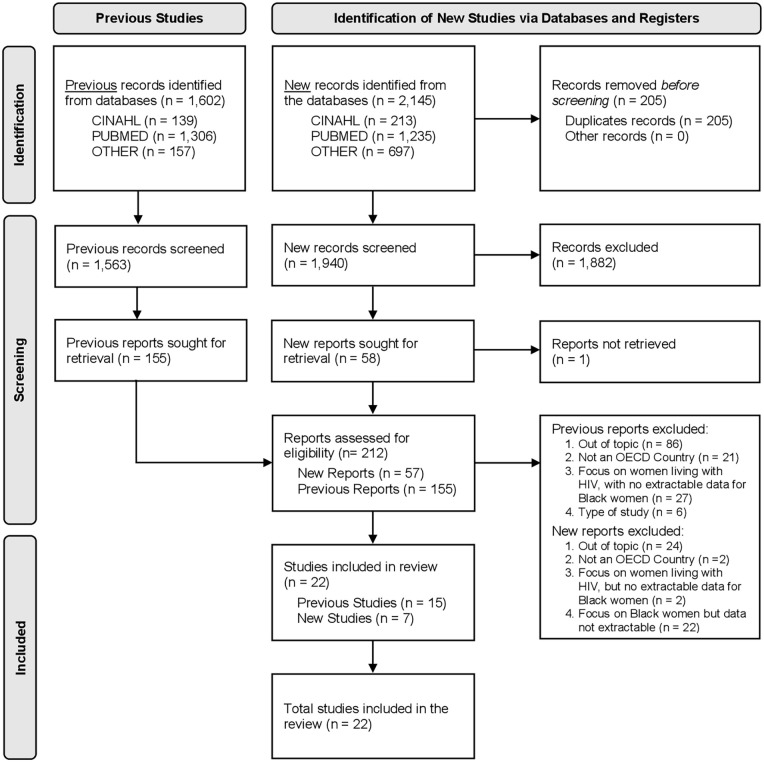
Results: Of 3503 records, 22 studies were chosen for synthesis, including 19 observational and three qualitative designs. Nearly, all studies originated from the United States; the earliest was reported in 1995. Few studies provided detailed sociodemographic data or subgroup analysis focused on race or ethnicity. Influencing factors for reproductive decision-making were organized into the following seven categories: ethnicity, race, and pregnancy; religion and spirituality; attitudes and beliefs about antiretroviral therapy; supportive people; motherhood and fulfillment; reproductive planning; and health and wellness.
Conclusion: No major differences were identified in the reproductive decision-making of Black women living with HIV. Even though Black women were the largest group of women living with HIV, no studies reported a subgroup analysis, and few studies detailed sociodemographic information specific to Black women. In the future, institutional review boards should require a subgroup analysis for Black women when they are included as participants in larger studies of women living with HIV.
Keywords: Blacks; HIV; contraception; decision-making; developed countries; high-income countries; organization for economic co-operation and development; racial groups; reproduction; reproductive behavior; systematic review; women’s health.
Conflict of interest statement
Figures
References
-
- Tubert S. Los ideales culturales de la feminidad y sus efectos sobre el cuerpo de las mujeres. Quaderns Psicol 2010; 12: 161–174.
-
- Leyva-Moral JM. La dominación del cuerpo femenino: análisis feminista del climaterio y las prácticas de cuidado profesional. Ene 2014; 8, https://scielo.isciii.es/scielo.php?script=sci_arttext&pid=S1988-348X201...
-
- Morison T. Heterosexual men and parenthood decision making in South Africa: attending to the invisible norm. J Family Iss 2013; 34: 1125–1144.
-
- Rijken A, Knijn T. Couples’ decisions on having a first child: comparing pathways to early and late parenthood. Demograph Res 2009; 21: 765–802.
-
- Meyers DT. The rush to motherhood: pronatalist discourse and women’s autonomy. Signs 2001; 26: 735–773.
Publication types
MeSH terms
LinkOut - more resources
Full Text Sources
Medical
