


Formulation and Evaluation of Hydrophilic Polymer Based Methotrexate Patches: In Vitro and In Vivo Characterization
- PMID: 35406184
- PMCID: PMC9002860
- DOI: 10.3390/polym14071310
Formulation and Evaluation of Hydrophilic Polymer Based Methotrexate Patches: In Vitro and In Vivo Characterization
Abstract
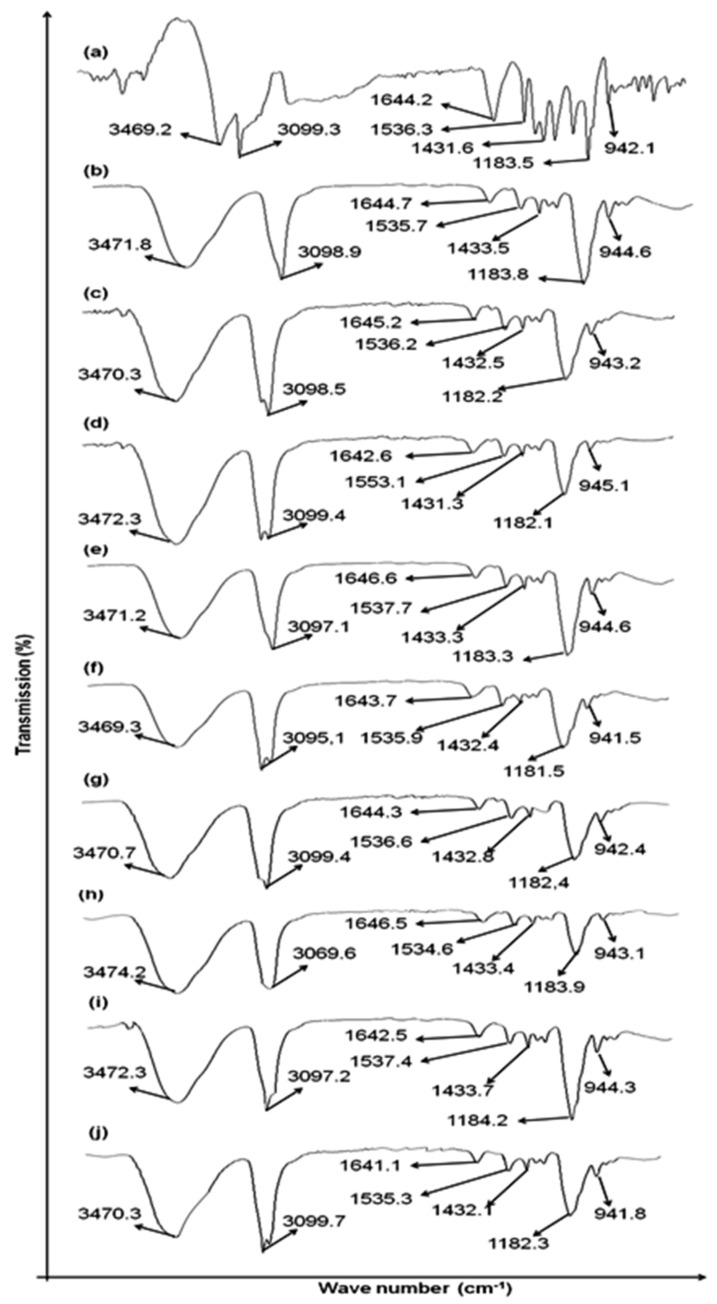
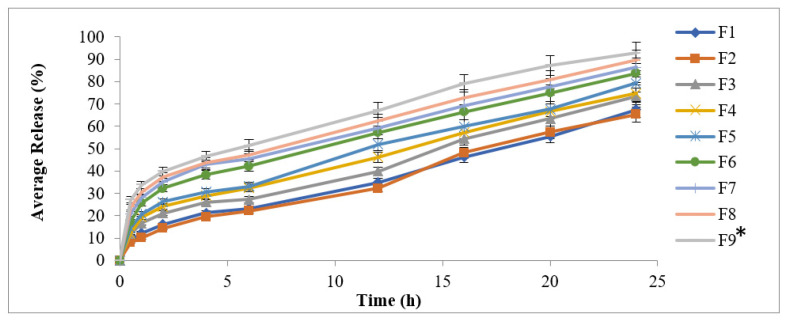
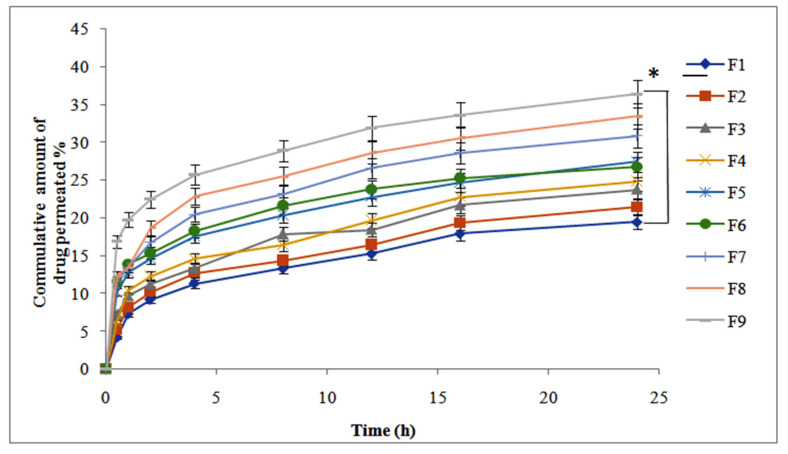
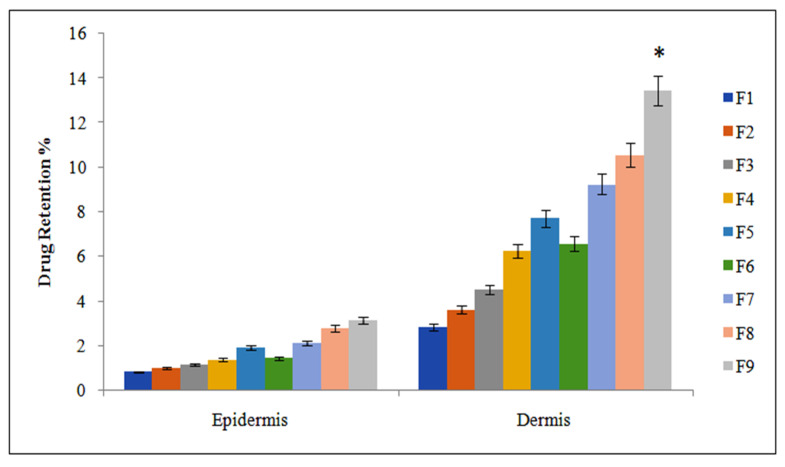
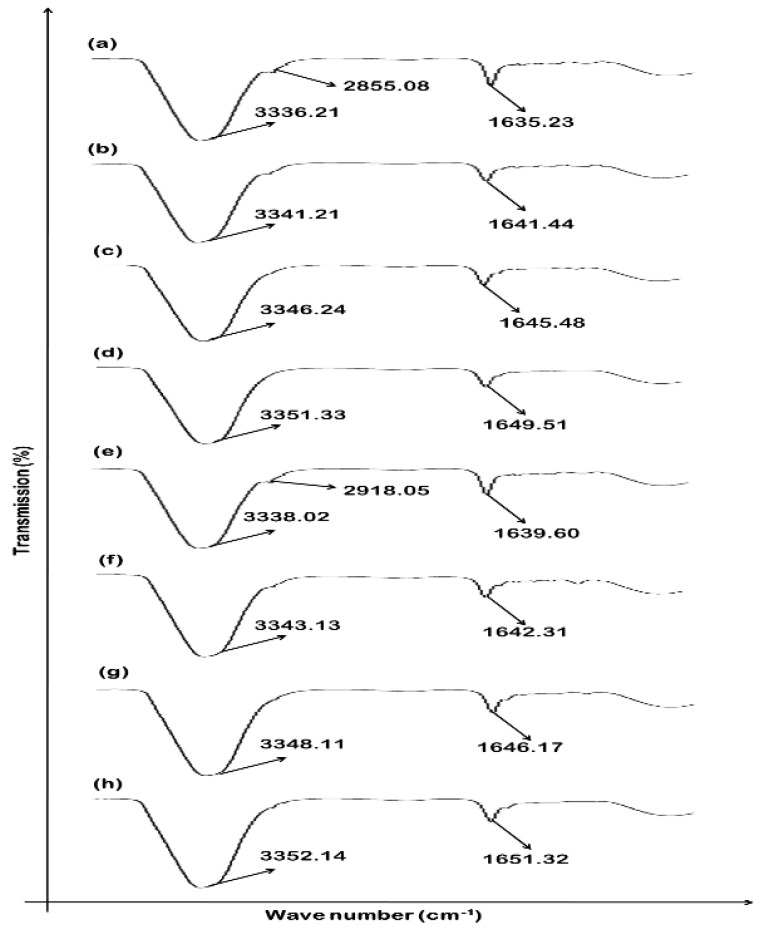
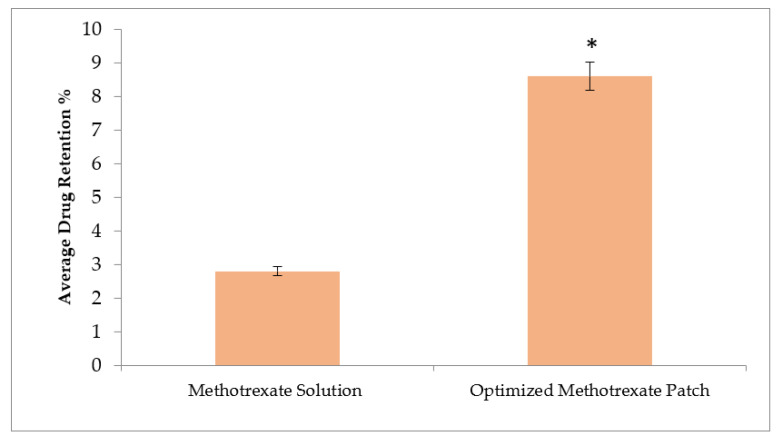
This study attempted to develop and evaluate controlled-release matrix-type transdermal patches with different ratios of hydrophilic polymers (sodium carboxymethylcellulose and hydroxypropyl methylcellulose) for the local delivery of methotrexate. Transdermal patches were formulated by employing a solvent casting technique using blends of sodium carboxymethylcellulose (CMC-Na) and hydroxypropylmethylcellulose (HPMC) polymers as rate-controlling agents. The F1 formulated patch served as the control formulation with a 1:1 polymer concentration. The F9 formulation served as our optimized formulation due to suitable physicochemical properties yielded through the combination of CMC-Na and HPMC (5:1). Drug excipient compatibilities (ATR-FTIR) were performed as a preformulation study. The ATR-FTIR study depicted great compatibility between the drug and the polymers. Physicochemical parameters, kinetic modeling, in vitro drug release, ex vivo drug permeation, skin drug retention, and in vivo studies were also carried out for the formulated patches. The formulated patches exhibited a clear, smooth, elastic nature with good weight uniformity, % moisture uptake, drug content, and thickness. Physicochemical characterization revealed folding endurance ranging from 62 ± 2.21 to 78 ± 1.54, tensile strength from 9.42 ± 0.52 to 12.32 ± 0.72, % swelling index from 37.16 ± 0.17 to 76.24 ± 1.37, and % drug content from 93.57 ± 5.34 to 98.19 ± 1.56. An increase in the concentration of the CMC-Na polymer (F9) resulted in increased drug release from the formulated transdermal patches. Similarly, drug permeation and retention were found to be higher in the F9 formulation compared to the other formulations (F1-F8). A drug retention analysis revealed that the F9 formulation exhibited 13.43% drug retention in the deep layers of the skin compared to other formulations (F1-F8). The stability study indicated that, during the study period of 60 days, no significant changes in the drug content and physical characteristics were found. ATR-FTIR analysis of rabbit skin samples treated with the formulated transdermal patches revealed that hydrophilic polymers mainly affect the skin proteins (ceramide and keratins). A pharmacokinetic profile revealed Cmax was 1.77.38 ng/mL, Tmax was 12 h, and t1/2 was 17.3 ± 2.21. In vivo studies showed that the skin drug retention of F9 was higher compared to the drug solution. These findings reinforce that methotrexate-based patches can possibly be used for the management of psoriasis. This study can reasonably conclude that methotrexate transdermal matrix-type patches with CMC-Na and HPMC polymers at different concentrations effectively sustain drug release with prime permeation profiles and better bioavailability. Therefore, these formulated patches can be employed for the potential management of topical diseases, such as psoriasis.
Keywords: hydroxypropyl methylcellulose (HPMC); methotrexate; sodium carboxymethylcellulose (CMC-Na); transdermal drug deliveries (TDDs); transdermal patches.
Conflict of interest statement
The authors declare no conflict of interest.
Figures
References
-
- Lawton S. Skin 1: The structure and functions of the skin. Nurs. Times. 2019;115:30–33.
-
- Chen Z., Ceballos-Francisco D., Guardiola F.A., Esteban M.Á. Influence of skin wounds on the intestinal inflammatory response and barrier function: Protective role of dietary Shewanella putrefaciens SpPdp11 administration to gilthead seabream (Sparus aurata L.) Fish Shellfish Immunol. 2020;99:414–423. doi: 10.1016/j.fsi.2020.02.022. - DOI - PubMed
LinkOut - more resources
Full Text Sources
Miscellaneous
