


Functional Devices from Bottom-Up Silicon Nanowires: A Review
- PMID: 35407161
- PMCID: PMC9000537
- DOI: 10.3390/nano12071043
Functional Devices from Bottom-Up Silicon Nanowires: A Review
Abstract
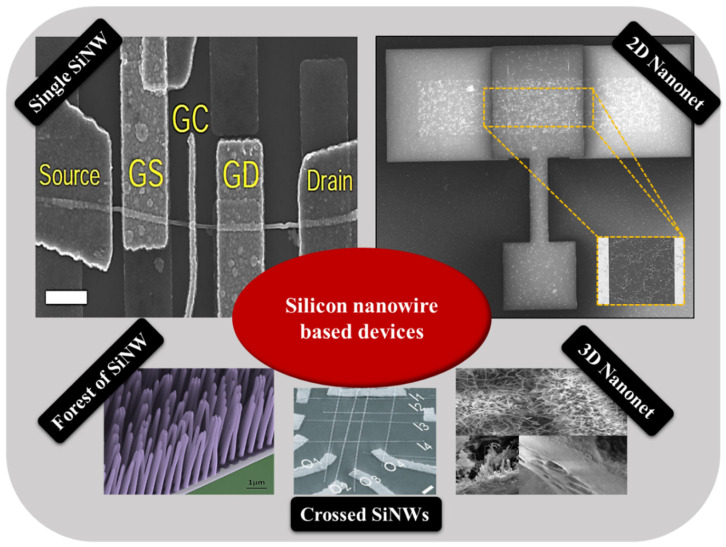
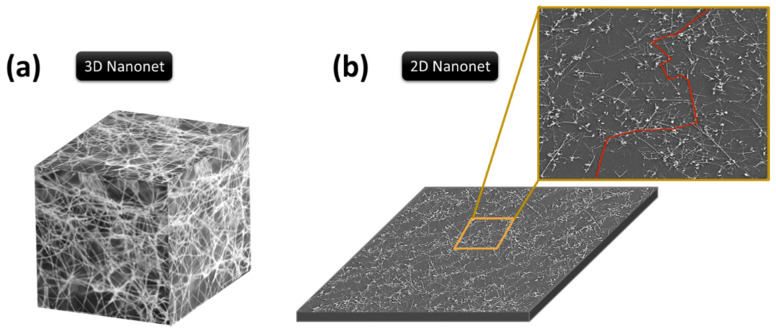
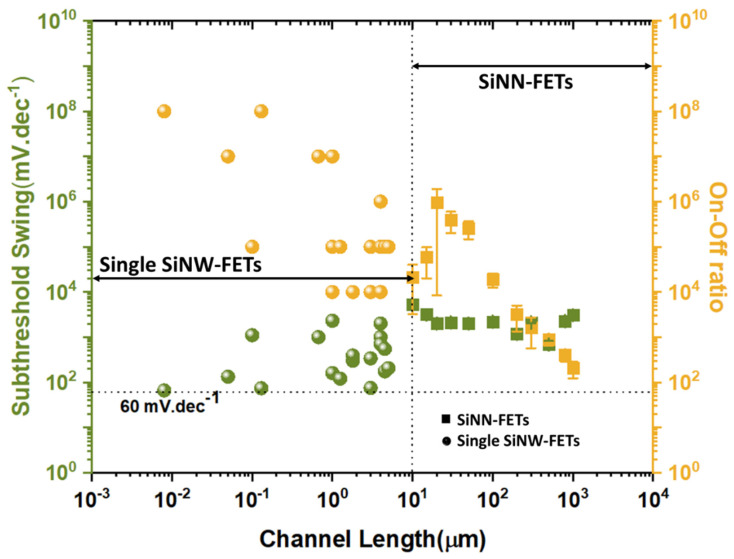
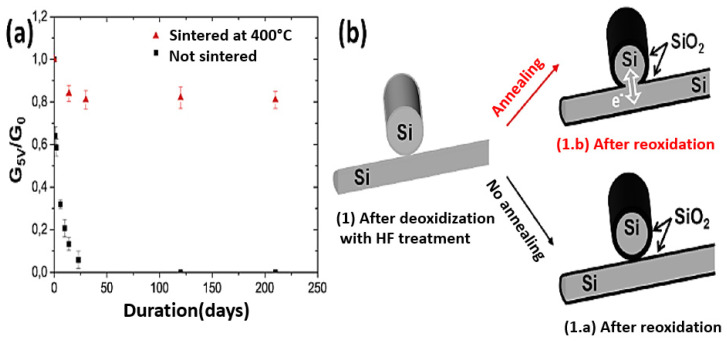
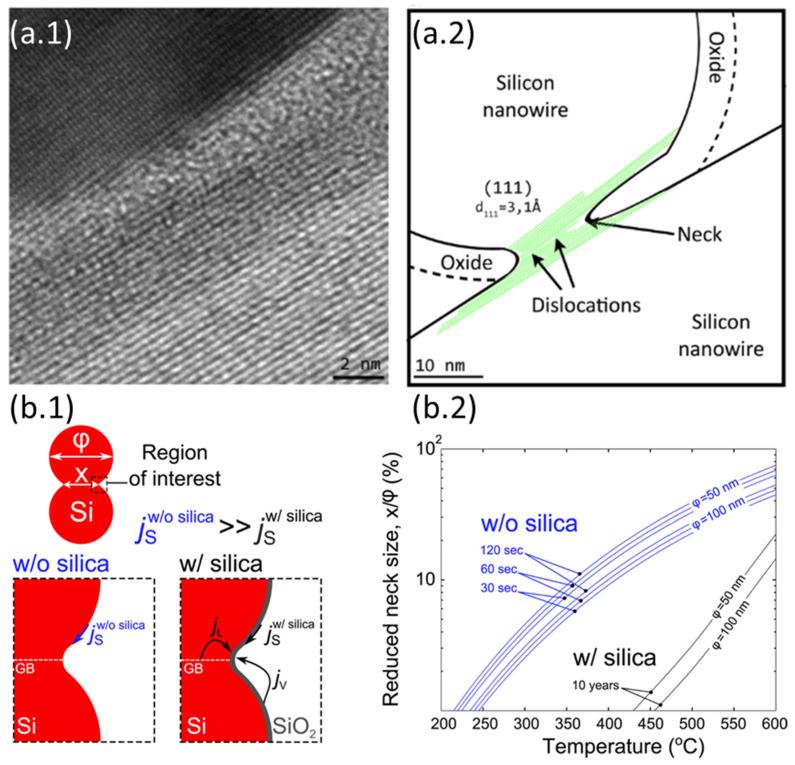
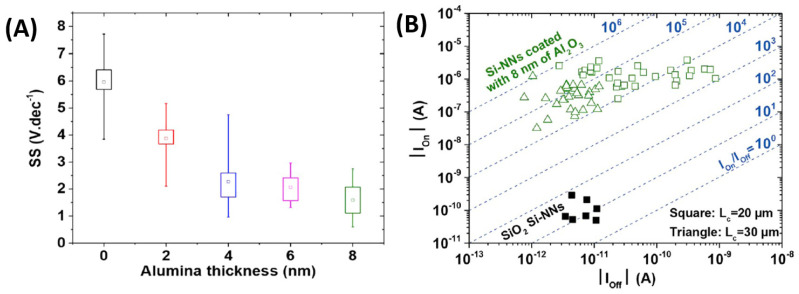
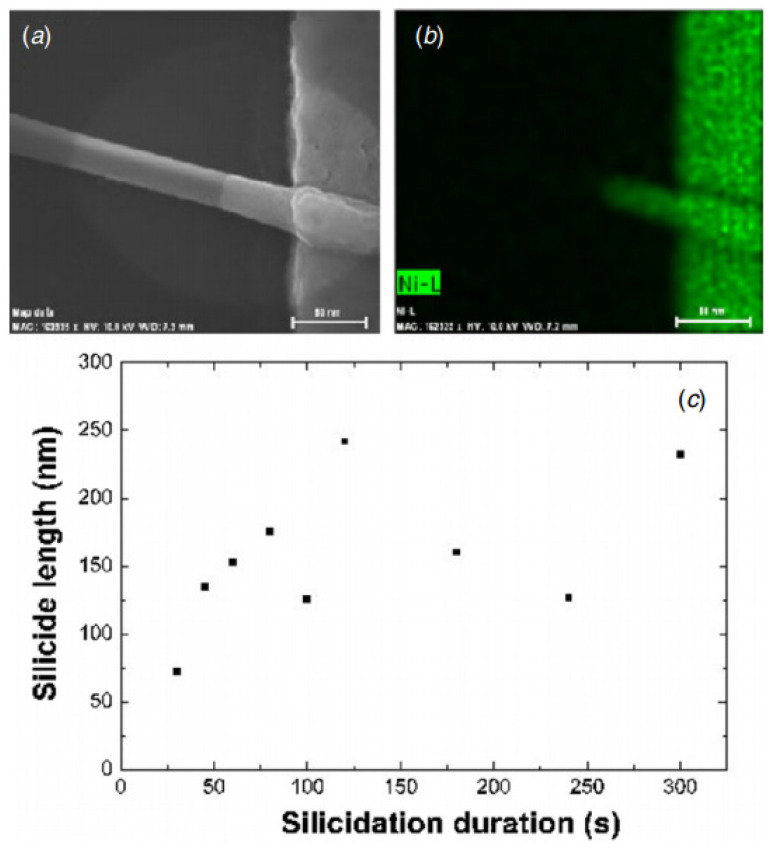
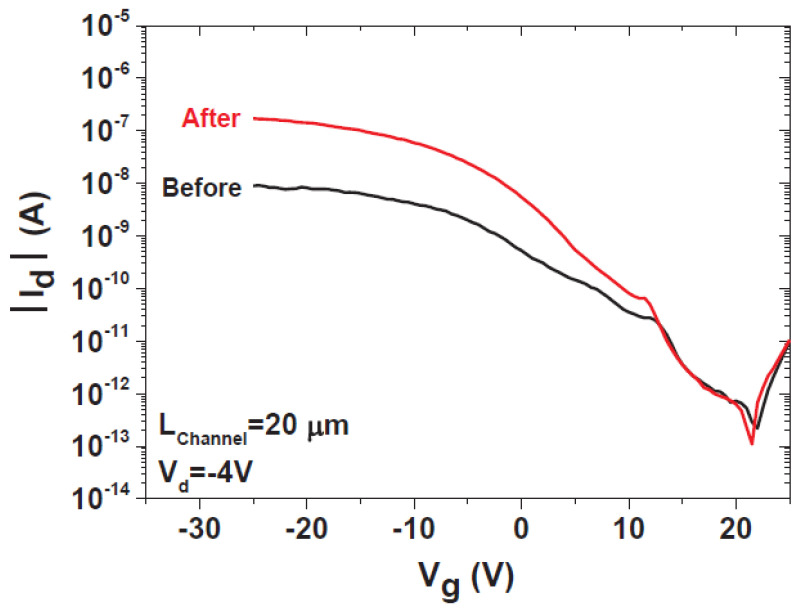
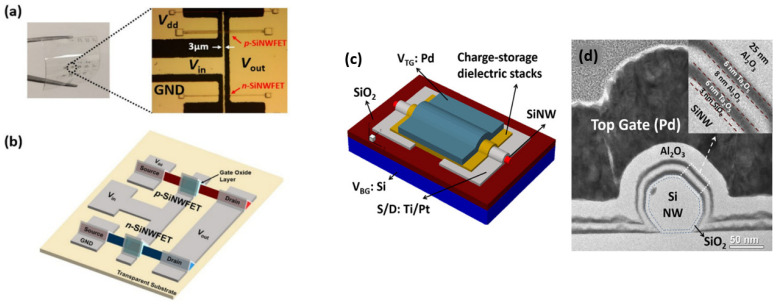
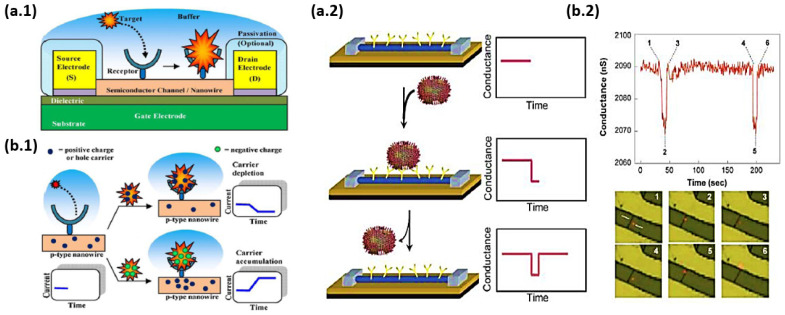
This paper summarizes some of the essential aspects for the fabrication of functional devices from bottom-up silicon nanowires. In a first part, the different ways of exploiting nanowires in functional devices, from single nanowires to large assemblies of nanowires such as nanonets (two-dimensional arrays of randomly oriented nanowires), are briefly reviewed. Subsequently, the main properties of nanowires are discussed followed by those of nanonets that benefit from the large numbers of nanowires involved. After describing the main techniques used for the growth of nanowires, in the context of functional device fabrication, the different techniques used for nanowire manipulation are largely presented as they constitute one of the first fundamental steps that allows the nanowire positioning necessary to start the integration process. The advantages and disadvantages of each of these manipulation techniques are discussed. Then, the main families of nanowire-based transistors are presented; their most common integration routes and the electrical performance of the resulting devices are also presented and compared in order to highlight the relevance of these different geometries. Because they can be bottlenecks, the key technological elements necessary for the integration of silicon nanowires are detailed: the sintering technique, the importance of surface and interface engineering, and the key role of silicidation for good device performance. Finally the main application areas for these silicon nanowire devices are reviewed.
Keywords: integration process; nanonets; nanowires; silicon; transistor.
Conflict of interest statement
The authors declare no conflict of interest. The funders had no role in the design of the study; in the collection, analyses, or interpretation of data; in the writing of the manuscript, or in the decision to publish the results.
Figures








References
-
- Rosaz G. Intégration 3D de Nanofils Si et SiGe Pour la Réalisation de Transistors Verticaux à Canal. 2012. [(accessed on 9 February 2022)]. Available online: https://www.theses.fr/2012GRENT108.
-
- Lu W., Xiang J. Semiconductor Nanowires: From Next-Generation Electronics to Sustainable Energy. [(accessed on 8 February 2022)];R. Soc. Chem. 2015 39 Available online: http://stacks.iop.org/0022-3727/39/i=21/a=R01.
-
- Liu L.-C., Huang M.-J., Yang R., Jeng M.-S., Yang C.-C. Curvature effect on the phonon thermal conductivity of dielectric nanowires. J. Appl. Phys. 2009;105:104313. doi: 10.1063/1.3130671. - DOI
Publication types
Grants and funding
LinkOut - more resources
Full Text Sources
