


Respiratory Abnormalities in Parkinson's Disease: What Do We Know from Studies in Humans and Animal Models?
- PMID: 35408858
- PMCID: PMC8998219
- DOI: 10.3390/ijms23073499
Respiratory Abnormalities in Parkinson's Disease: What Do We Know from Studies in Humans and Animal Models?
Abstract
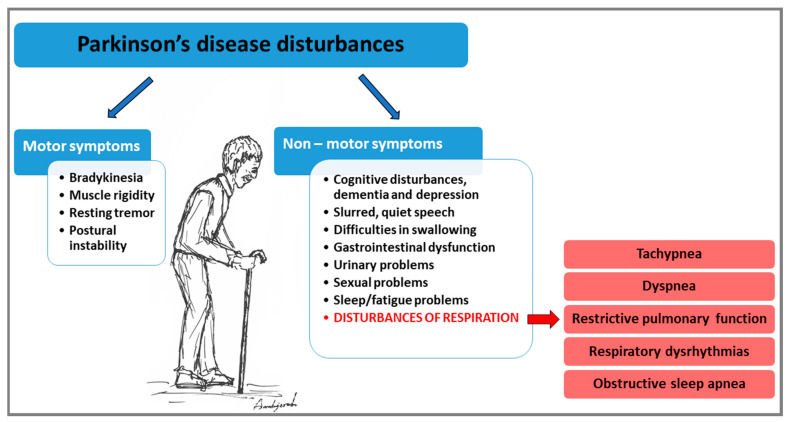
Parkinson's disease (PD) is the second most common progressive neurodegenerative disease characterized by movement disorders due to the progressive loss of dopaminergic neurons in the ventrolateral region of the substantia nigra pars compacta (SNpc). Apart from the cardinal motor symptoms such as rigidity and bradykinesia, non-motor symptoms including those associated with respiratory dysfunction are of increasing interest. Not only can they impair the patients' quality of life but they also can cause aspiration pneumonia, which is the leading cause of death among PD patients. This narrative review attempts to summarize the existing literature on respiratory impairments reported in human studies, as well as what is newly known from studies in animal models of the disease. Discussed are not only respiratory muscle dysfunction, apnea, and dyspnea, but also altered central respiratory control, responses to hypercapnia and hypoxia, and how they are affected by the pharmacological treatment of PD.
Keywords: Parkinson’s disease; apnea; dyspnea; hypercapnia; hypoxia; respiratory dysfunction.
Conflict of interest statement
The authors declare no conflict of interest.
Figures
References
Publication types
MeSH terms
LinkOut - more resources
Full Text Sources
Medical
Miscellaneous
