


Vascular Permeability in Diseases
- PMID: 35409010
- PMCID: PMC8998843
- DOI: 10.3390/ijms23073645
Vascular Permeability in Diseases
Abstract
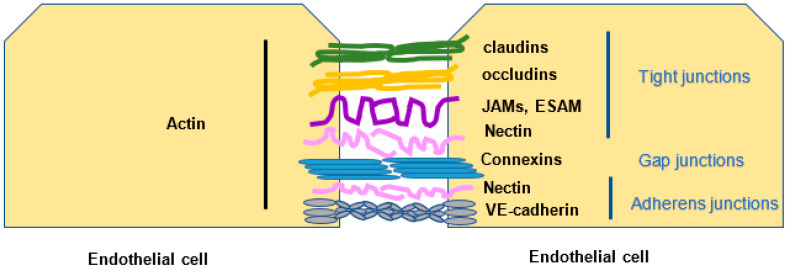
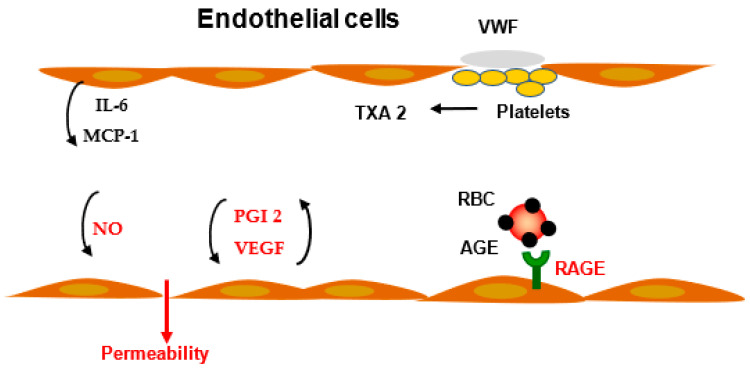
Vascular permeability is a selective mechanism that maintains the exchange between vessels, tissues, and organs. The regulation was mostly studied during the nineteenth century by physiologists who defined physical laws and equations, taking blood, tissue interstitial, and oncotic pressure into account. During the last decades, a better knowledge of vascular cell functions and blood-vessel interactions opens a new area of vascular biology. Endothelial cell receptors vascular cell adhesion molecule (VCAM), intercellular cell adhesion molecule (ICAM), vascular endothelial growth factor receptor (VEGFR-2), receptor for advanced glycation end products (RAGE), and mediators were identified and their role in homeostasis and pathological situations was described. The molecular differences of endothelial cell junctions (tight, gap, and adherens junctions) and their role in vascular permeability were characterized in different organs. The main mediators of vasomotricity and permeability, such as prostaglandins, nitric oxide (NO), prostacyclin, vascular growth factor (VEGF), and cytokines, have been demonstrated to possess major functions in steady state and pathological situations. Leukocytes were shown to adhere to endothelium and migrate during inflammatory situations and infectious diseases. Increased vascular permeability is linked to endothelium integrity. Glycocalyx, when intact, may limit cancer cell metastasis. Biological modifications of blood and tissue constituents occurring in diabetes mellitus were responsible for increased permeability and, consequently, ocular and renal complications. Vascular pressure and fluidity are major determinants of pulmonary and cerebral edema. Beside the treatment of the infectious disease, of the blood circulation dysfunction and inflammatory condition, drugs (cyclooxygenase inhibitors) and specific antibodies anti-cytokine (anti-VEGF) have been demonstrated to reduce the severity and the mortality in diseases that exhibited enhanced vascular permeability.
Keywords: cerebral edema; diabetic vasculopathy; endothelial cells; endothelial junctions; macular edema; nitric oxide; prostacyclin; vascular endothelial cell growth factor; vascular permeability.
Conflict of interest statement
The authors declare no conflict of interest.
Figures

References
-
- Broman L.M., Wittberg L.P., Westlund C.J., Gilbers M., Da Câmara L.P., Swol J., Taccone F.S., Malfertheiner M.V., Di Nardo M., Vercaemst L., et al. Pressure and flow properties of cannulae for extracorporeal membrane oxygenation I: Return (arterial) cannulae. Perfusion. 2019;34:58–64. doi: 10.1177/0267659119830521. - DOI - PubMed
-
- Grotte G. Passage of dextran molecules across the blood-lymph barrier. Acta Chir. Scand. Suppl. 1956;211:1–84. - PubMed
Publication types
MeSH terms
Substances
LinkOut - more resources
Full Text Sources
Miscellaneous
