


Enteroendocrine System and Gut Barrier in Metabolic Disorders
- PMID: 35409092
- PMCID: PMC8998765
- DOI: 10.3390/ijms23073732
Enteroendocrine System and Gut Barrier in Metabolic Disorders
Abstract
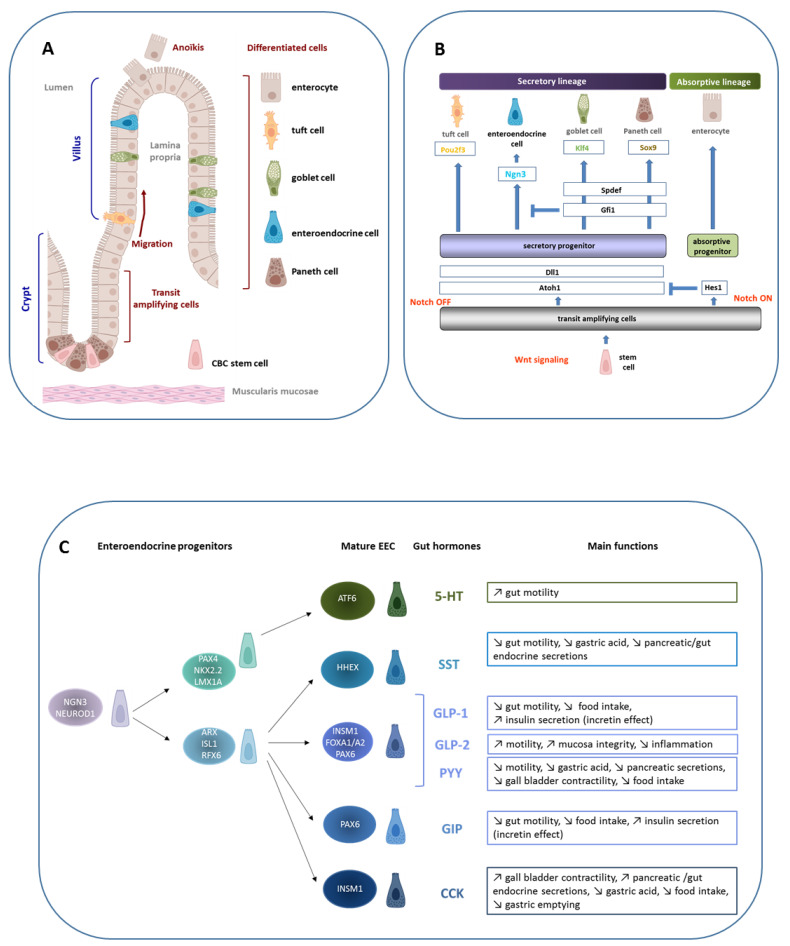
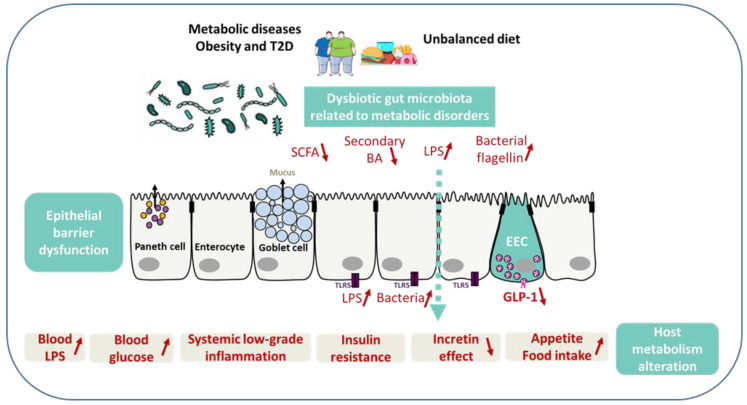
With the continuous rise in the worldwide prevalence of obesity and type 2 diabetes, developing therapies regulating body weight and glycemia has become a matter of great concern. Among the current treatments, evidence now shows that the use of intestinal hormone analogs (e.g., GLP1 analogs and others) helps to control glycemia and reduces body weight. Indeed, intestinal endocrine cells produce a large variety of hormones regulating metabolism, including appetite, digestion, and glucose homeostasis. Herein, we discuss how the enteroendocrine system is affected by local environmental and metabolic signals. These signals include those arising from unbalanced diet, gut microbiota, and the host metabolic organs and their complex cross-talk with the intestinal barrier integrity.
Keywords: cell lineage; diets; enteroendocrine cells; gut barrier integrity; intestinal hormones; microbiota; obesity; type 2 diabetes.
Conflict of interest statement
The authors declare no potential conflict of interest with respect to the research, authorship, and/or publication of this article.
Figures
References
Publication types
MeSH terms
Substances
LinkOut - more resources
Full Text Sources
Medical
