


Endogenous Opioids and Their Role in Stem Cell Biology and Tissue Rescue
- PMID: 35409178
- PMCID: PMC8998234
- DOI: 10.3390/ijms23073819
Endogenous Opioids and Their Role in Stem Cell Biology and Tissue Rescue
Abstract
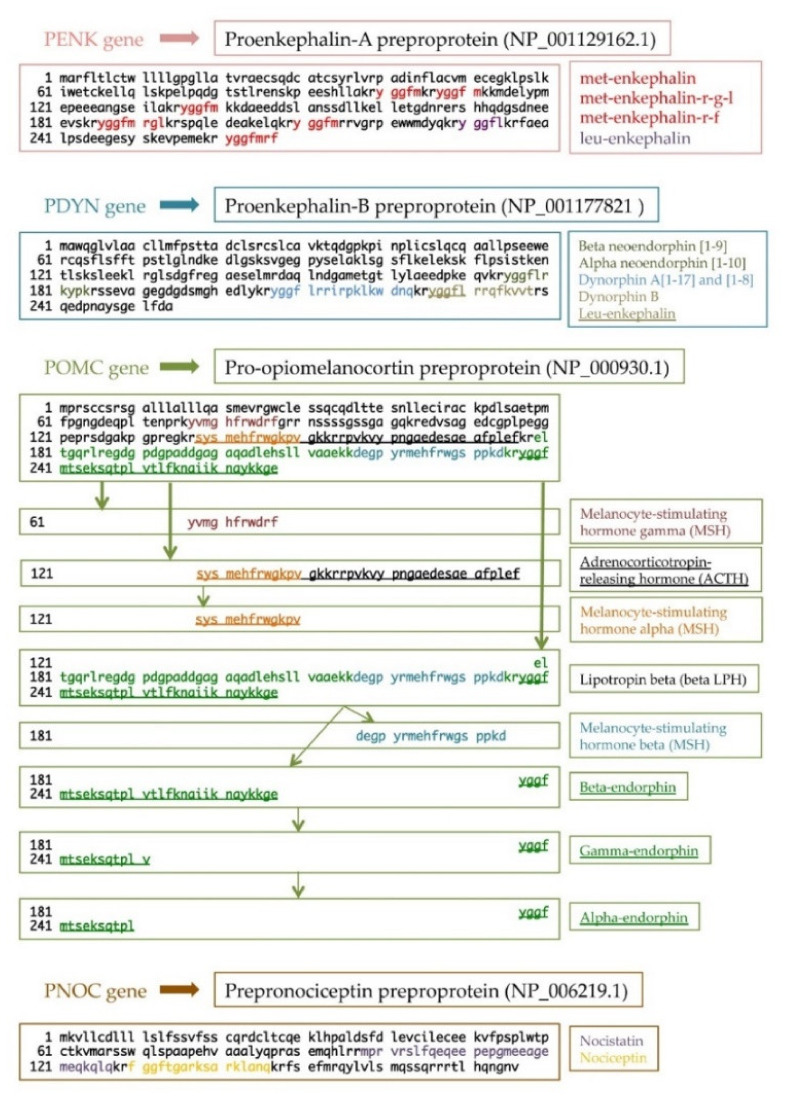
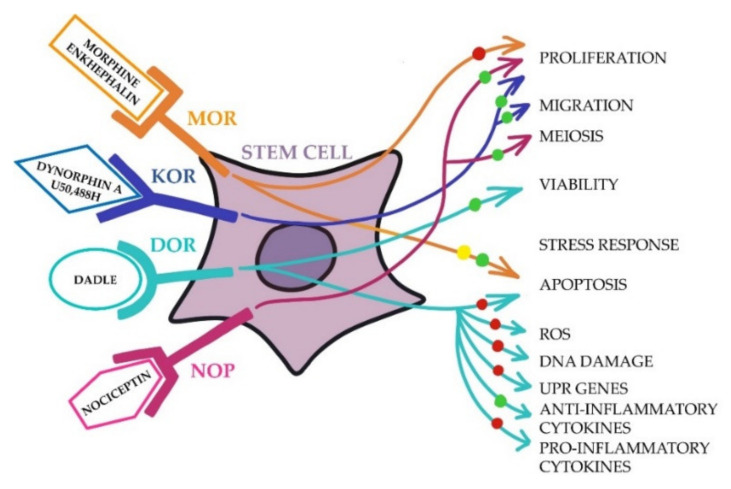
Opioids are considered the oldest drugs known by humans and have been used for sedation and pain relief for several centuries. Nowadays, endogenous opioid peptides are divided into four families: enkephalins, dynorphins, endorphins, and nociceptin/orphanin FQ. They exert their action through the opioid receptors (ORs), transmembrane proteins belonging to the super-family of G-protein-coupled receptors, and are expressed throughout the body; the receptors are the δ opioid receptor (DOR), μ opioid receptor (MOR), κ opioid receptor (KOR), and nociceptin/orphanin FQ receptor (NOP). Endogenous opioids are mainly studied in the central nervous system (CNS), but their role has been investigated in other organs, both in physiological and in pathological conditions. Here, we revise their role in stem cell (SC) biology, since these cells are a subject of great scientific interest due to their peculiar features and their involvement in cell-based therapies in regenerative medicine. In particular, we focus on endogenous opioids' ability to modulate SC proliferation, stress response (to oxidative stress, starvation, or damage following ischemia-reperfusion), and differentiation towards different lineages, such as neurogenesis, vasculogenesis, and cardiogenesis.
Keywords: endogenous opioid peptides; opioid receptors; proliferation; stem cell differentiation; stem cells; stress response.
Conflict of interest statement
The authors declare no conflict of interest.
Figures
References
Publication types
MeSH terms
Substances
Grants and funding
LinkOut - more resources
Full Text Sources
Research Materials
