. 2022 Apr 6;23(7):4055.
doi: 10.3390/ijms23074055.

Physical Forces in Glioblastoma Migration: A Systematic Review

Affiliations

Physical Forces in Glioblastoma Migration: A Systematic Review

Audrey Grossen et al. Int J Mol Sci. .

Abstract

The invasive capabilities of glioblastoma (GBM) define the cancer's aggressiveness, treatment resistance, and overall mortality. The tumor microenvironment influences the molecular behavior of cells, both epigenetically and genetically. Current forces being studied include properties of the extracellular matrix (ECM), such as stiffness and "sensing" capabilities. There is currently limited data on the physical forces in GBM-both relating to how they influence their environment and how their environment influences them. This review outlines the advances that have been made in the field. It is our hope that further investigation of the physical forces involved in GBM will highlight new therapeutic options and increase patient survival. A search of the PubMed database was conducted through to 23 March 2022 with the following search terms: (glioblastoma) AND (physical forces OR pressure OR shear forces OR compression OR tension OR torsion) AND (migration OR invasion). Our review yielded 11 external/applied/mechanical forces and 2 tumor microenvironment (TME) forces that affect the ability of GBM to locally migrate and invade. Both external forces and forces within the tumor microenvironment have been implicated in GBM migration, invasion, and treatment resistance. We endorse further research in this area to target the physical forces affecting the migration and invasion of GBM.

Keywords: chemoresistance; glioblastoma; physical forces; tumor microenvironment.


Conflict of interest statement

The authors declare no conflict of interest.

Figures
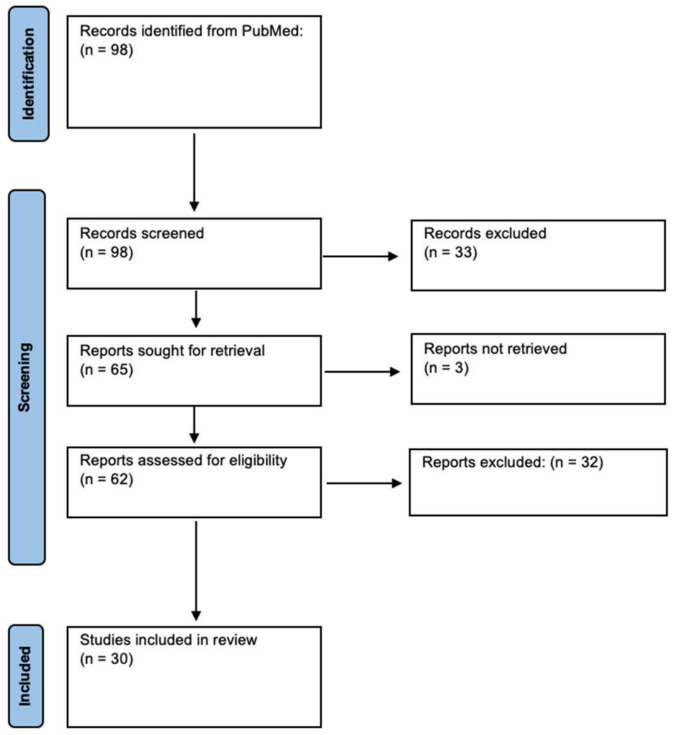
Figure 1
Figure 1
Identification of Studies via PRISMA Guidelines.
Figure 2
Figure 2
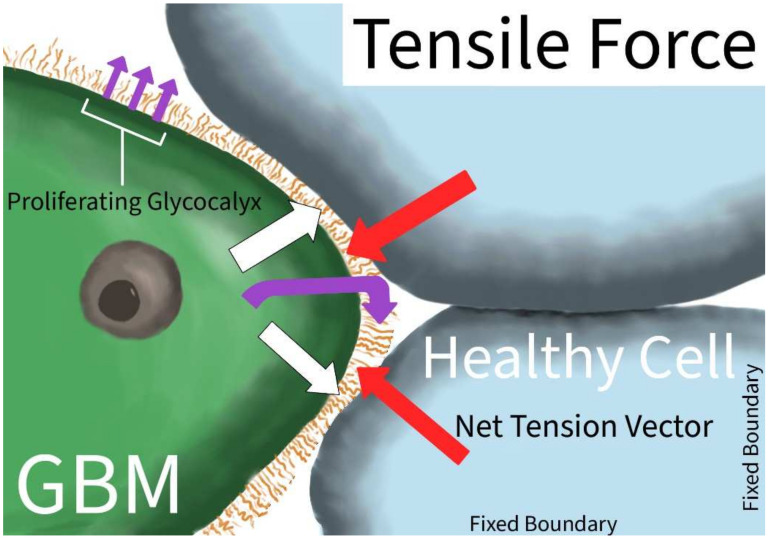
Tensile Force in GBM. Tension vector (white arrow) applied to GBM cell exerts force on the GBM cell membrane, and in response, the GBM produces an extracellular glycocalyx matrix (purple curved arrow) leading to matrix growth (purple straight arrow); the glycocalyx matrix can pull on the surrounding healthy tissue, inducing net tensile force at the leading borders of the GBM (red arrow).
Figure 3
Figure 3
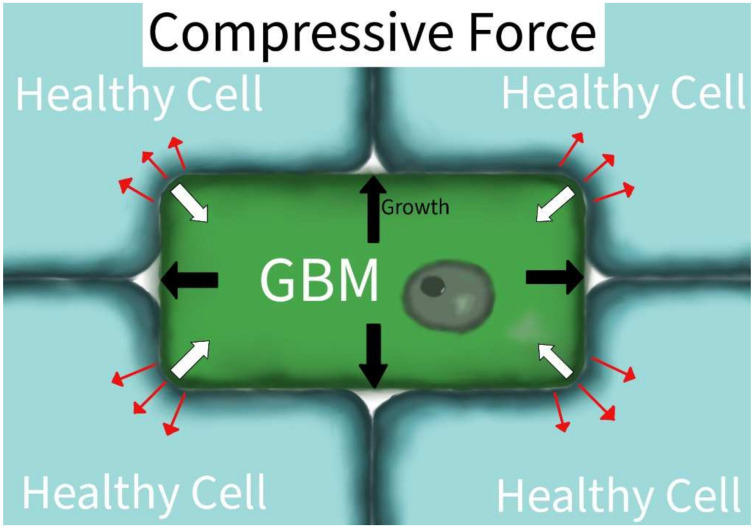
Compressive Force in GBM. The external environment will exert compressive forces on the GBM cell (white arrow vectors). When GBM grows in a fixed volume or is surrounded by immobile tissue (black arrows), it will also exert compressive forces on the surrounding tissue structure (red arrows).
Figure 4
Figure 4
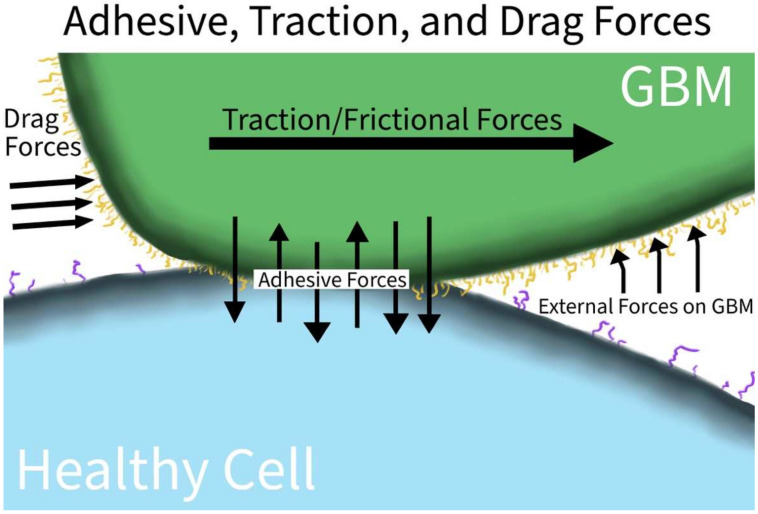
Adhesive, Traction, and Drag Forces in GBM. GBM upregulates various surface proteins, enabling it to adhere to the surfaces of healthy tissue; the increased adherence also helps GBM to resist the physical forces of other tissues or fluids via increased traction forces directly at the surface interface and drag forces at the free margins of the cancer.
Figure 5
Figure 5
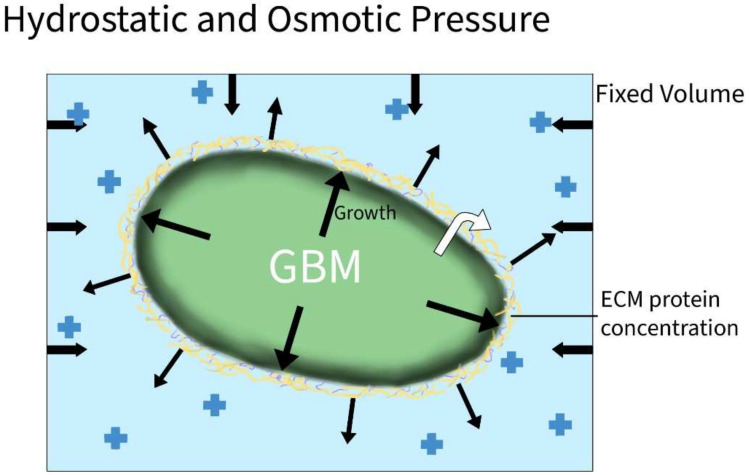
Hydrostatic and Osmotic Pressure in GBM. As GBM grows and produces excess proteins (black cellular arrows and yellow margins) in the fixed craniospinal volume, both hydrostatic and osmotic pressures (black arrows at edges) will build as the intercranial fluid and extracellular protein concentrations continue to increase.
Figure 6
Figure 6
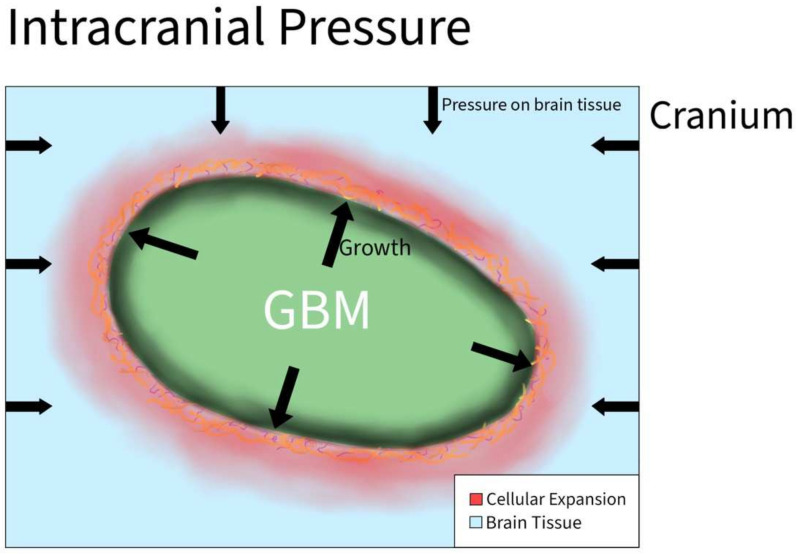
Intracranial Pressure in GBM. As the tumor grows rapidly inside the brain, the overall size of the brain increases and causes tissue to start pressing against the cranium. As a result, the cranium exerts compressive forces back on the brain that result in an increase in intracranial pressure.
Figure 7
Figure 7
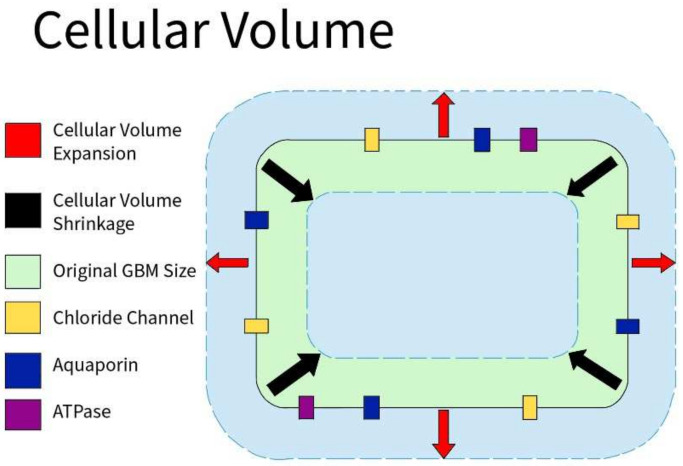
Cellular Volume in GBM. GBM cells express an abundance of chloride ion channels. Along with aquaporin channels and various ATPases, those channels allow the cells to shrink or swell depending on the environment to aid in the survival of GBM cells.
Figure 8
Figure 8
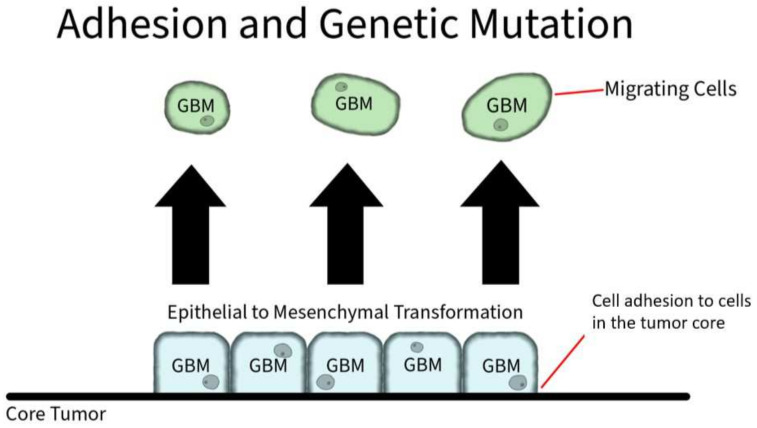
Adhesion and Genetic Mutation in GBM. Cellular membrane proteins play a role in individual GBM cell adhesion to the core tumor. However, through genetic mutation, GBM cells can induce an overexpression of hyaluronic acid, which serves as a ligand for CD-44 receptors. The CD-44 receptors activate SRC complexes that induces a shift to mesenchymal shift in GBM.

References

    1. Spill F., Reynolds D.S., Kamm R.D., Zaman M.H. Impact of the physical microenvironment on tumor progression and metastasis. Curr. Opin. Biotechnol. 2016;40:41–48. doi: 10.1016/j.copbio.2016.02.007. - DOI - PMC - PubMed
    1. Shen Q., Hill T., Cai X., Bui L., Barakat R., Hills E., Almugaiteeb T., Babu A., Mckernan P.H., Zalles M., et al. Physical confinement during cancer cell migration triggers therapeutic resistance and cancer stem cell-like behavior. Cancer Lett. 2021;506:142–151. doi: 10.1016/j.canlet.2021.01.020. - DOI - PMC - PubMed
    1. Mierke C.T. The matrix environmental and cell mechanical properties regulate cell migration and contribute to the invasive phenotype of cancer cells. Rep. Prog. Phys. 2019;82:064602. doi: 10.1088/1361-6633/ab1628. - DOI - PubMed
    1. Muldoon L.L., Alvarez J.I., Begley D.J., Boado R.J., Del Zoppo G.J., Doolittle N.D., Engelhardt B., Hallenbeck J.M., Lonser R.R., Ohlfest J.R., et al. Immunologic privilege in the central nervous system and the blood-brain barrier. J. Cereb. Blood Flow Metab. 2013;33:13–21. doi: 10.1038/jcbfm.2012.153. - DOI - PMC - PubMed
    1. Van Tellingen O., Yetkin-Arik B., De Gooijer M.C., Wesseling P., Wurdinger T., De Vries H.E. Overcoming the blood-brain tumor barrier for effective glioblastoma treatment. Drug Resist. Updates. 2015;19:1–12. doi: 10.1016/j.drup.2015.02.002. - DOI - PubMed

Publication types