


Microbial Contamination and Survival Rate on Different Types of Banknotes
- PMID: 35409990
- PMCID: PMC8998619
- DOI: 10.3390/ijerph19074310
Microbial Contamination and Survival Rate on Different Types of Banknotes
Abstract
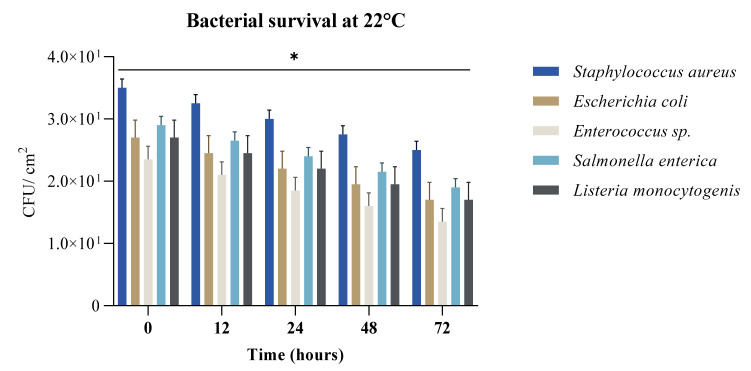
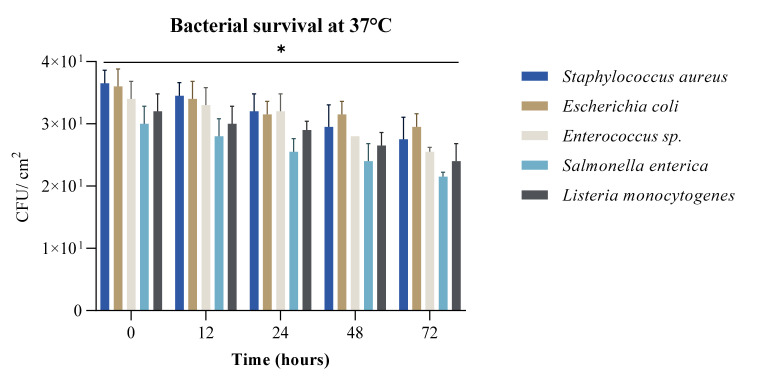
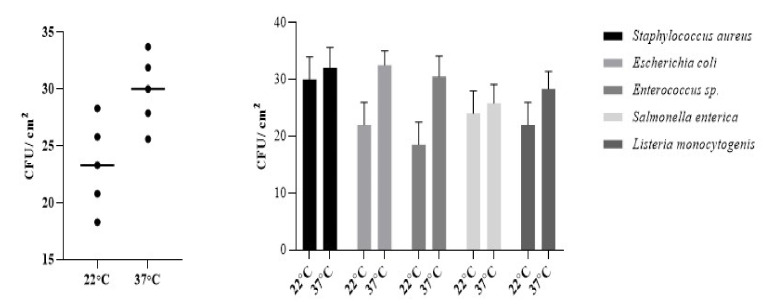
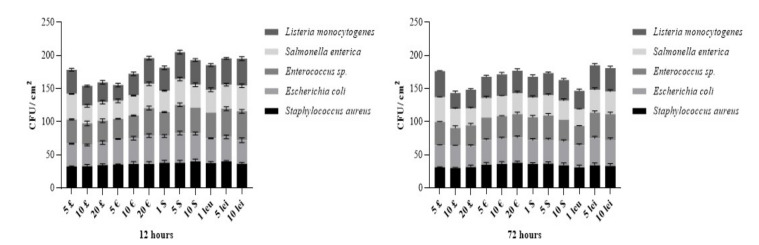
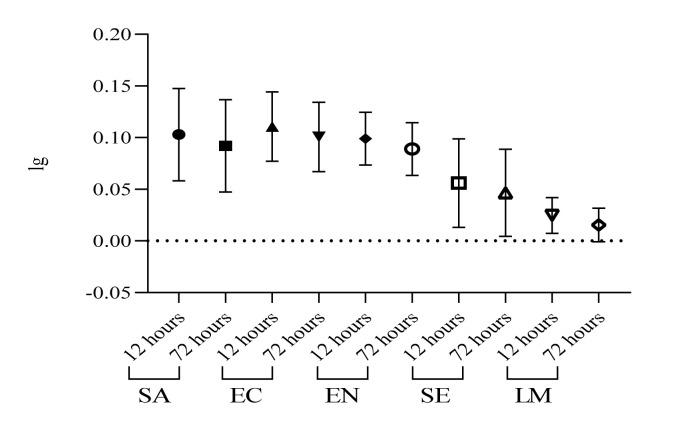
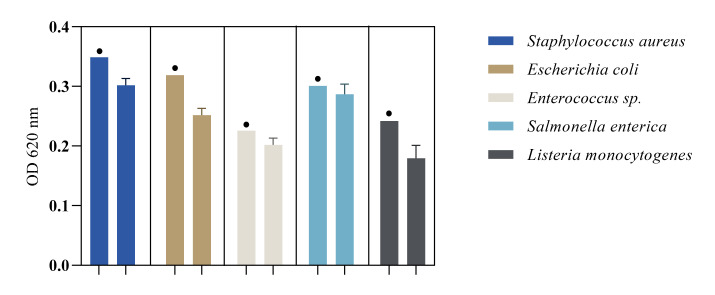
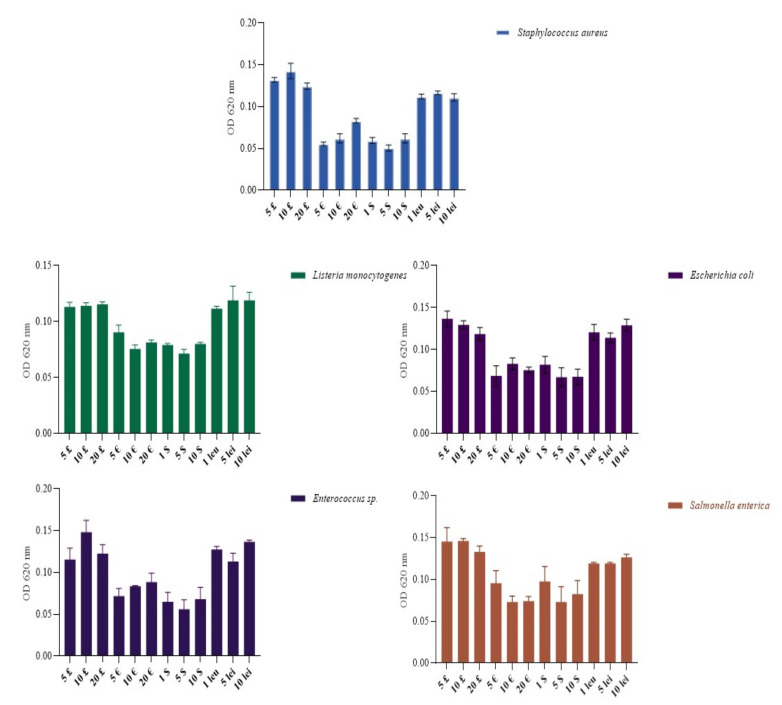
In the COVID-19 pandemic context, numerous concerns have been raised regarding the hygienic status of certain objects we interact with on a daily basis, and especially cash money and their potential to harbor and transmit pathogenic bacteria. Therefore, in the present study, we analyzed different currency bills represented by British pounds (5 £, 10 £ and 20 £), Romanian lei (1 leu, 5 lei and 10 lei), U.S. dollars (1 $, 5 $ and 10 $) and Euros (5 €, 10 € and 20 €) in order to evaluate the bacterial survival rate and bacterial adherence. We used five reference microorganisms by American Type Culture Collection (ATCC, Manassas, VA, USA): Staphylococcus aureus ATCC 6538, Escherichia coli ATCC 8739, Enterococcus sp. ATCC 19952, Salmonella enterica subsp. enterica serovar Typhi ATCC 6539, and Listeria monocytogenes ATCC 7644. Microorganisms were selected in accordance with the criteria of prevalence, pathogenicity, opportunism, and incidence. However, Maldi-TOF analysis from samples taken from the banknotes revealed only a few of the common pathogens that are traditionally thought to be found on banknotes. Some of the most important factors for the survival of pathogenic agents on surfaces are the presence of organic matter, temperature and humidity. Our data showed that Salmonella enterica survived 72 h on every banknote tested, while L. monocytogenes tended to improve persistence in humid conditions. Survival rate is also influenced by the substrate composition, being lower for polymer-based banknotes especially for Salmonella enterica, Listeria monocytogenes and Enterococcus sp. The adherence of bacterial strains was lower for polymer-based banknotes British pounds and Romanian Leu, in contrast to the cotton-based U.S dollars and Euro banknotes. The risk of bacterial contamination from the banknote bills is high as indicated by both a strong survival capacity and low adherence of tested bacteria with differences between the two types of materials used for the tested banknotes.
Keywords: bacterial adherence; banknotes; currency; fomite; pathogens; public health.
Conflict of interest statement
The authors declare no conflict of interest.
Figures
References
-
- European Central Bank Banknote Production and Stocks. [(accessed on 17 October 2021)]. Available online: https://www.ecb.europa.eu/euro/intro/production/html/index.en.html.
-
- Chand N., Fahim M. Tribology of Natural Fiber Polymer Composites. 2nd ed. Woodhead Publishing; Sawston, UK: 2020.
-
- U.S. Bureau of Engraving and Printing—How Money Is Made—Paper and Ink. [(accessed on 16 October 2021)]; Available online: https://www.moneyfactory.gov/hmimpaperandink.html.
-
- Rohrig B. The Chemistry of Money. Royal Society of Chemistry; London, UK: 2020. [(accessed on 14 October 2021)]. Available online: https://bit.ly/3hGG43v.
-
- Is That Real? Identification and Assessment of the Counterfeiting Threat for U.S. Banknotes. National Academies Press; Washington, DC, USA: 2006.
Publication types
MeSH terms
Substances
LinkOut - more resources
Full Text Sources
Medical
Molecular Biology Databases
