


Accumulation in nutrient acquisition strategies of arbuscular mycorrhizal fungi and plant roots in poor and heterogeneous soils of karst shrub ecosystems
- PMID: 35410135
- PMCID: PMC8996662
- DOI: 10.1186/s12870-022-03514-y
Accumulation in nutrient acquisition strategies of arbuscular mycorrhizal fungi and plant roots in poor and heterogeneous soils of karst shrub ecosystems
Abstract
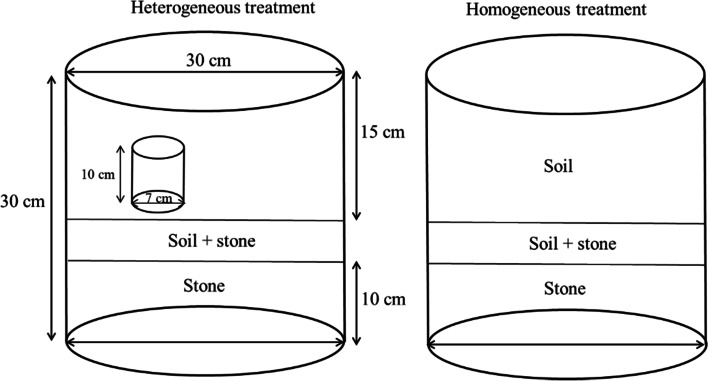
Background: Arbuscular mycorrhizal (AM) fungi and roots play important roles in plant nutrient acquisition, especially in nutrient poor and heterogeneous soils. However, whether an accumulation strategy of AM fungi and root exists in such soils of karst shrubland ecosystems remains unclear. Root traits related to nutrient acquisition (root biomass, AM colonisation, root acid phosphatase activity and N2 fixation) were measured in two N2-fixing plants (i.e. Albizia odoratissima (Linn. f.) Benth. and Cajanus cajan (Linn.) Millsp.) that were grown in heterogeneous or homogeneous nutrient (ammonium) soil with and without AM fungi inoculation.
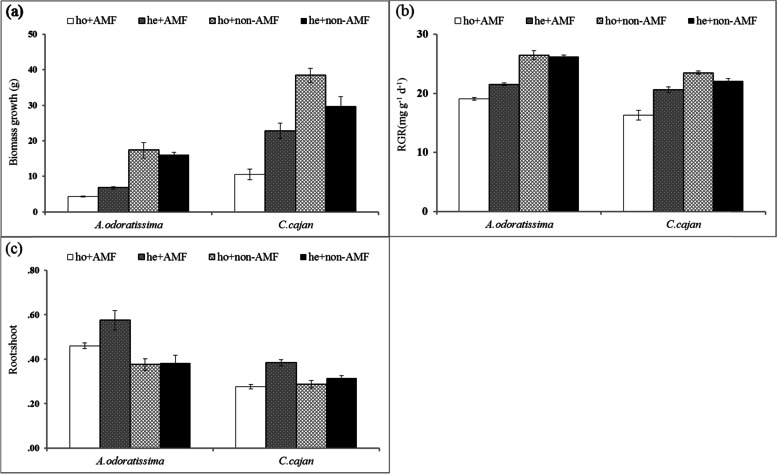
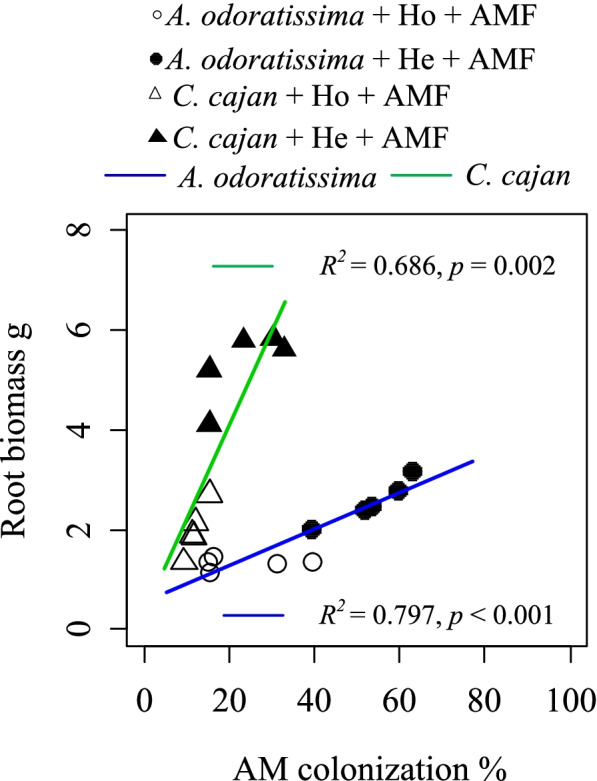
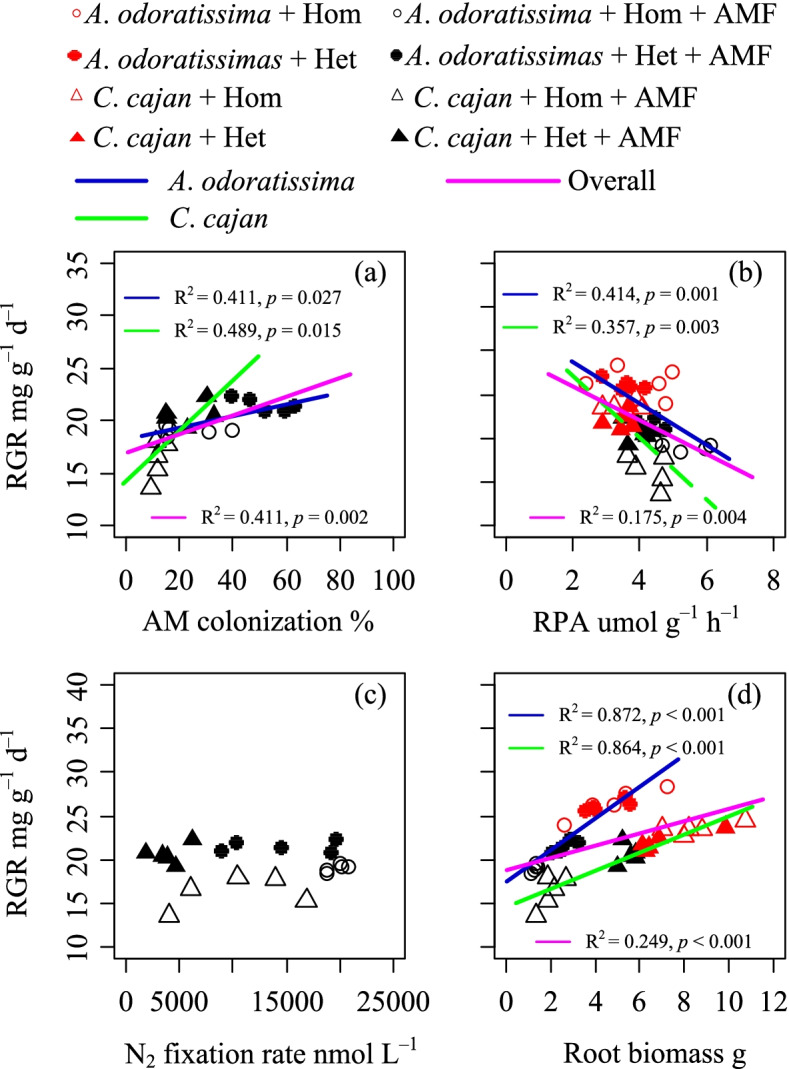
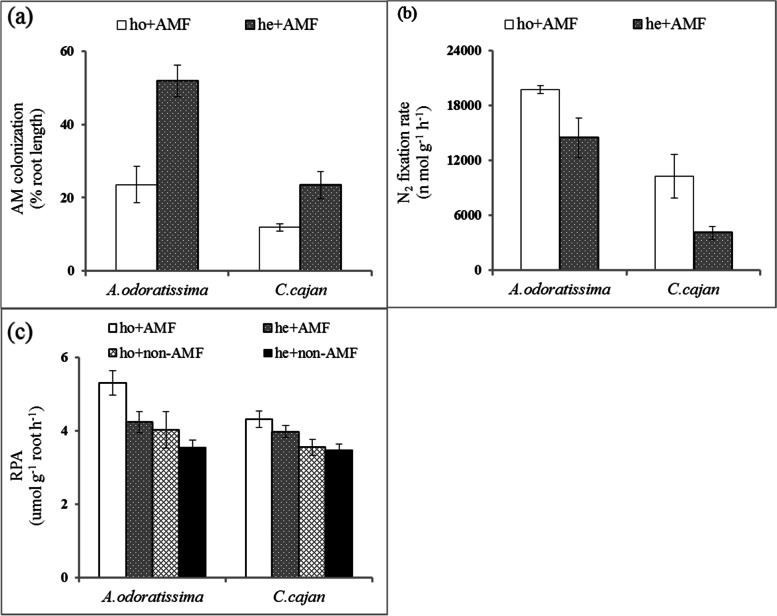
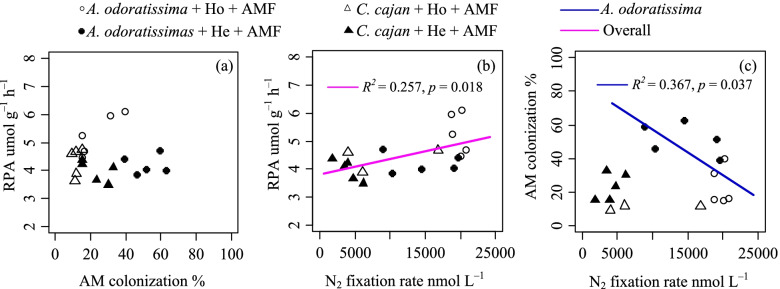
Results: Both of these plants had higher AM colonisation, root biomass and relative growth rate (RGR), but lower N2 fixation and root acid phosphatase activity in the rhizosphere in the heterogeneous soil environment, than that in the homogeneous soil environment. Plants grown in the AM fungi-inoculated heterogeneous soil environment had increased root biomass and root acid phosphatase activity compared with those grown in soil without inoculation. AM colonisation was negatively correlated with the N2 fixation rate of A. odoratissima, while it was not significantly correlated with the root phosphatase activity.
Conclusions: Our results indicated that enhanced AM symbiosis and root biomass increased the absorptive surfaces for nutrient acquisition, highlighting the accumulation strategies of AM and root traits for plant nutrient acquisition in nutrient poor and heterogeneous soils of the karst shrubland ecosystem.
Keywords: Arbuscular mycorrhizal (AM) fungi; Karst; Nutrient acquisition strategies; Root trait; Shrubland ecosystem; Soil nutrient heterogeneity.
© 2022. The Author(s).
Conflict of interest statement
The authors declare that they have no competing interests.
Figures
References
-
- Gross KL, Pregitzer KS, Burton AJ. Spatial variation in nitrogen availability in three successional plant communities. J Ecol. 1995;83:357–367. doi: 10.2307/2261590. - DOI
-
- Mommer L, Visser EJM, van Ruijven J. contrasting root behavior in two grass species: A test of functionality in dynamic heterogeneous conditions. Plant Soil. 2011;344:347–360. doi: 10.1007/s11104-011-0752-8. - DOI
-
- Smith SE, Read DJ. Mycorrhizal symbiosis. 3. London: Academic Press; 2008.
MeSH terms
Substances
Grants and funding
- KDL201803/the Foundation of Karst Dynamics Laboratory, MNR and GZAR
- 41907208/National Natural Science Foundation of China
- 31800441/the National Natural Science Foundation of China
- 31870503/the National Natural Science Foundation of China
- 2018GXNSFBA138012/the Natural Science Foundation of Guangxi
- AA20302018-9/the Guangxi Innovation Driven Development Special Fund Project of China
- U20A2011/Innovative Research Group Project of the National Natural Science Foundation of China
- KDL/the Opening Project of Guangxi Key Laboratory of Karst Dynamics
- Guangxi202102/the Opening Project of Guangxi Key Laboratory of Karst Dynamics
LinkOut - more resources
Full Text Sources
