Review
. 2022 Jun;18(6):337-352.
doi: 10.1038/s41574-022-00655-w. Epub 2022 Apr 11.

Management challenges and therapeutic advances in congenital adrenal hyperplasia

Affiliations
Review

Management challenges and therapeutic advances in congenital adrenal hyperplasia

Ashwini Mallappa et al. Nat Rev Endocrinol. 2022 Jun.

Abstract

Treatment for congenital adrenal hyperplasia (CAH) was introduced in the 1950s following the discovery of the structure and function of adrenocortical hormones. Although major advances in molecular biology have delineated steroidogenic mechanisms and the genetics of CAH, management and treatment of this condition continue to present challenges. Management is complicated by a combination of comorbidities that arise from disease-related hormonal derangements and treatment-related adverse effects. The clinical outcomes of CAH can include life-threatening adrenal crises, altered growth and early puberty, and adverse effects on metabolic, cardiovascular, bone and reproductive health. Standard-of-care glucocorticoid formulations fall short of replicating the circadian rhythm of cortisol and controlling efficient adrenocorticotrophic hormone-driven adrenal androgen production. Adrenal-derived 11-oxygenated androgens have emerged as potential new biomarkers for CAH, as traditional biomarkers are subject to variability and are not adrenal-specific, contributing to management challenges. Multiple alternative treatment approaches are being developed with the aim of tailoring therapy for improved patient outcomes. This Review focuses on challenges and advances in the management and treatment of CAH due to 21-hydroxylase deficiency, the most common type of CAH. Furthermore, we examine new therapeutic developments, including treatments designed to replace cortisol in a physiological manner and adjunct agents intended to control excess androgens and thereby enable reductions in glucocorticoid doses.


Conflict of interest statement

D.P.M. received research funds from Diurnal Limited through the National Institutes of Health Cooperative Research and Development Agreement. During the writing of this manuscript, A.M. took up employment at AstraZeneca and is currently employed there.

Figures
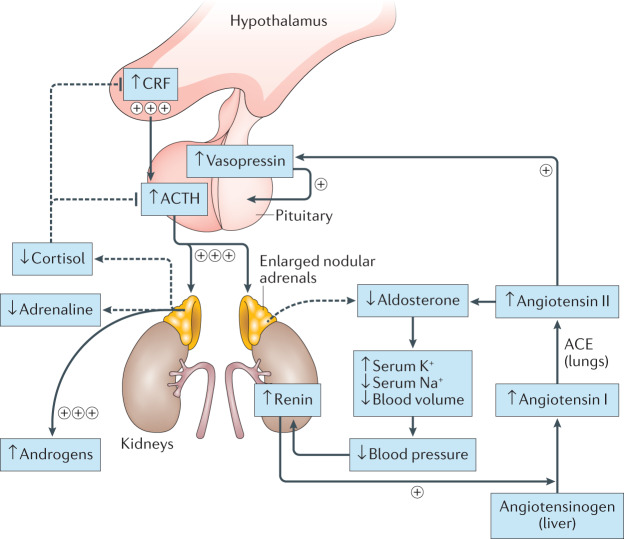
Fig. 1
Fig. 1. Hormonal alterations in classic CAH.
In congenital adrenal hyperplasia (CAH) due to 21-hydroxylase deficiency, reduced circulating levels of cortisol increase the hypothalamic secretion of corticotropin-releasing factor (CRF) and pituitary production of adrenocorticotrophic hormone (ACTH), and decrease adrenomedullary adrenaline secretion. Elevated ACTH drives adrenocortical hyperplasia and uninhibited synthesis of adrenal androgens. The renin–angiotensin–aldosterone system regulates blood pressure as well as fluid and electrolyte balance and is not directly under the influence of ACTH. However, volume depletion and salt loss from aldosterone insufficiency in CAH leads to an increase in circulating levels of angiotensin II, which in turn stimulates vasopressin secretion. Vasopressin acts synergistically with CRF to augment ACTH release. The dashed lines indicate processes that are blunted in CAH. Plus symbols indicate processes that are enhanced in CAH; processes with three plus symbols are greatly enhanced and those with one plus symbol are mildly enhanced. ACE, angiotensin-converting enzyme.
Fig. 2
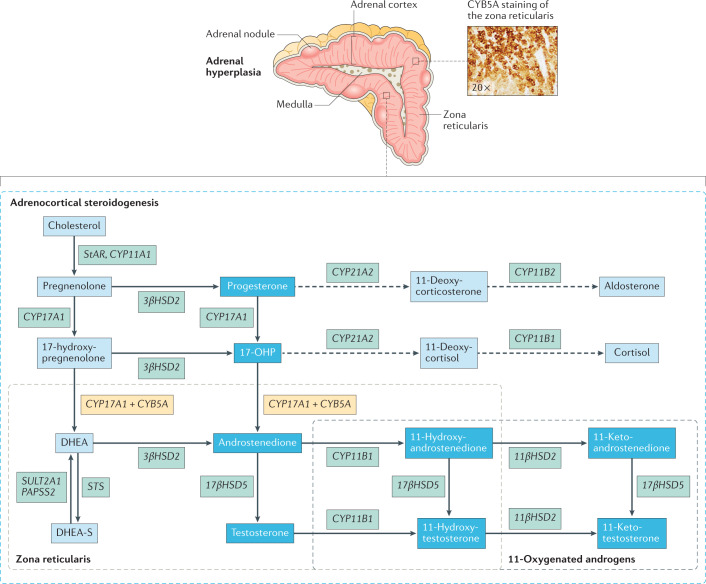
Fig. 2. Adrenal hyperplasia with extensive adrenocortical reticularis.
Nodular cortical adrenal hyperplasia is common in congenital adrenal hyperplasia (CAH). Intermingled zonation, adrenomedullary dysplasia and hyperplasia, predominantly involving the cells in the adrenocortical reticularis, are found in the untreated or undertreated CAH-affected adrenal. Immunostaining demonstrates strong expression of the zona reticularis enzyme CYB5A, which results in efficient androgen production. Increased CYB5A expression in the CAH-affected adrenal leads to increased activity of steroid 17α-hydroxylase-17,20-lyase (CYP17A1), a key enzyme involved in adrenocortical androgen production. The CAH-adrenal also efficiently makes biologically active 11-oxygenated (11-OH) androgens. Androgens and androgen precursors are highlighted in the deep blue boxes. Dashed lines indicate processes that are blunted in CAH. 17-OHP, 17-hydroxyprogesterone; DHEA, dehydroepiandrosterone; DHEA-S, DHEA sulfate.
Fig. 3
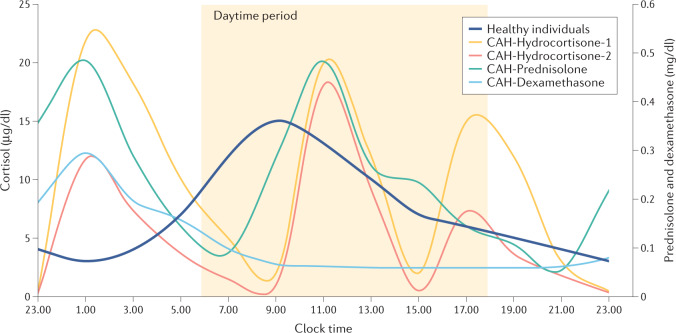
Fig. 3. Cortisol and synthetic glucocorticoid profiles over 24 hours.
The physiological cortisol circadian rhythm has one peak in the morning at approximately 8.00 a.m. or upon awakening, with a gradual decline throughout the day. By contrast, in patients with congenital adrenal hyperplasia (CAH) receiving hydrocortisone three times daily (the glucocorticoid of choice in all children and select adults) results in three cortisol peaks approximately 90 minutes following each dose, followed by rapid declines to undetectable levels. Similarly, patients with CAH receiving once-daily dexamethasone or twice-daily prednisone have non-physiological glucocorticoid profiles. Failure to mimic the circadian cortisol profile contributes to management challenges and supraphysiological doses of glucocorticoid are typically needed to adequately suppress the adrenocorticotrophic hormone (ACTH)-mediated androgen excess of CAH. Data presented are from 24-hour serial sampling studies and reflect varied treatment practices. Data remain inconclusive regarding recommended dosing practices, including morning versus evening dose weighting. Data are expressed as geometric means. Data sources: healthy volunteers (n = 33, aged 17–57 years; dark blue line); patients with classic 21-hydroxylase deficiency CAH (n = 14, aged 17–55 years) on thrice-daily oral hydrocortisone tablet regimen (10 mg at 8.00 a.m., 5 mg at 3.00 p.m., 15 mg at 10.00 p.m.; yellow line); patients with classic 21-hydroxylase deficiency CAH (n = 13) on an individualized dose thrice-daily oral hydrocortisone tablet regimen (8.00 a.m., 3.00 p.m. and 10.00 p.m.; orange line); patients with CAH receiving once-daily dexamethasone (n = 4, dose range: 0.25–0.5 mg, median dose time: 10.00 p.m.; light blue line) or twice-daily prednisone (n = 11, dose range: 2–7.5 mg (morning), 2–5 mg (night), median dose administration times 8.00 a.m. and 9.00 p.m.; green line).
Fig. 4
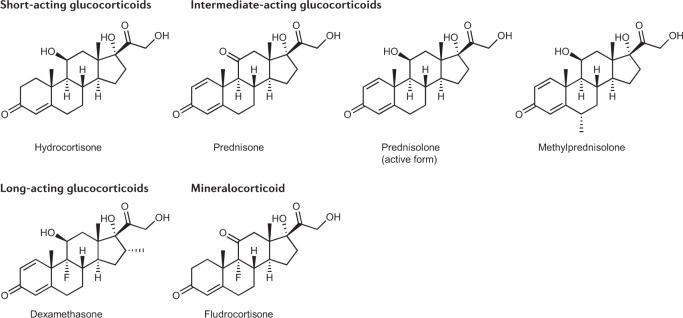
Fig. 4. Chemical structures of current oral glucocorticoid and mineralocorticoid preparations used in the management of classic congenital adrenal hyperplasia.
Chemical structures for short-acting, intermediate-acting and long-acting glucocorticoids and mineralocorticoids used for the management of classic congenital adrenal hyperplasia.
Fig. 5
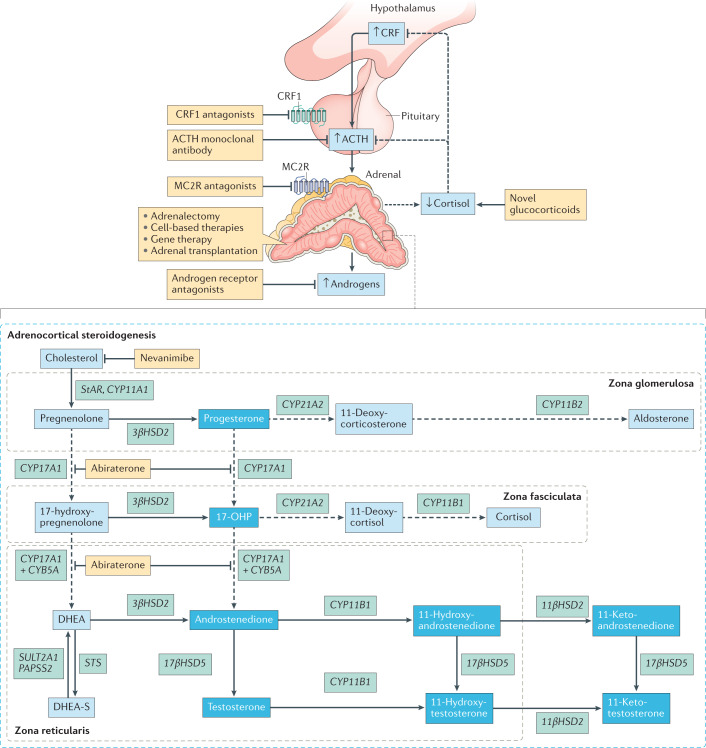
Fig. 5. Novel therapeutic approaches in classic CAH.
Novel treatment approaches include new ways to deliver circadian cortisol replacement (novel glucocorticoids) as well as various adjunct therapies to decrease adrenocortical androgen production, thereby enabling glucocorticoid dose reduction. These include direct adrenocortical steroidogenesis inhibitors and agents to suppress the hypothalamic–pituitary–adrenal axis (such as corticotropin-releasing factor (CRF) receptor 1 (CRF1) antagonists, an adrenocorticotropic hormone (ACTH)-specific monoclonal antibody and melanocortin type 2 receptor (MC2R) antagonists). Preclinical studies are exploring the role of restorative cell-based therapies. A first-in-human recombinant adeno-associated virus-based gene therapy in classic 21-hydroxylase deficiency congenital adrenal hyperplasia (CAH) is also in development. Dashed arrows indicate processes blunted in CAH or targeted by abiraterone, a CYP17A1 inhibitor. Androgens and androgen precursors are highlighted in the deep blue boxes. Therapies are shown in yellow boxes. 17-OHP, 17-hydroxyprogesterone; DHEA, dehydroepiandrosterone; DHEA-S, DHEA sulfate.

References

    1. Claahsen-van der Grinten HL, et al. Congenital adrenal hyperplasia-current insights in pathophysiology, diagnostics, and management. Endocr. Rev. 2022;43:91–159. doi: 10.1210/endrev/bnab016. - DOI - PMC - PubMed
    1. White PC. Neonatal screening for congenital adrenal hyperplasia. Nat. Rev. Endocrinol. 2009;5:490–498. doi: 10.1038/nrendo.2009.148. - DOI - PubMed
    1. Chiou SH, Hu MC, Chung BC. A missense mutation at Ile172–Asn or Arg356–Trp causes steroid 21-hydroxylase deficiency. J. Biol. Chem. 1990;265:3549–3552. doi: 10.1016/S0021-9258(19)39804-7. - DOI - PubMed
    1. Hu MC, Chung BC. Expression of human 21-hydroxylase (P450c21) in bacterial and mammalian cells: a system to characterize normal and mutant enzymes. Mol. Endocrinol. 1990;4:893–898. doi: 10.1210/mend-4-6-893. - DOI - PubMed
    1. Tusie-Luna MT, Traktman P, White PC. Determination of functional effects of mutations in the steroid 21-hydroxylase gene (CYP21) using recombinant vaccinia virus. J. Biol. Chem. 1990;265:20916–20922. doi: 10.1016/S0021-9258(17)45304-X. - DOI - PubMed

MeSH terms