


CFTR modulator use and risk of nontuberculous mycobacteria positivity in cystic fibrosis, 2011-2018
- PMID: 35415188
- PMCID: PMC8995538
- DOI: 10.1183/23120541.00724-2021
CFTR modulator use and risk of nontuberculous mycobacteria positivity in cystic fibrosis, 2011-2018
Abstract
Background: People with cystic fibrosis are at increased risk of pulmonary nontuberculous mycobacteria (NTM) disease. Cystic fibrosis transmembrane conductance regulator (CFTR) modulators are associated with reduced lung infection with pathogens like Pseudomonas aeruginosa and Staphylococcus aureus. This association has not been studied with NTM.
Methods: Using encounter-level data from the US Cystic Fibrosis Foundation Patient Registry from 2011 to 2018, we identified individuals aged >12 years with one or more NTM-negative sputum culture and information on receipt of ivacaftor therapy. We used a Cox proportional hazards model to assess the relationship between CFTR modulator usage (any and monotherapy versus combination therapy) and NTM sputum culture positivity, controlling for sex, least severe class of CFTR mutation, receipt of chronic macrolides, age, body mass index and percentage predicted forced expiratory volume.
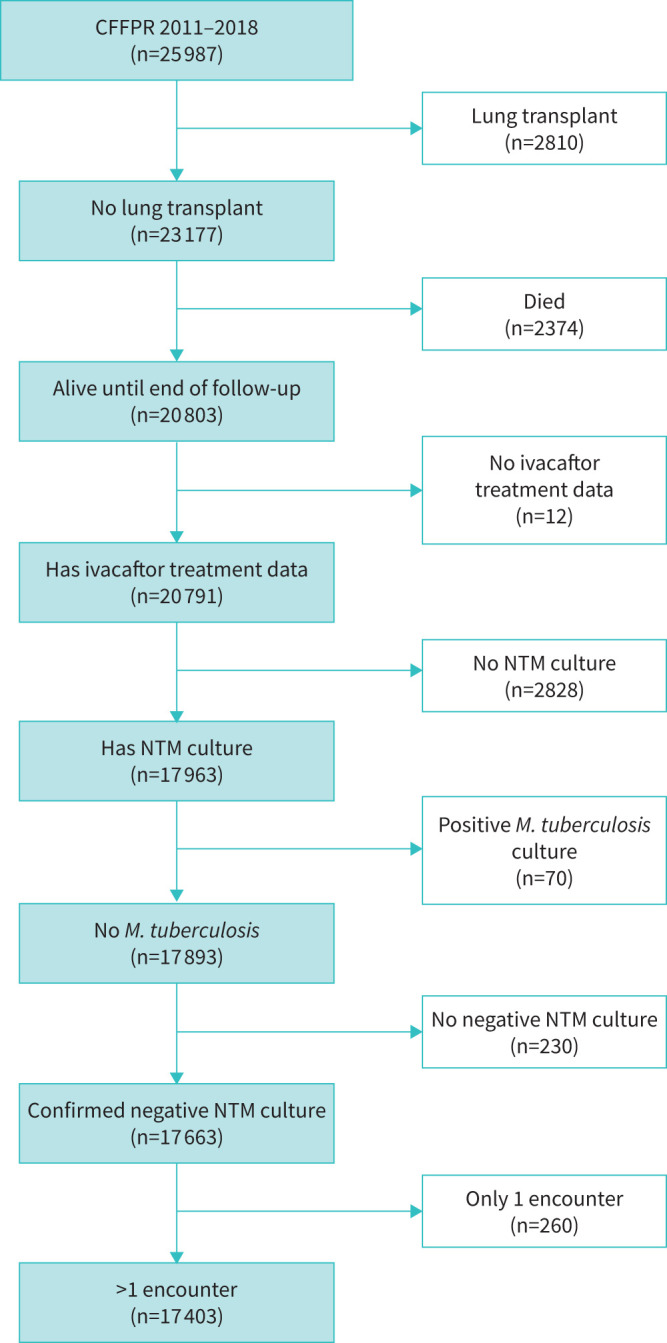
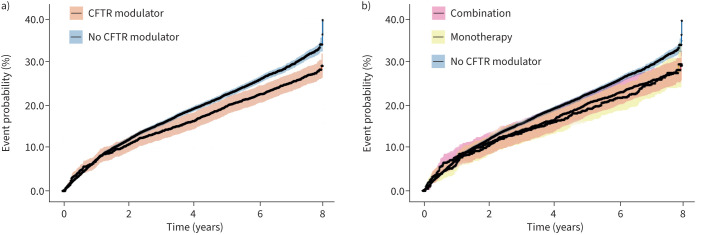
Results: Out of 25 987 unique individuals, 17 403 individuals met inclusion criteria. During follow-up, 42% of individuals received CFTR modulator therapy, and 23% had incident NTM. The median (interquartile range) time to event was 6.1 (4.0-7.3) years for those ever receiving CFTR modulators compared to 4.0 (1.6-6.5) years in those never receiving CFTR modulators. CFTR modulator use was associated with a significantly reduced hazard of NTM culture positivity (hazard ratio (HR) 0.88, 95% CI 0.79-0.97); there was no significant difference in the hazard between those receiving ivacaftor monotherapy versus combination therapy (combination HR 1.01, 95% CI 0.79-1.23).
Conclusions: CFTR modulator therapy is associated with a decreased risk of NTM positivity in individuals with cystic fibrosis.
The content of this work is not subject to copyright. Design and branding are copyright ©ERS 2022.
Conflict of interest statement
Conflict of interest: K.N. Olivier declares a cooperative research and development agreement with Beyond Air, Inc, outside the current work. All other authors declare no competing interests.
Figures
References
LinkOut - more resources
Full Text Sources
Miscellaneous