


Evaluating Regional Nodal Irradiation Allocation and Association with Oncologic Outcomes in NSABP B-18, B-27, B-40, and B-41
- PMID: 35418342
- PMCID: PMC9250597
- DOI: 10.1016/j.ijrobp.2022.03.007
Evaluating Regional Nodal Irradiation Allocation and Association with Oncologic Outcomes in NSABP B-18, B-27, B-40, and B-41
Abstract
Purpose: There is a lack of level I evidence to guide radiation therapy recommendations for patients receiving neoadjuvant chemotherapy for breast cancer. We used 4 neoadjuvant chemotherapy trials to determine which patients benefit from regional nodal irradiation (RNI).
Methods and materials: We obtained data from the NSABP (National Surgical Adjuvant Breast and Bowel Project) B-18, B-27, B-40, and B-41 clinical trials. B-40 and B-41 allowed RNI at physician's discretion. We evaluated locoregional recurrence (LRR), distant recurrence, disease-free survival, and overall survival (OS). Kaplan-Meier, Peto-Peto, χ2, Fisher exact, and Wilcoxon rank-sum tests were used for survival estimates and comparison.
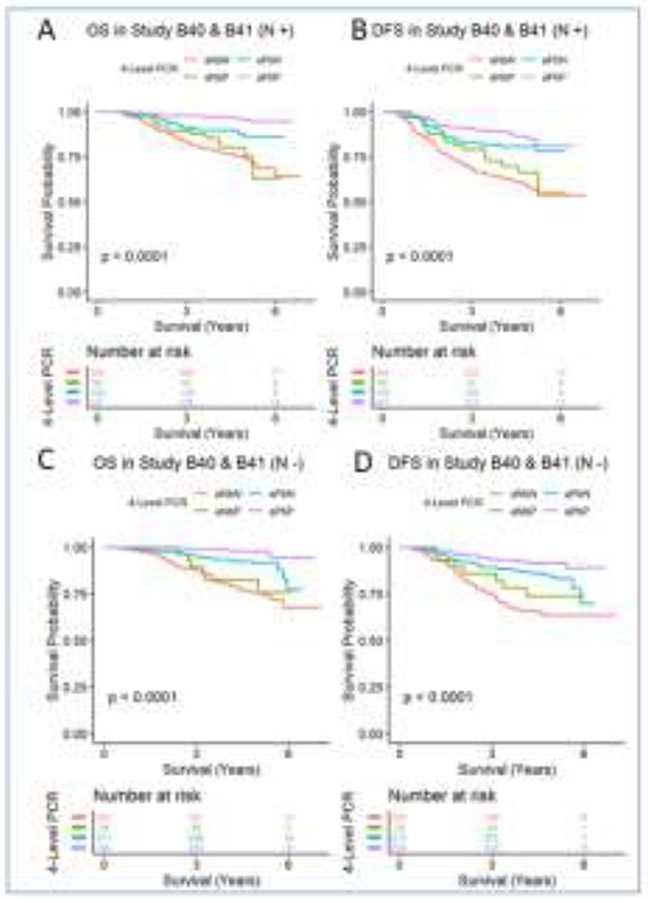
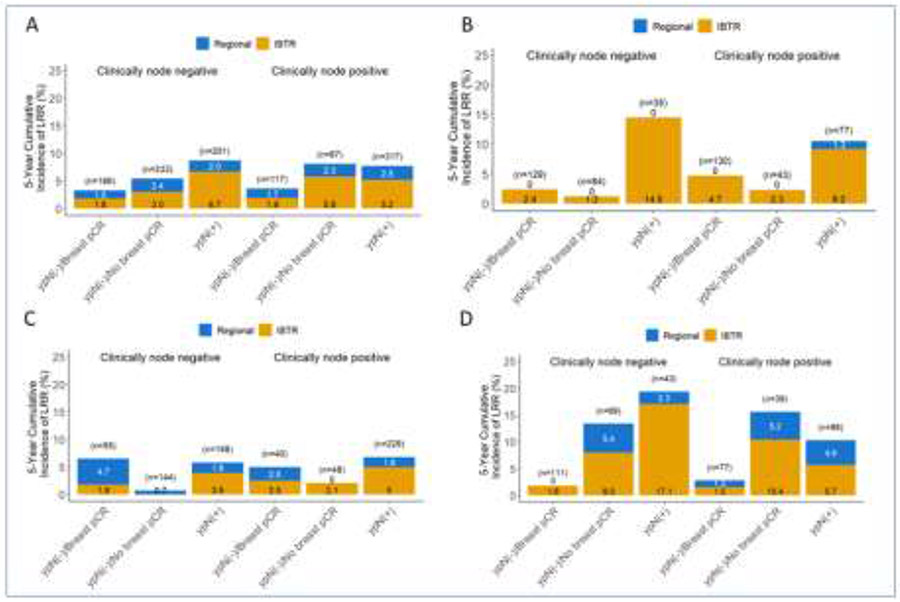
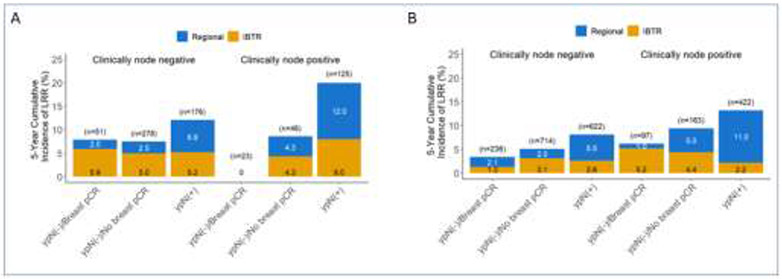
Results: Median follow-up for B-18, B-27, B-40, and B-41 was 13.7, 9.7, 4.5, and 5.1 years, respectively, including 742, 2254, 1154, and 504 patients for analysis. On multivariable analysis, factors significantly associated with RNI included tumor size, ypN status, and tumor subtype; Hispanic patients were less likely to receive RNI. Patients with ypN+HER2+ disease who received RNI had improved OS. B-40 patients with ypN+HR+ disease had improved LRR. On multivariable analysis for the B-40 and B-41 study population, RNI was not associated with significantly improved OS, disease-free survival, distant recurrence, or LRR.
Conclusions: RNI was associated with a clinical benefit for patients with ypN+HER2+ and ypN+HR+ disease. RNI was not significantly associated with a clinically beneficial outcome for the entire cohort. Prospective phase 3 clinical trials are needed to establish guidelines for patients who should receive RNI after neoadjuvant treatment, and action is necessary to eliminate the disparity in care delivery shown for Hispanic women.
Copyright © 2022 Elsevier Inc. All rights reserved.
Conflict of interest statement
Figures
References
-
- Fisher B, Anderson S, Bryant J, et al. Twenty-year follow-up of a randomized trial comparing total mastectomy, lumpectomy, and lumpectomy plus irradiation for the treatment of invasive breast cancer. N Engl J Med 2002;347:1233–1241. - PubMed
-
- Overgaard M, Hansen PS, Overgaard J, et al. Postoperative radiotherapy in high-risk premenopausal women with breast cancer who receive adjuvant chemotherapy. Danish Breast Cancer Cooperative Group 82b Trial. N Engl J Med 1997;337:949–955. - PubMed
Publication types
MeSH terms
Grants and funding
LinkOut - more resources
Full Text Sources
Medical
Research Materials
Miscellaneous
