


How parents express their worry in calls to a medical helpline: a mixed methods study
- PMID: 35421930
- PMCID: PMC9012025
- DOI: 10.1186/s12875-022-01680-4
How parents express their worry in calls to a medical helpline: a mixed methods study
Abstract
Background: Telephone triage is used globally in out-of-hours primary care, to prioritize who needs urgent assessment. Even though children rarely are severely ill, calls about sick children are among the most prevalent, mainly due to parental worry. Pediatric calls are considered challenging, as the call-handler must rely on parents' second-hand information. We aimed to investigate if parents' worry can be used as a predictor of severe illness, and if the content of the calls varies between different grades of worry.
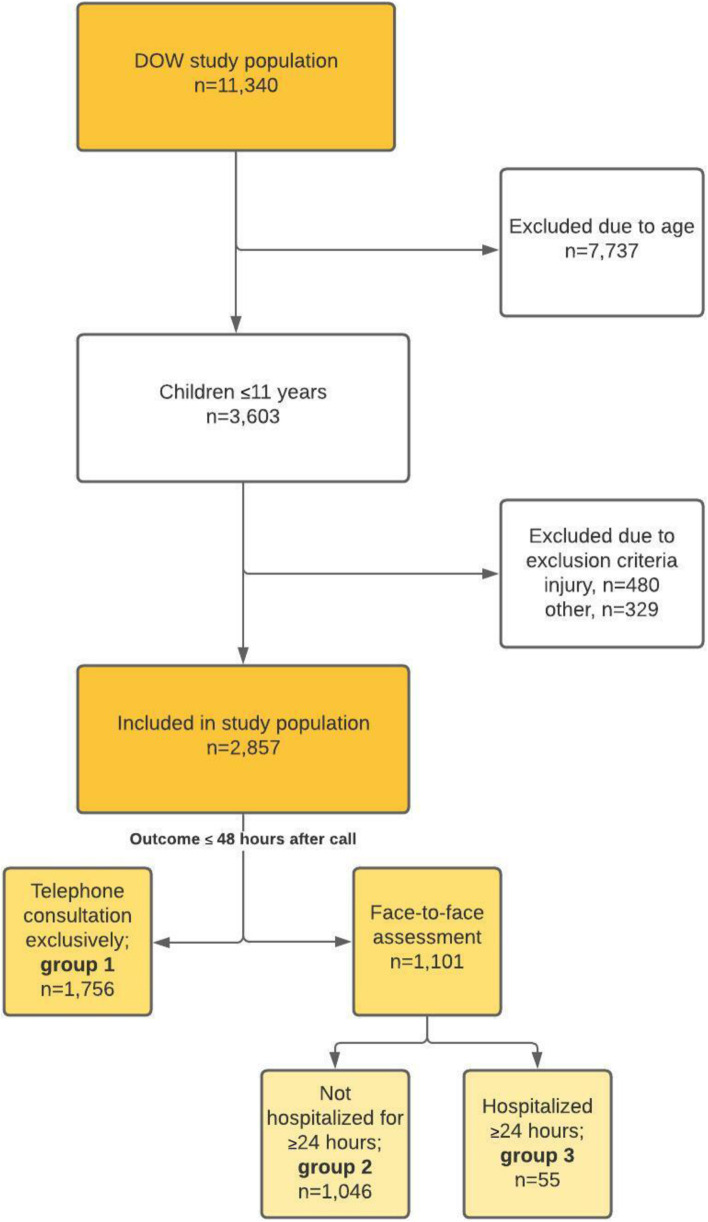
Methods: In a convergent mixed methods study design we asked patients to rate their degree-of-worry before talking to a call-handler. We used quantitative data of degree-of-worry, triage- and patient outcome in pediatric calls (n = 2857), and the qualitative content from 54 calls with subsequent hospitalization ≥24 h.
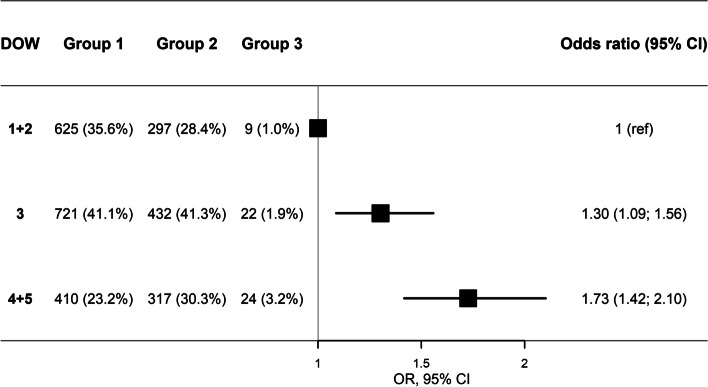
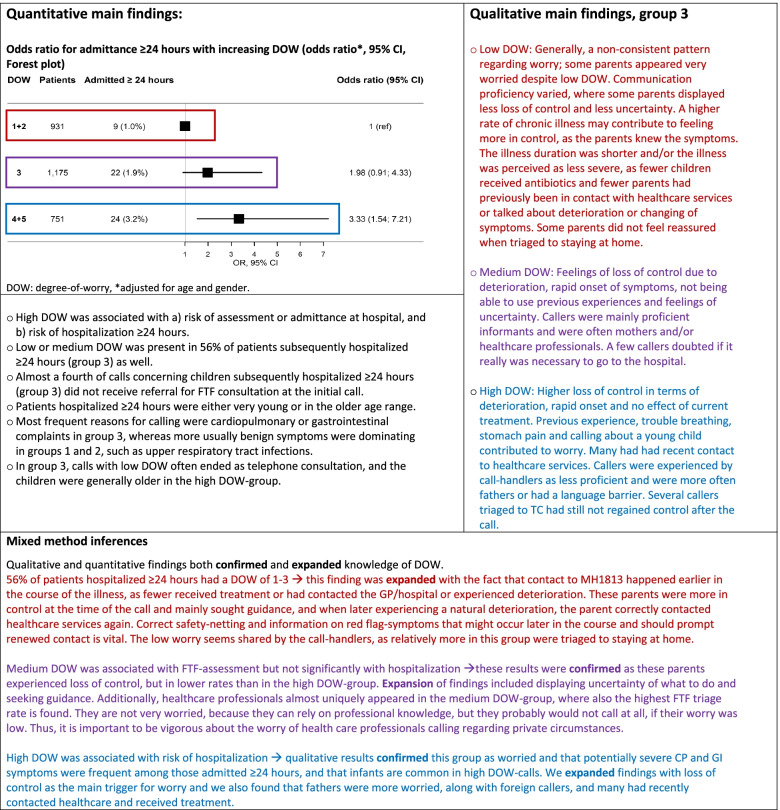
Results: High degree-of-worry was associated with hospitalization ≥24 h (OR 3.33, 95% CI 1.53-7.21). Qualitative findings both confirmed and expanded knowledge of degree-of-worry. Worry was the predominant cause for contact overall, and was mainly triggered by loss-of-control. In calls with high degree-of-worry, the prevalence of loss-of-control was especially high, and the parents had additionally often contacted healthcare services recently. Parents with a foreign accent often rated their worry as high, and these callers were often ignored or interrupted. Calls with low degree-of-worry seemed to occur early during the disease.
Conclusion: High degree of parental worry was associated with severe illness. At the end of calls, call-handlers should ensure that the parent has regained control of the situation to reach increased reassurance and to prevent renewed unnecessary contact. Safety-netting is crucial, as many parents made contact early during the illness and deterioration may develop later. The scoring of parental degree-of-worry may be used as an indicator of potentially severe illness and can easily be implemented at out-of-hours call-centers globally.
Trial registration: Original study registered at clinicaltrials.gov ( NCT02979457 ).
Keywords: After hours; Denmark; Mixed methods study; Out-of-hours care; Parents; Pediatrics; Primary care; Telemedicine; Telenursing; Telephone triage; Worry.
© 2022. The Author(s).
Conflict of interest statement
The authors declare that they have no competing interests.
Figures

References
-
- Berchet C, Nader C. The organisation of out-of-hours primary care in OECD countries. OECD Heal Work Pap. 2016;89:1–46.
Publication types
MeSH terms
Associated data
LinkOut - more resources
Full Text Sources
Medical
Miscellaneous