


Breast cancer in the era of integrating "Omics" approaches
- PMID: 35422484
- PMCID: PMC9010455
- DOI: 10.1038/s41389-022-00393-8
Breast cancer in the era of integrating "Omics" approaches
Abstract
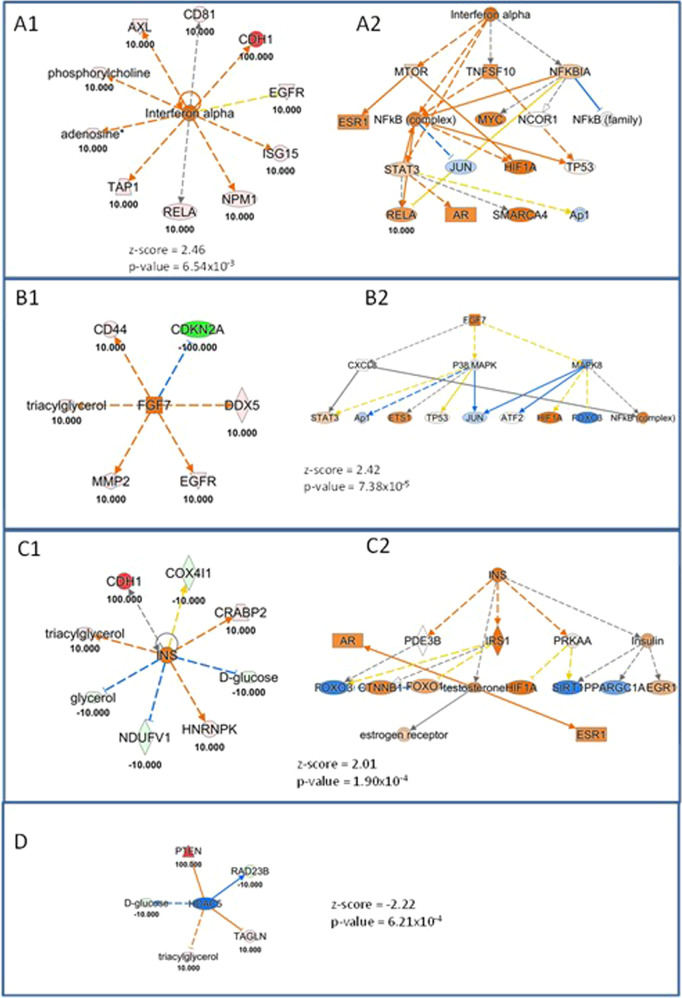
Worldwide, breast cancer is the leading cause of cancer-related deaths in women. Breast cancer is a heterogeneous disease characterized by different clinical outcomes in terms of pathological features, response to therapies, and long-term patient survival. Thus, the heterogeneity found in this cancer led to the concept that breast cancer is not a single disease, being very heterogeneous both at the molecular and clinical level, and rather represents a group of distinct neoplastic diseases of the breast and its cells. Indubitably, in the past decades we witnessed a significant development of innovative therapeutic approaches, including targeted and immunotherapies, leading to impressive results in terms of increased survival for breast cancer patients. However, these multimodal treatments fail to prevent recurrence and metastasis. Therefore, it is urgent to improve our understanding of breast tumor and metastasis biology. Over the past few years, high-throughput "omics" technologies through the identification of novel biomarkers and molecular profiling have shown their great potential in generating new insights in the study of breast cancer, also improving diagnosis, prognosis and prediction of response to treatment. In this review, we discuss how the implementation of "omics" strategies and their integration may lead to a better comprehension of the mechanisms underlying breast cancer. In particular, with the aim to investigate the correlation between different "omics" datasets and to define the new important key pathway and upstream regulators in breast cancer, we applied a new integrative meta-analysis method to combine the results obtained from genomics, proteomics and metabolomics approaches in different revised studies.
© 2022. The Author(s).
Conflict of interest statement
The authors declare no competing interests.
Figures

References
Publication types
Grants and funding
- IG-20043/Associazione Italiana per la Ricerca sul Cancro (Italian Association for Cancer Research)
- IG-20043, 25696/Associazione Italiana per la Ricerca sul Cancro (Italian Association for Cancer Research)
- IG-20043, 25696/Associazione Italiana per la Ricerca sul Cancro (Italian Association for Cancer Research)
- IG-20043, 25696/Associazione Italiana per la Ricerca sul Cancro (Italian Association for Cancer Research)
- IG-20043, 25696/Associazione Italiana per la Ricerca sul Cancro (Italian Association for Cancer Research)
- IG-20043, 25696/Associazione Italiana per la Ricerca sul Cancro (Italian Association for Cancer Research)
- IG-20043, 25696/Associazione Italiana per la Ricerca sul Cancro (Italian Association for Cancer Research)
- IG-20043, 25696/Associazione Italiana per la Ricerca sul Cancro (Italian Association for Cancer Research)
- IG-20043, 25696/Associazione Italiana per la Ricerca sul Cancro (Italian Association for Cancer Research)
LinkOut - more resources
Full Text Sources
Miscellaneous
