


Oncogenic fusion proteins and their role in three-dimensional chromatin structure, phase separation, and cancer
- PMID: 35427897
- PMCID: PMC9156545
- DOI: 10.1016/j.gde.2022.101901
Oncogenic fusion proteins and their role in three-dimensional chromatin structure, phase separation, and cancer
Abstract
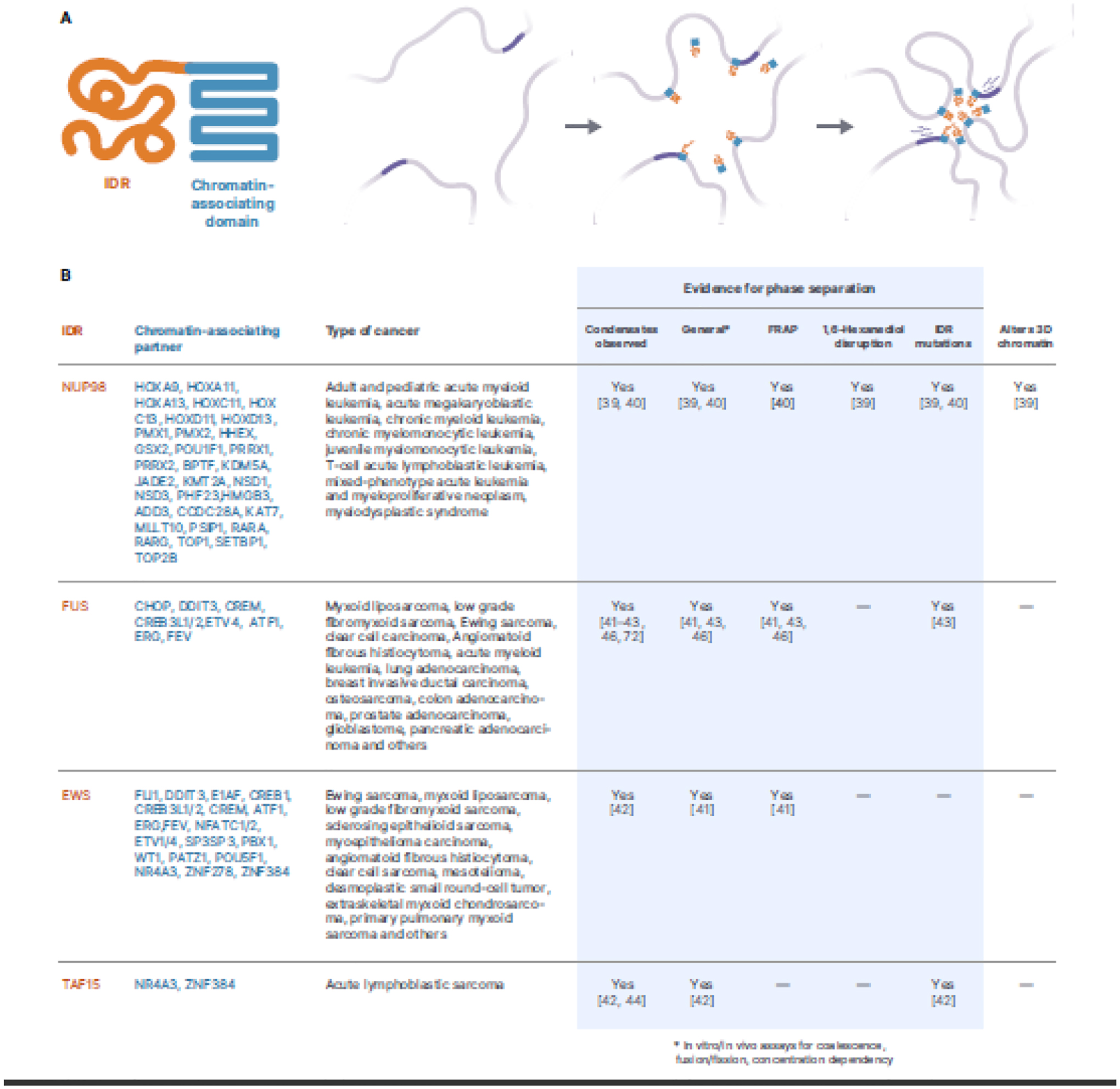
Three-dimensional (3D) chromatin structure plays a critical role in development, gene regulation, and cellular identity. Alterations to this structure can have profound effects on cellular phenotypes and have been associated with a variety of diseases including multiple types of cancer. One of several forces that help shape 3D chromatin structure is liquid-liquid phase separation, a form of self-association between biomolecules that can sequester regions of chromatin into subnuclear droplets or even membraneless organelles like nucleoli. This review focuses on a class of oncogenic fusion proteins that appear to exert their oncogenic function via phase-separation-driven alterations to 3D chromatin structure. Here, we review what is known about the mechanisms by which these oncogenic fusion proteins phase separate in the nucleus and their role in shaping the 3D chromatin structure. We discuss the potential for this phenomenon to be a more widespread mechanism of oncogenesis.
Copyright © 2022 Elsevier Ltd. All rights reserved.
Conflict of interest statement
Declarations of interest
none
Figures
References
-
- Zheng H, Xie W: The role of 3D genome organization in development and cell differentiation. Nat Rev Mol Cell Biol 2019, 20:535–550. - PubMed
Publication types
MeSH terms
Substances
Grants and funding
LinkOut - more resources
Full Text Sources
Medical
