


Ultrasound-assisted extraction of saffron bioactive compounds; separation of crocins, picrocrocin, and safranal optimized by artificial bee colony
- PMID: 35429897
- PMCID: PMC9034390
- DOI: 10.1016/j.ultsonch.2022.105971
Ultrasound-assisted extraction of saffron bioactive compounds; separation of crocins, picrocrocin, and safranal optimized by artificial bee colony
Abstract
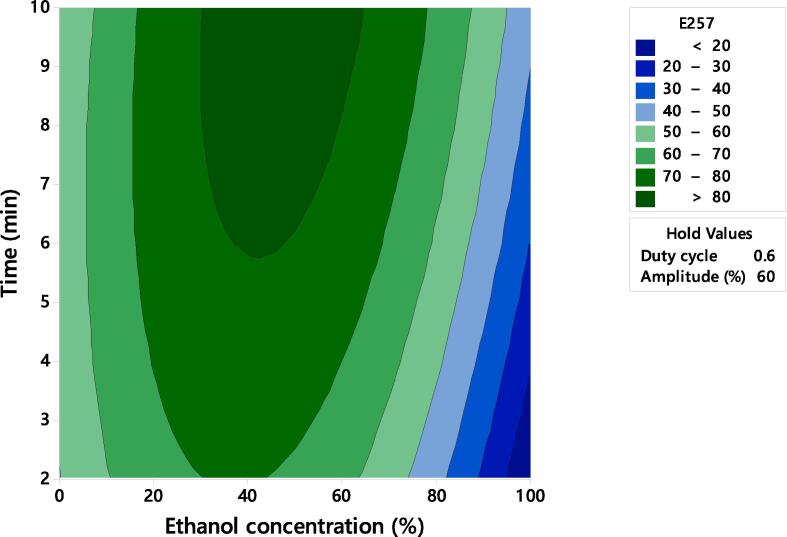
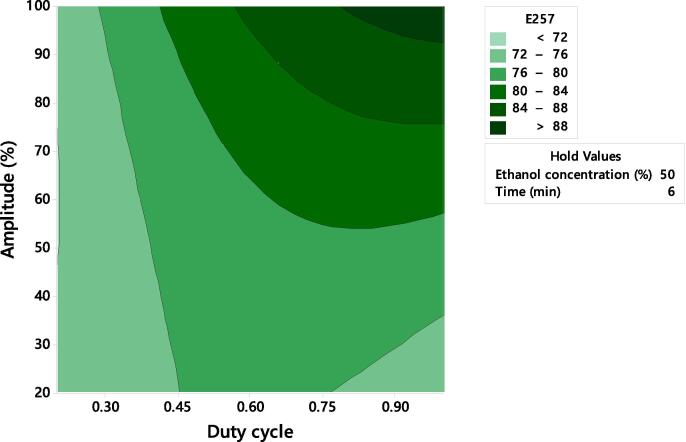
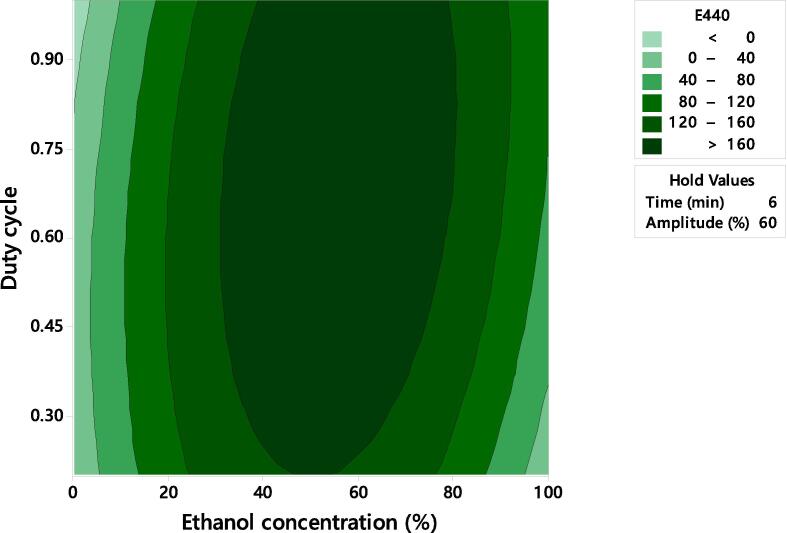
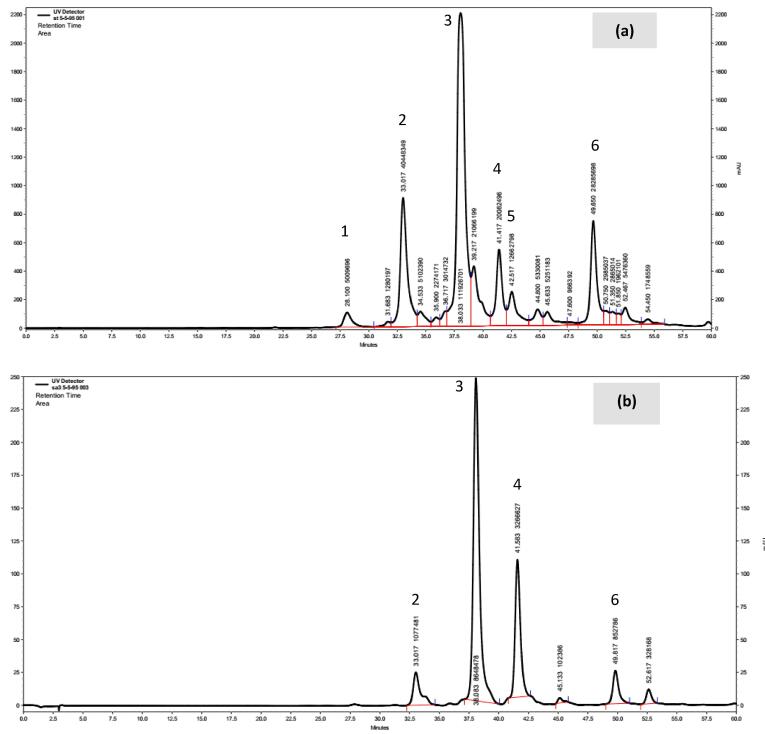
In this work, a four-factor five-level full factorial central composite design (CCD) was used to optimize the ultrasound-assisted extraction (UAE) of saffron major components, namely picrocrocin, safranal and crocin. The process parameters included ethanol concentration (0-100%), extraction time (2-10 min), duty cycle (0.2-1.0) and ultrasonic amplitude (20-100%). The extracted compounds were measured both by spectrophotometry and chromatography techniques. The results revealed that the middle concentrations of ethanol and relatively long process durations along with high duty cycles and ultrasonic amplitudes had the most profound impact on the yields of the extracted bioactives. UAE was optimized using response surface methodology (RSM) and artificial bee colony (ABC); a comparison between these methods indicated their optimization power was approximately the same. According to the RSM analysis, an ethanol concentration of 58.58%, extraction time of 6.85 min, duty cycle of 0.82 and amplitude of 91.11% were the optimum extraction conditions, while the optimal conditions resulting from ABC were 53.07%, 7.32 min, 0.93 and 100% for the UAE variables respectively. Finally, HPLC analysis was carried out on the UAE optimum extract resulting from RSM. Four crocetin esters were detected in the optimal extract.
Keywords: Artificial bee colony; Crocin; Picrocrocin; Response surface methodology; Saffron; Safranal; Ultrasound.
Copyright © 2022 The Authors. Published by Elsevier B.V. All rights reserved.
Conflict of interest statement
The authors declare that they have no known competing financial interests or personal relationships that could have appeared to influence the work reported in this paper.
Figures






References
-
- Gresta F., Lombardo G., Siracusa L., Ruberto G. Saffron, an alternative crop for sustainable agricultural systems. A review. Agronomy for sustainable development. 2008;28(1):95–112.
-
- Licón C.C., Carmona M., Rubio R., Molina A., Berruga M.I. Preliminary study of saffron (Crocus sativus L. stigmas) color extraction in a dairy matrix. Dyes Pigm. 2012;92(3):1355–1360. doi: 10.1016/j.dyepig.2011.09.022. - DOI
-
- Melnyk J.P., Wang S., Marcone M.F. Chemical and biological properties of the world's most expensive spice: Saffron. Food Res. Int. 2010;43(8):1981–1989. doi: 10.1016/j.foodres.2010.07.033. - DOI
-
- Lozano P., Delgado D., Gómez D., Rubio M., Iborra J.L. A non-destructive method to determine the safranal content of saffron (Crocus sativus L.) by supercritical carbon dioxide extraction combined with high-performance liquid chromatography and gas chromatography. J. Biochem. Bioph. Methods. 2000;43(1–3):367–378. doi: 10.1016/S0165-022X(00)00090-7. - DOI - PubMed
-
- Negbi M. CRC Press; 2003. Saffron: Crocus Sativus L.
MeSH terms
Substances
LinkOut - more resources
Full Text Sources
