


Translation and validation of the evidence-based practice attitude scale (EBPAS-15) to Brazilian Portuguese: Examining providers' perspective about evidence-based parent intervention
- PMID: 35431379
- PMCID: PMC9012479
- DOI: 10.1016/j.childyouth.2022.106421
Translation and validation of the evidence-based practice attitude scale (EBPAS-15) to Brazilian Portuguese: Examining providers' perspective about evidence-based parent intervention
Abstract
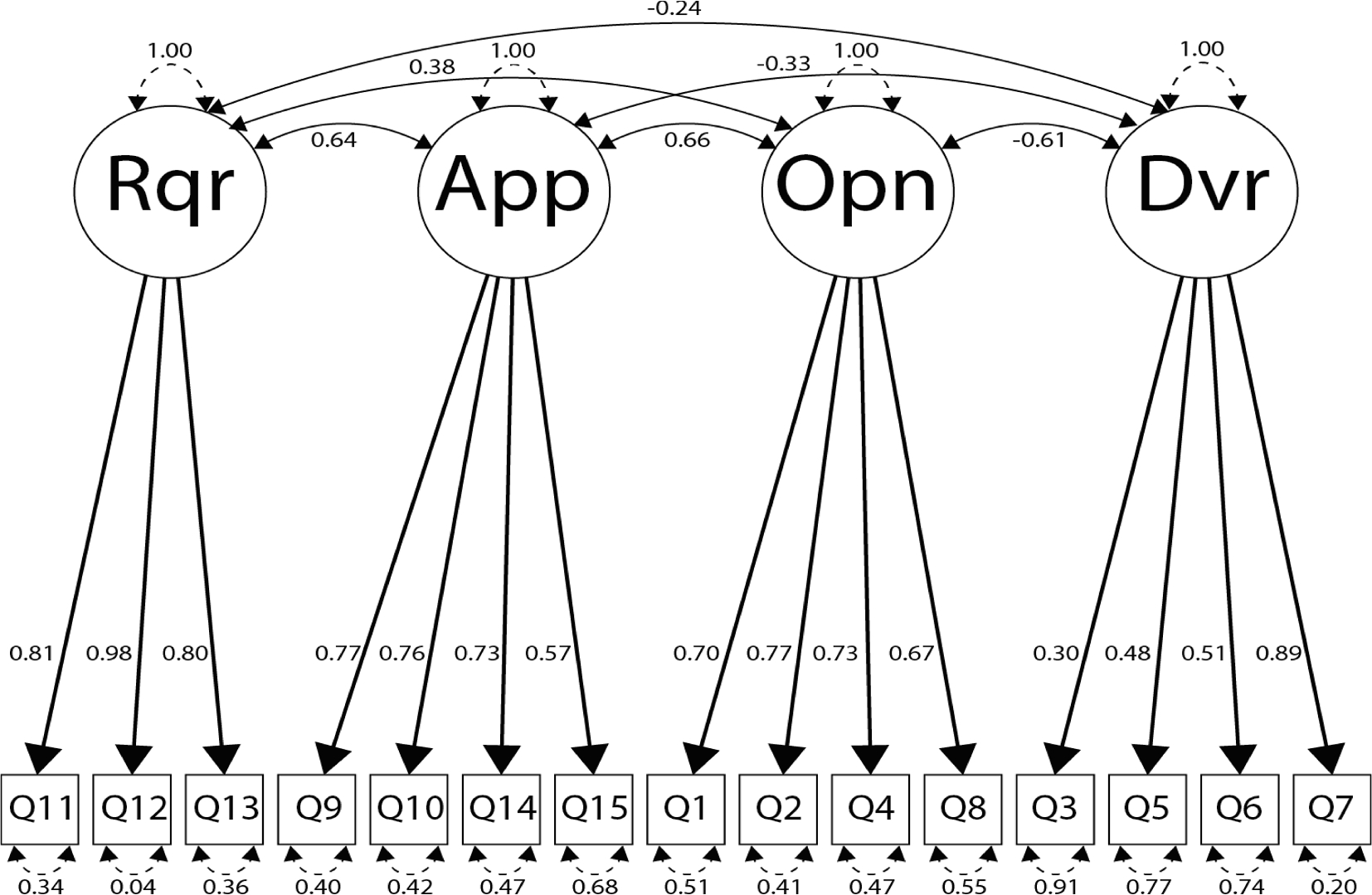
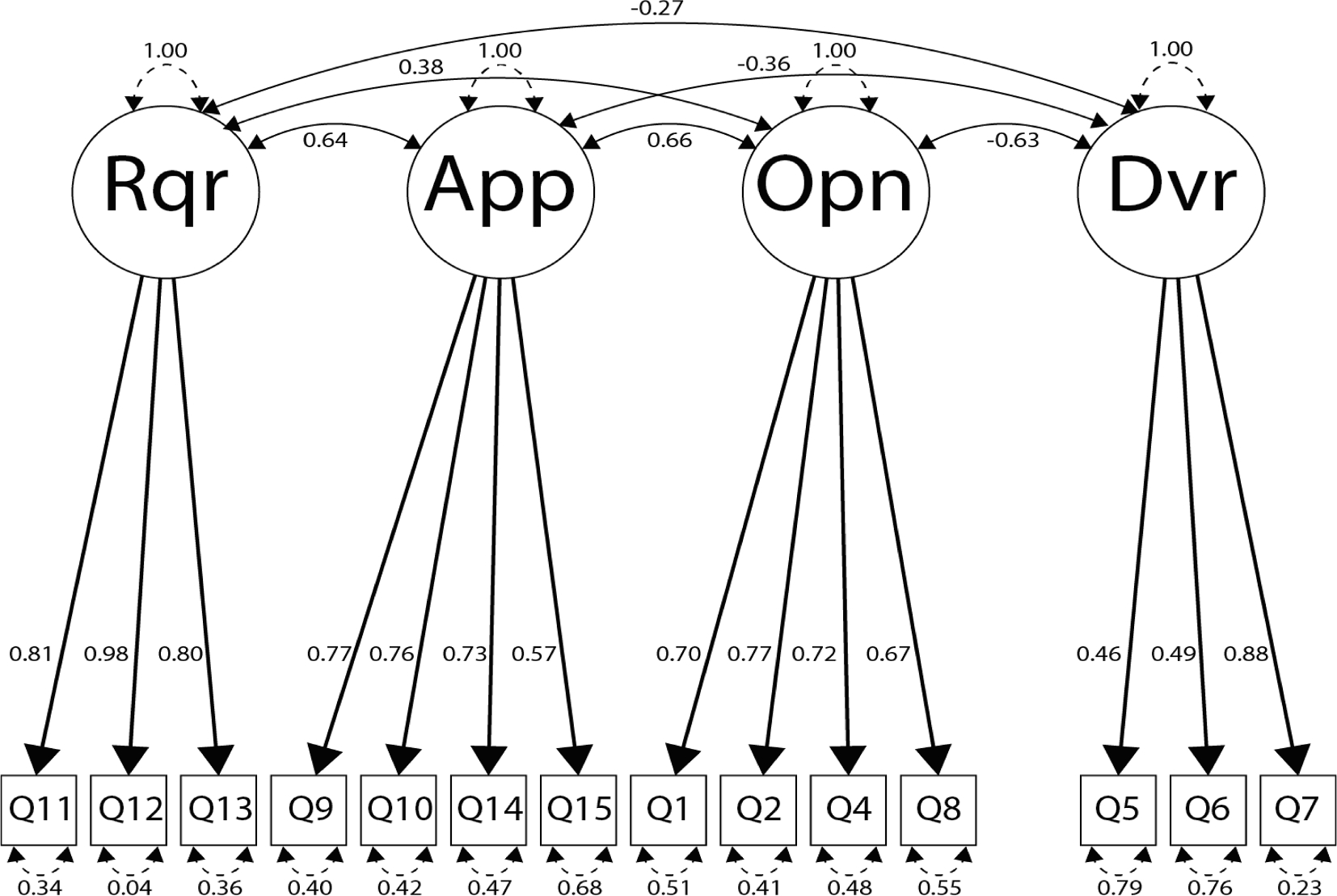
Background: Few existing evidence-based parent interventions (EBPIs) for prevention and treatment of child and youth mental health disorders are implemented in low-middle-income countries. This study aimed to translate and confirm the factor structure of the Evidence-Based Practice Attitude Scale (EBPAS-15) survey in Brazilian Portuguese with the goal of examining providers' perspective about EBPIs.
Methods: We translated and back translated the EBPAS-15 from English to Brazilian Portuguese. Participants were recruited via snowball sampling and data were collected using an online survey from July of 2018 through January of 2020. A confirmatory factor analysis was conducted to determine if the scale retained its original structure. Open-ended questions about providers' perspectives of their own clinical practice were coded using the Theoretical Domains Framework (TDF). Analyses included data from 362 clinicians (318 women, 41 men) from 20 of the 27 states of Brazil. Participants on average were 26.7 years old, held specialist degrees in the field of psychology, actively worked as therapists, and practiced in private clinics.
Results: The translation of the EBPAS to Brazilian Portuguese retained the same four-factor structure as the English version except for dropping one item from the Divergence domain. When asked about the challenges in their practices, providers generally referred to parents as clients with little skills to discipline their children and lacking knowledge about child development.
Discussion: The Brazilian version of the EBPAS-15 is promising, but future research should consider using quantitative data alongside qualitative information to better understand providers' attitudes about evidence-based interventions to inform implementation efforts.
Trial registration: N/A.
Keywords: EBPAS-15; Evidence-based parent interventions; Implementation; Provider attitude.
Conflict of interest statement
Declaration of Competing Interest The authors declare that they have no known competing financial interests or personal relationships that could have appeared to influence the work reported in this paper.
Figures
References
-
- Amaral CE, Onocko-Campos R, de Oliveira PRS, Pereira MB, Ricci ÉC, Pequeno ML, Emerich B, dos Santos RC, & Thornicroft G (2018). Systematic review of pathways to mental health care in Brazil: Narrative synthesis of quantitative and qualitative studies. International Journal of Mental Health Systems, 12. 10.1186/s13033-018-0237-8 - DOI - PMC - PubMed
-
- Andrade LH, Wang Y-P, Andreoni S, Silveira CM, Alexandrino-Silva C, Siu ER, Nishimura R, Anthony JC, Gattaz WF, Kessler RC, & Viana MC (2012). Mental Disorders in Megacities: Findings from the São Paulo Megacity Mental Health Survey, Brazil. Plos ONE, 7(2), Article e31879. 10.1371/journal.pone.0031879 - DOI - PMC - PubMed
-
- Atkins L, Francis J, Islam R, O’Connor D, Patey A, Ivers N, Foy R, Duncan EM, Colquhoun H, Grimshaw JM, Lawton R, & Michie S (2017). A guide to using the Theoretical Domains Framework of behaviour change to investigate implementation problems. Implementation Science, 12(1), 77. 10.1186/s13012-017-0605-9 - DOI - PMC - PubMed
Grants and funding
LinkOut - more resources
Full Text Sources
Medical
