Review
. 2022 Mar 31:13:858557.
doi: 10.3389/fphar.2022.858557. eCollection 2022.

How Our Continuing Studies of the Pre-clinical Inbred Mouse Models of Mesothelioma Have Influenced the Development of New Therapies

Affiliations
Review

How Our Continuing Studies of the Pre-clinical Inbred Mouse Models of Mesothelioma Have Influenced the Development of New Therapies

Bruce W S Robinson et al. Front Pharmacol. .

Abstract

Asbestos-induced preclinical mouse models of mesothelioma produce tumors that are very similar to those that develop in humans and thus represent an ideal platform to study this rare, universally fatal tumor type. Our team and a number of other research groups have established such models as a stepping stone to new treatments, including chemotherapy, immunotherapy and other approaches that have been/are being translated into clinical trials. In some cases this work has led to changes in mesothelioma treatment practice and over the last 30 years these models and studies have led to trials which have improved the response rate in mesothelioma from less than 10% to over 50%. Mouse models have had a vital role in that improvement and will continue to play a key role in the future success of mesothelioma immunotherapy. In this review we focus only on these original inbred mouse models, the large number of preclinical studies conducted using them and their contribution to current and future clinical therapy for mesothelioma.

Keywords: asbestos; cancer; chemotherapy; immunothearpy; mesothelioma.


Conflict of interest statement

The authors declare that the research was conducted in the absence of any commercial or financial relationships that could be construed as a potential conflict of interest.

Figures
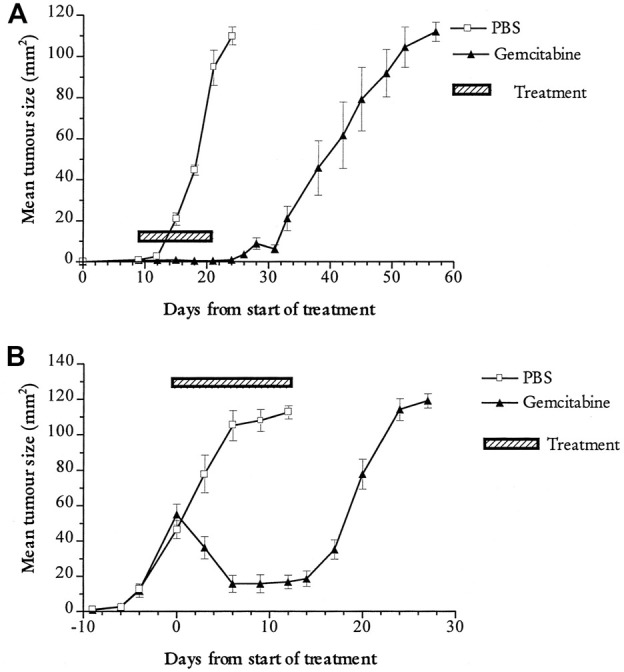
FIGURE 1
FIGURE 1
Preclinical evidence of effectiveness of chemotherapy in mesothelioma. The apoptosis-inducing chemotherapy agent gemcitabine (black triangles) induces in vivo regression of the mouse mesothelioma tumour line AB1-HA compared to mice treated with phosphate buffered saline alone (open squares) (A) Early treatment; tumour bearing mice were treated when tumours were small (∼10 mm2) (B) Late treatment. tumour bearing mice were treated when tumours were small (∼10 mm2). Mice were treated with five doses of gemcitabine or PBS injection at third daily intervals. Figure originally published in Nowak et al., 2002a. Cancer Research 62:2353-8.
FIGURE 2
FIGURE 2
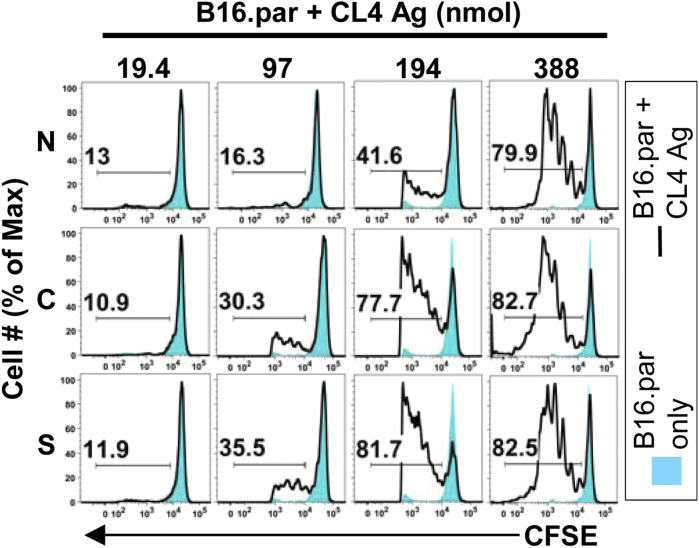
Cross presentation is sensitive to low antigen loads. Cross presentation was assessed using the in vivo Lyons-Parish assay (Lyons and Parish, 1994), in which carboxyfluorescein succinimidyl ester (CFSE) stained neoantigen specific T cells (CL4) were intravenously injected into F1 mice bearing the melanoma tumour (B16. par) bearing totals of 19.4, 97, 194 or 388 nmol of the neoantigen CL4 in either the nucleus (N), cytoplasm (C) or supernatant (S). Proliferation of T cells in the tumor draining lymph node on day 11 is shown by the number and size of peaks to the left of the parental non-proliferating single blue peak. Figure originally published in Anyaegbu et al., 2014. PLOS One 9: e107894.
FIGURE 3
FIGURE 3
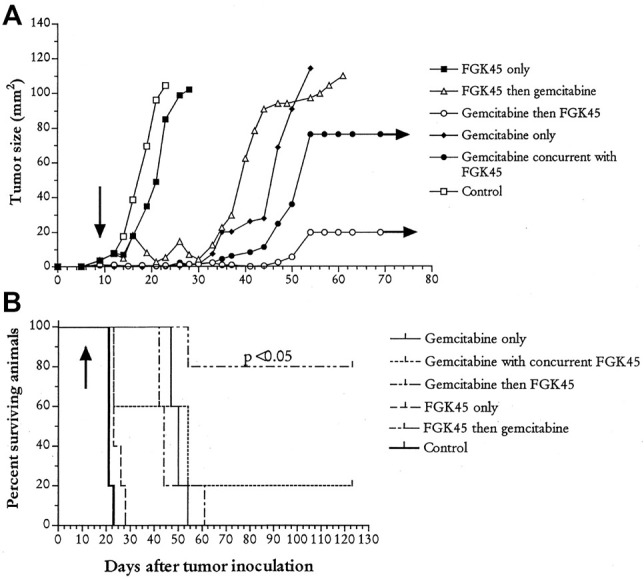
Synergy between chemotherapy and immunotherapy. Mice were injected with mesothelioma AB1-HA tumor cells and then treated on day nine with 120 ug/Gram gemcitabine intraperitoneally and/or 100 ug of FGK45 (activating anti-CD40) three times. Groups of mice received indicated treatment regimens; control animals were treated with PBS (A) Tumor growth rates and (B) survival curves. Arrows represent the start of treatment. Figure originally published in Nowak et al., 2003b. Journal of Immunology 170; 4905-4913.
FIGURE 4
FIGURE 4
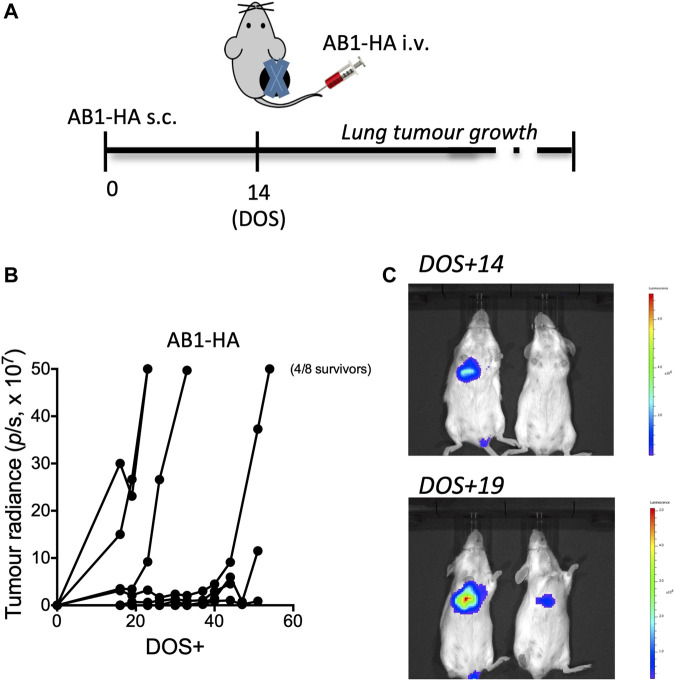
Early detection of metastatic lung disease by immune recognition versus PET-CT. To compare immune responses to neo-antigens with PET-CT in terms of sensitivity to recurrence of metastatic tumour. Mice received AB1-HA cells day 0 and AB1-HA_LUC cells intravenously on day 14. Tumours were surgically resected to mimic cancer surgery and lung tumour growth, as a measure of the appearance of metastases, was measured in an invitro imaging system (IVIS) (A) Experimental plan (B) lung tumour growth by IVIS (C) IVIS images of mice. DOS—day of surgery. Figure originally published in Fear et al., 2019. Scientific Reports 9:14,640.
FIGURE 5
FIGURE 5
Immune responses to candidate asbestos-induced neo-antigens in murine mesothelioma. Immune responses against a panel of neo-antigen candidates predicted from genome sequencing (A) Representative duplicate wells from interferon-γ ELISPOT analysis of total tumour draining lymph node cell preparations from non-treated AB1 tumor-bearing mice against pools of predicted neo-antigenic peptides (B) Summary of ELISPOT data showing mean ± SD for the deconvolution of peptide Pool B. Mutant (Δ) peptide; wildtype (WT) peptide for indicated genes harboring single nucleotide variants. Figure originally published in Creaney et al., 2015. Oncoimmunology 4: e1011492.

References

    1. Anyaegbu C. C., Lake R. A., Heel K., Robinson B. W., Fisher S. A. (2014). Chemotherapy Enhances Cross-Presentation of Nuclear Tumor Antigens. PLoS One 9 (9), e107894. 10.1371/journal.pone.0107894 - DOI - PMC - PubMed
    1. Aston W. J., Hope D. E., Nowak A. K., Robinson B. W., Lake R. A., Lesterhuis W. J. (2017). A Systematic Investigation of the Maximum Tolerated Dose of Cytotoxic Chemotherapy with and without Supportive Care in Mice. Bmc Cancer 17 (1), 684–710. 10.1186/s12885-017-3677-7 - DOI - PMC - PubMed
    1. Bielefeldt-Ohmann H., Fitzpatrick D. R., Marzo A. L., Jarnicki A. G., Himbeck R. P., Davis M. R., et al. (1994). Patho- and Immunobiology of Malignant Mesothelioma: Characterisation of Tumour Infiltrating Leucocytes and Cytokine Production in a Murine Model. Cancer Immunol. Immunother. 39 (6), 347–359. 10.1007/BF01534421 - DOI - PMC - PubMed
    1. Bielefeldt-Ohmann H., Fitzpatrick D. R., Marzo A. L., Jarnicki A. G., Musk A. W., Robinson B. W. (1995). Potential for Interferon-Alpha-Based Therapy in Mesothelioma: Assessment in a Murine Model. J. Interferon Cytokine Res. 15 (3), 213–223. 10.1089/jir.1995.15.213 - DOI - PubMed
    1. Broomfield S., Currie A., van der Most R. G., Brown M., van Bruggen I., Robinson B. W., et al. (2005). Partial, but Not Complete, Tumor-Debulking Surgery Promotes Protective Antitumor Memory when Combined with Chemotherapy and Adjuvant Immunotherapy. Cancer Res. 65 (17), 7580–7584. 10.1158/0008-5472.CAN-05-0328 - DOI - PubMed

LinkOut - more resources