


Isolated Superior Mesenteric Artery Dissection: A Novel Etiology and a Review
- PMID: 35432650
- PMCID: PMC8958406
- DOI: 10.3400/avd.ra.21-00055
Isolated Superior Mesenteric Artery Dissection: A Novel Etiology and a Review
Abstract
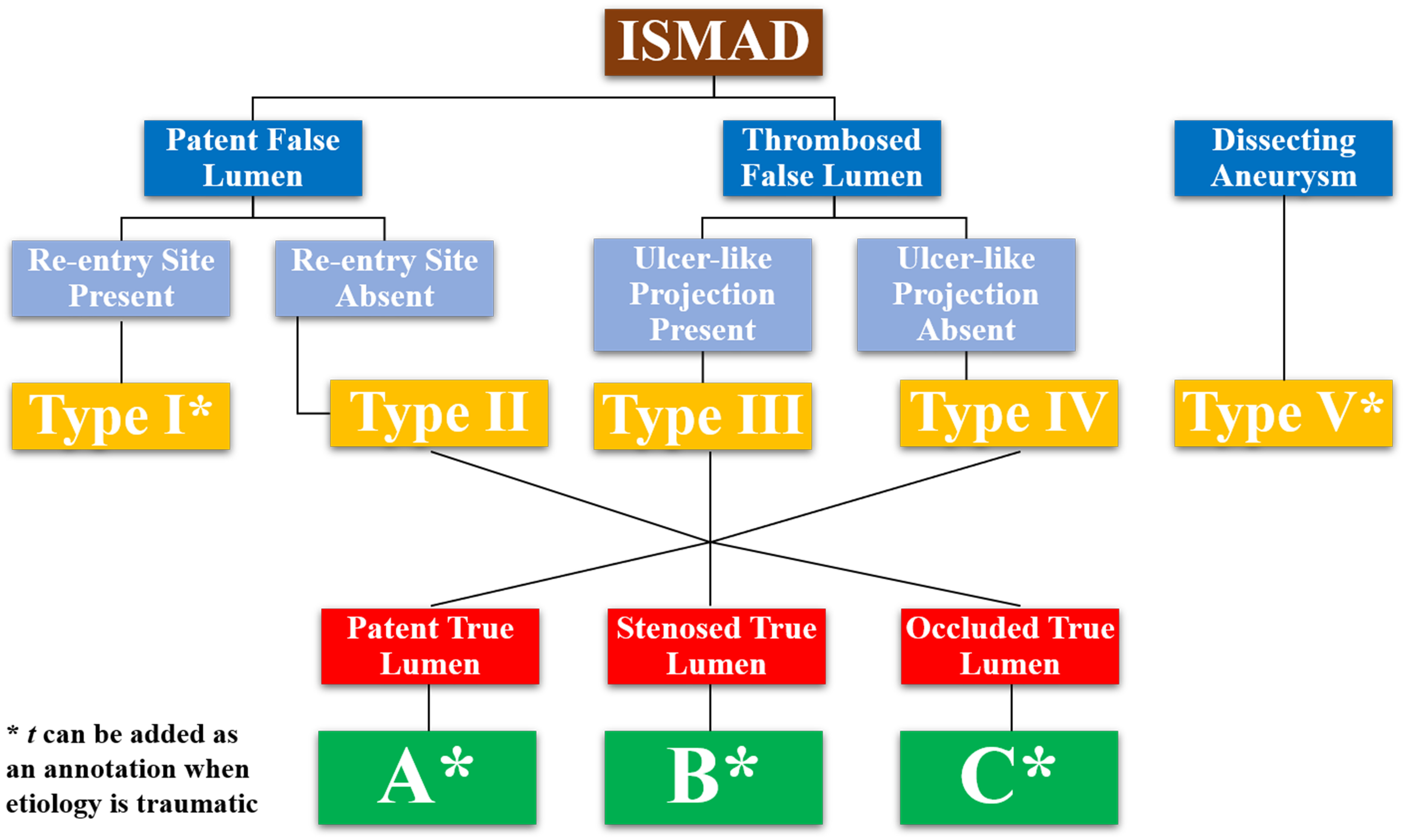
Isolated superior mesenteric artery dissection (ISMAD) is a rare pathology with multifactorial etiology. The aim of this article is to provide a narrative review of the latest literature about ISMAD. Case reports, series, and recent meta-analyses were included. This review is introduced with a brief case report of a rare etiology of ISMAD, followed by a discussion of its etiology, clinical presentation, diagnosis, classification, and treatment, and we report a new cause of ISMAD, that is, blunt abdominal trauma. The etiology of ISMAD is multifactorial, consisting of anatomic, genetic, and systemic components. ISMAD is more common among middle-aged males and in East Asia. Its clinical presentation ranges from asymptomatic to mesenteric ischemia, albeit mortality remains <1%. It is diagnosed and classified mostly by computed tomography angiography, and there are five classification systems for ISMAD, though traumatic etiology may be added. The treatment of ISMAD is mostly conservative, with a success rate exceeding 90%. Endovascular stenting is second line, reserved so far for failed medical management, though its role is expanding to include earlier management of symptomatic patients, while open surgical repair is left for acute mesenteric ischemia with bowel compromise.
Keywords: ISMAD; blunt trauma; dissection; endovascular; superior mesenteric artery.
© 2022 The Editorial Committee of Annals of Vascular Diseases.
Conflict of interest statement
Disclosure StatementAll authors have no conflict of interest to declare.
Figures
References
-
- Erbel R, Aboyans V, Boileau C, et al. 2014 ESC Guidelines on the diagnosis and treatment of aortic diseases: document covering acute and chronic aortic diseases of the thoracic and abdominal aorta of the adult. The Task Force for the Diagnosis and Treatment of Aortic Diseases of the European Society of Cardiology (ESC). Eur Heart J 2014; 35: 2873-926. - PubMed
-
- Patel T, Kuladhipati I, Shah S. Successful percutaneous endovascular management of acute post-traumatic superior mesenteric artery dissection using a transradial approach. J Invasive Cardiol 2010; 22: E61-4. - PubMed
-
- Bauersfeld SR. Dissecting aneurysm of the aorta; a presentation of 15 cases and a review of the recent literature. Ann Intern Med 1947; 26: 873-89. - PubMed
