


KL2 scholars' perceptions of factors contributing to sustained translational science career success
- PMID: 35433037
- PMCID: PMC9003634
- DOI: 10.1017/cts.2021.886
KL2 scholars' perceptions of factors contributing to sustained translational science career success
Abstract
Introduction: Identifying the most effective ways to support career development of early stage investigators in clinical and translational science should yield benefits for the biomedical research community. Institutions with Clinical and Translational Science Awards (CTSA) offer KL2 programs to facilitate career development; however, the sustained impact has not been widely assessed.
Methods: A survey comprised of quantitative and qualitative questions was sent to 2144 individuals that had previously received support through CTSA KL2 mechanisms. The 547 responses were analyzed with identifying information redacted.
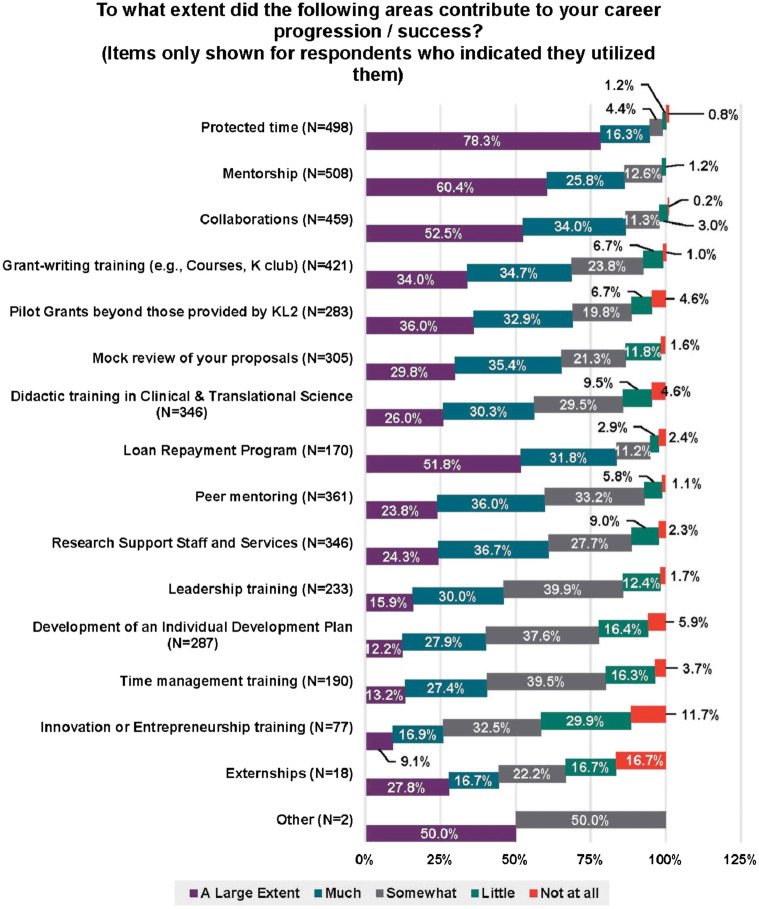
Results: Respondents held MD (47%), PhD (36%), and MD/PhD (13%) degrees. After KL2 support was completed, physicians' time was divided 50% to research and 30% to patient care, whereas PhD respondents devoted 70% time to research. Funded research effort averaged 60% for the cohort. Respondents were satisfied with their career progression. More than 95% thought their current job was meaningful. Two-thirds felt confident or very confident in their ability to sustain a career in clinical and translational research. Factors cited as contributing to career success included protected time, mentoring, and collaborations.
Conclusion: This first large systematic survey of KL2 alumni provides valuable insight into the group's perceptions of the program and outcome information. Former scholars are largely satisfied with their career choice and direction, national recognition of their expertise, and impact of their work. Importantly, they identified training activities that contributed to success. Our results and future analysis of the survey data should inform the framework for developing platforms to launch sustaining careers of translational scientists.
Keywords: Career development; career satisfaction; career success; translational science; work impact.
© The Author(s) 2022.
Conflict of interest statement
The authors have no conflicts of interest to declare.
Figures
References
-
- Sweeney C, Schwartz LS, Toto R, Merchant C, Fair AS, Gabrilove JL. Transition to independence: characteristics and outcomes of mentored career development (KL2) scholars at clinical and translational science award institutions. Academic Medicine 2017; 92(4): 556–562. DOI 10.1097/acm.0000000000001473. - DOI - PMC - PubMed
-
- Harris PA, Taylor R, Thielke R, Payne J, Gonzalez N, Conde JG. Research electronic data capture (REDCap)--a metadata-driven methodology and workflow process for providing translational research informatics support. Journal of Biomedical Informatics 2009; 42(2): 377–381. DOI 10.1016/j.jbi.2008.08.010. - DOI - PMC - PubMed
-
- Cottler LB, Green AI, Pincus HA, McIntosh S, Humensky JL, Brady K. Building capacity for collaborative research on opioid and other substance use disorders through the Clinical and Translational Science Award Program. Journal of Clinical and Translational Science 2020; 4(2): 81–89. DOI 10.1017/cts.2019.441. - DOI - PMC - PubMed
Grants and funding
LinkOut - more resources
Full Text Sources
Miscellaneous