


Tobacco smoking changes during the first pre-vaccination phases of the COVID-19 pandemic: A systematic review and meta-analysis
- PMID: 35434579
- PMCID: PMC9002019
- DOI: 10.1016/j.eclinm.2022.101375
Tobacco smoking changes during the first pre-vaccination phases of the COVID-19 pandemic: A systematic review and meta-analysis
Abstract
Background: Globally, tobacco smoking remains the largest preventable cause of premature death. The COVID-19 pandemic has forced nations to take unprecedented measures, including 'lockdowns' that might impact tobacco smoking behaviour. We performed a systematic review and meta-analyses to assess smoking behaviour changes during the early pre-vaccination phases of the COVID-19 pandemic in 2020.
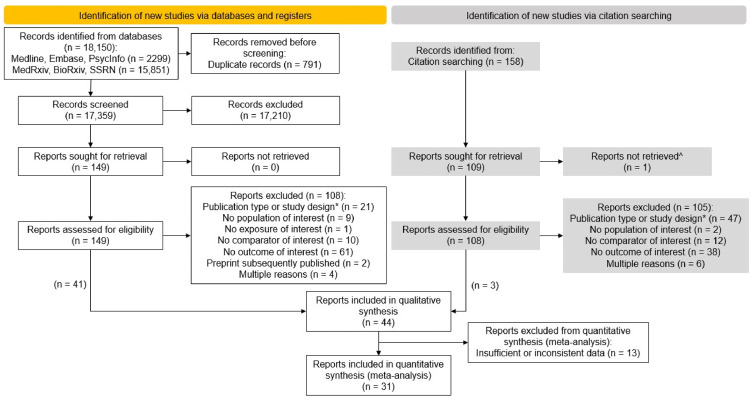
Methods: We searched Medline/Embase/PsycINFO/BioRxiv/MedRxiv/SSRN databases (January-November 2020) for published and pre-print articles that reported specific smoking behaviour changes or intentions after the onset of the COVID-19 pandemic. We used random-effects models to pool prevalence ratios comparing the prevalence of smoking during and before the pandemic, and the prevalence of smoking behaviour changes during the pandemic. The PROSPERO registration number for this systematic review was CRD42020206383.
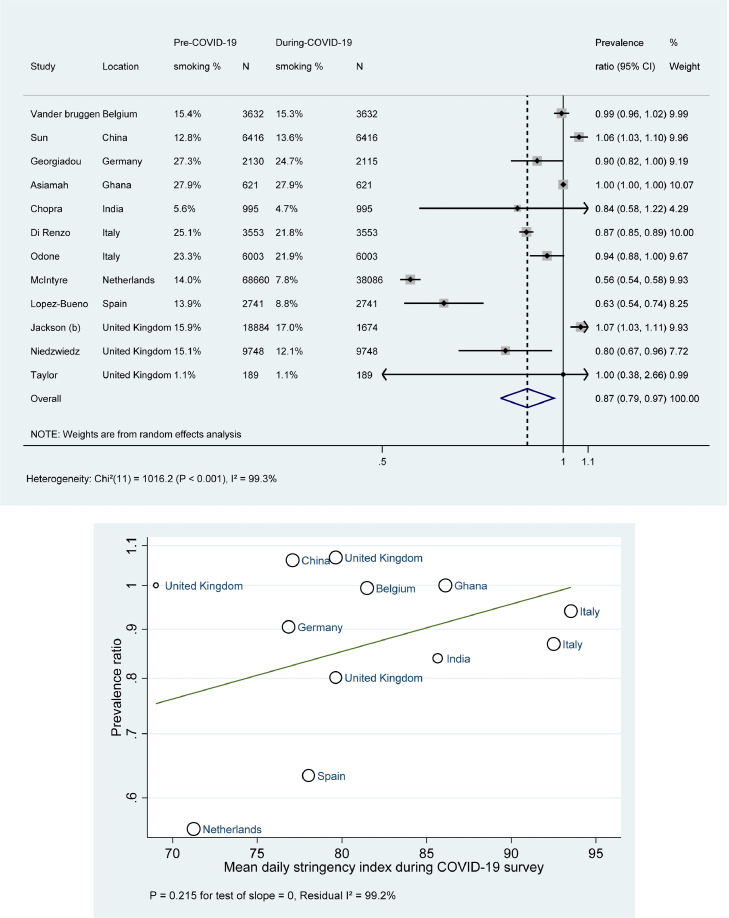
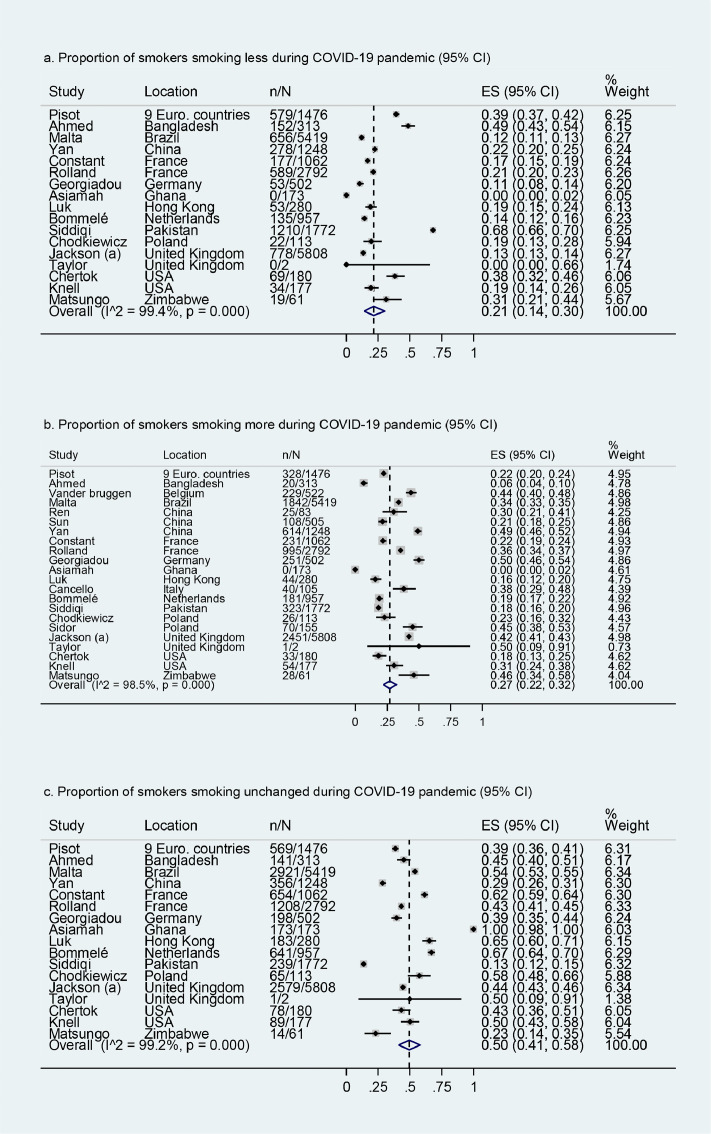
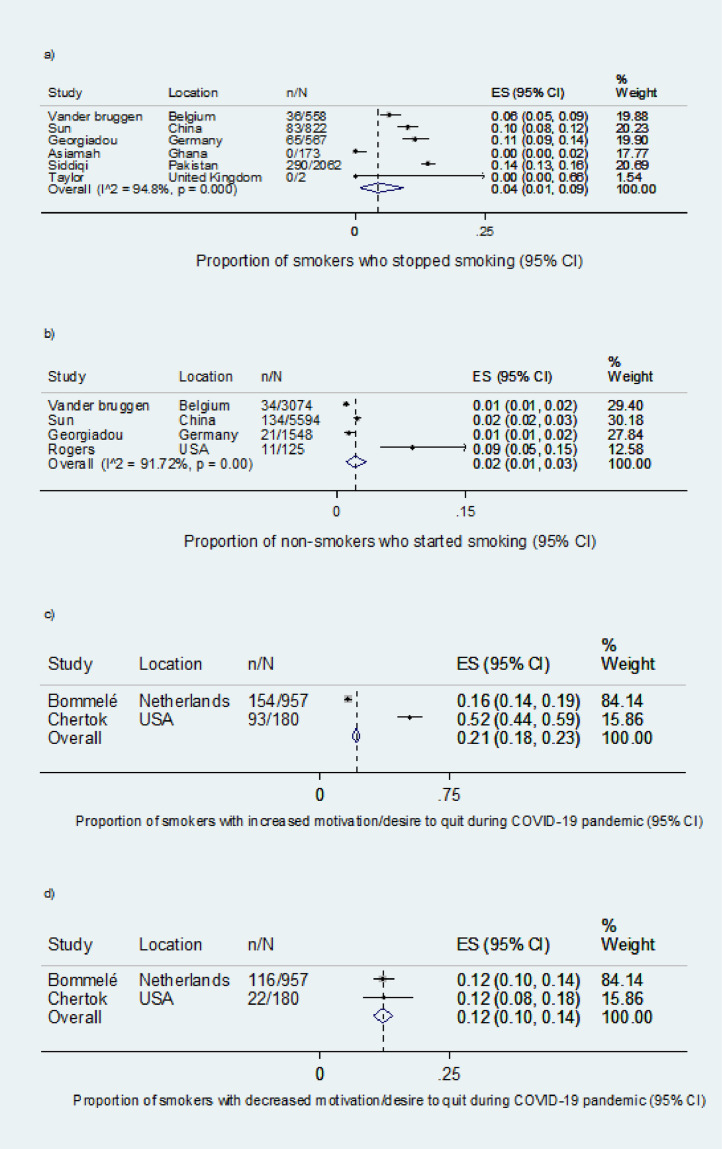
Findings: 31 studies were included in meta-analyses, with smoking data for 269,164 participants across 24 countries. The proportion of people smoking during the pandemic was lower than that before, with a pooled prevalence ratio of 0·87 (95%CI:0·79-0·97). Among people who smoke, 21% (95%CI:14-30%) smoked less, 27% (95%CI:22-32%) smoked more, 50% (95%CI:41%-58%) had unchanged smoking and 4% (95%CI:1-9%) reported quitting smoking. Among people who did not smoke, 2% (95%CI:1-3%) started smoking during the pandemic. Heterogeneity was high in all meta-analyses and so the pooled estimates should be interpreted with caution (I2 >91% and p-heterogeneity<0·001). Almost all studies were at high risk of bias due to use of non-representative samples, non-response bias, and utilisation of non-validated questions.
Interpretation: Smoking behaviour changes during the first phases of the COVID-19 pandemic in 2020 were highly mixed. Meta-analyses indicated that there was a relative reduction in overall smoking prevalence during the pandemic, while similar proportions of people who smoke smoked more or smoked less, although heterogeneity was high. Implementation of evidence-based tobacco control policies and programs, including tobacco cessation services, have an important role in ensuring that the COVID-19 pandemic does not exacerbate the smoking pandemic and associated adverse health outcomes.
Funding: No specific funding was received for this study.
Keywords: COVID-19; Coronavirus; Smoking; Systematic review; Tobacco.
© 2022 Published by Elsevier Ltd.
Conflict of interest statement
KC is co-PI of an investigator-initiated trial of cervical screening, Compass, run by the VCS Foundation, which is a government-funded not-for-profit charity; the VCS Foundation has received equipment and a funding contribution from Roche Molecular Diagnostics. She is also co-PI on a major investigator-initiated implementation program Elimination of Cervical Cancer in the Western Pacific (ECCWP) which will receive support from the Minderoo Foundation, the Frazer Family Foundation and equipment donations from Cepheid Inc. Neither KC nor her institution on her behalf receives direct funding from industry for any project. KC's research is supported via a National Health and Research Council Australia Leadership Fellowship (NHMRC; APP1194679). KC chairs and participates in a number of advisory committees to government and not-for-profit agencies; no committee participation for commercial companies. MC is an investigator on an investigator-initiated trial of cytology and primary HPV screening in Australia (‘Compass’) (ACTRN12613001207707 and NCT02328872), which is conducted and funded by the VCS Foundation a government-funded not-for-profit charity. The VCS Foundation has received equipment and a funding contribution for the Compass trial from Roche Molecular Systems. However neither MC nor his institution on his behalf (The Daffodil Centre, a joint venture between Cancer Council NSW and The University of Sydney) receive direct or indirect funding from industry for Compass Australia or any other project. MW's institution (The Daffodil Centre) received competitive grant and contract funding from the Australian Government for various projects outside the submitted work on which she is a named investigator, and received an honorarium from scientific meeting organisers for a presentation outside the submitted work. Where authors are identified as personnel of the International Agency for Research on Cancer or World Health Organization, the authors alone are responsible for the views expressed in this article and they do not necessarily represent the decisions, policy or views of the International Agency for Research on Cancer or World Health Organization. The opinions expressed in this article are the authors own and do not reflect the view of the National Institutes of Health, the Department of Health and Human Services, or the United States Government.
Figures
References
-
- Ritche H, Mathieu E, Rodés-Guirao L, et al. Coronavirus Pandemic (COVID-19). Our World in Data; 2020. [cited 2022 3 March]. Available from: https://ourworldindata.org/coronavirus [Online Resource].
-
- Ghebreyesus T.A. World Health Organization; 2020. WHO Director-General's Opening Remarks at the Media Briefing on COVID-19 - 11 March 2020. [Media Release - available from https://web.archive.org/web/20200502133342/https:/www.who.int/dg/speeche...
-
- Pfefferbaum B., North C.S. Mental health and the COVID-19 pandemic. N Engl J Med. 2020;383(6):510–512. - PubMed
-
- Action on Smoking and Health . Acting on Smoking and Health; 2020. A Million People Have Stopped Smoking Since the COVID Pandemic Hit Britain - 15 July 2020.https://ash.org.uk/media-and-news/press-releases-media-and-news/pandemic... [Media release - Available from:
Grants and funding
LinkOut - more resources
Full Text Sources
