


Multi-omics approaches for biomarker discovery in early ovarian cancer diagnosis
- PMID: 35439677
- PMCID: PMC9035645
- DOI: 10.1016/j.ebiom.2022.104001
Multi-omics approaches for biomarker discovery in early ovarian cancer diagnosis
Abstract
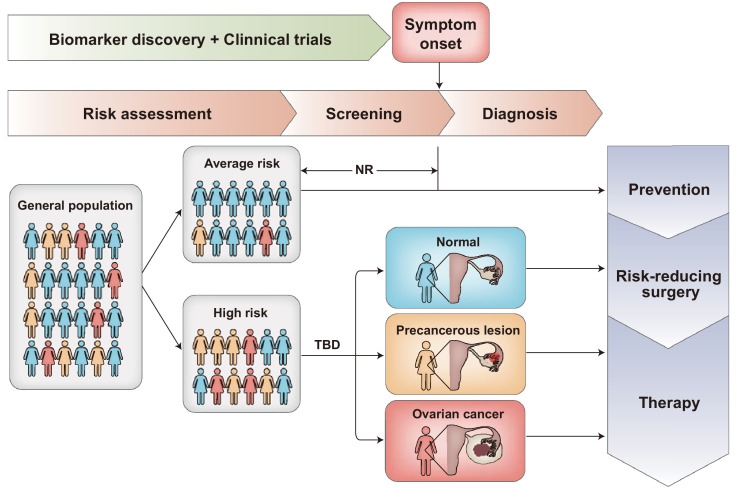
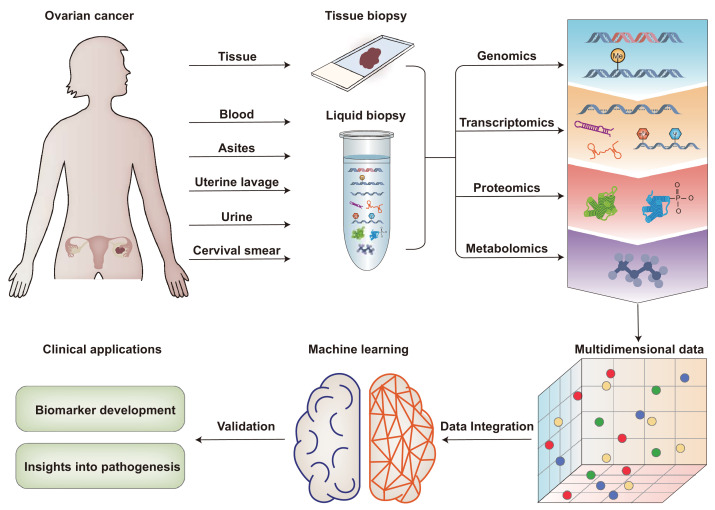
Ovarian cancer (OC) is a heterogeneous disease with the highest mortality rate and the poorest prognosis among gynecological malignancies. Because of the absence of specific early symptoms, most OC patients are often diagnosed at late stages. Thus, improved biomarkers of OC for use in research and clinical practice are urgently needed. The last decade has seen increasingly rapid advances in sequencing and biotechnological methodologies. Consequently, multiple omics technologies, including genomic/transcriptomic sequencings and proteomic/metabolomic mass spectra, have been widely applied to analyze tissue- and liquid-derived samples from OC patients. The integration of multi-omics data has increased our knowledge of the disease and identified valuable OC biomarkers. In this review, we summarize the recent advances and perspectives in the use of multi-omics technologies in OC research and highlight potential applications of multi-omics for identifying novel biomarkers and improving clinical assessments.
Keywords: Biomarker; Multi-omics; Ovarian cancer; Translational medicine.
Copyright © 2022 The Author(s). Published by Elsevier B.V. All rights reserved.
Conflict of interest statement
Declaration of interests The authors declare that they have no known competing financial interests or personal relationships that could have appeared to influence the work reported in this paper.
Figures
References
-
- Sung H., Ferlay J., Siegel R.L., et al. Global cancer statistics 2020: GLOBOCAN estimates of incidence and mortality worldwide for 36 cancers in 185 countries. CA Cancer J Clin. 2021;71(3):209–249. - PubMed
-
- Siegel R.L., Miller K.D., Fuchs H.E., Jemal A. Cancer Statistics, 2021. CA Cancer J Clin. 2021;71(1):7–33. - PubMed
-
- Lheureux S., Gourley C., Vergote I., Oza A.M. Epithelial ovarian cancer. Lancet. 2019;393(10177):1240–1253. - PubMed
Publication types
MeSH terms
Substances
LinkOut - more resources
Full Text Sources
Medical
