Asymptomatic COVID-19 in the elderly: dementia and viral clearance as risk factors for disease progression
- PMID: 35441127
- PMCID: PMC8987012
- DOI: 10.12688/gatesopenres.13357.2
Asymptomatic COVID-19 in the elderly: dementia and viral clearance as risk factors for disease progression
Abstract
Background: SARS-CoV-2 infected individuals ≥60 years old have the highest hospitalization rates and represent >80% fatalities. Within this population, those in long-term facilities represent >50% of the total COVID-19 related deaths per country. Among those without symptoms, the rate of pre-symptomatic illness is unclear, and potential predictors of progression for symptom development are unknown. Our objective was to delineate the natural evolution of asymptomatic SARS-CoV-2 infection in elders and identify determinants of progression.
Methods: We established a medical surveillance team monitoring 63 geriatric institutions in Buenos Aires, Argentina during June-July 2020. When an index COVID-19 case emerged, we tested all other eligible asymptomatic elders ≥75 or >60 years old with at least 1 comorbidity. SARS-CoV-2 infected elders were followed for 28 days. Disease was diagnosed when any COVID-19 manifestation occurred. SARS-CoV-2 load at enrollment, shedding on day 15, and antibody responses were also studied.
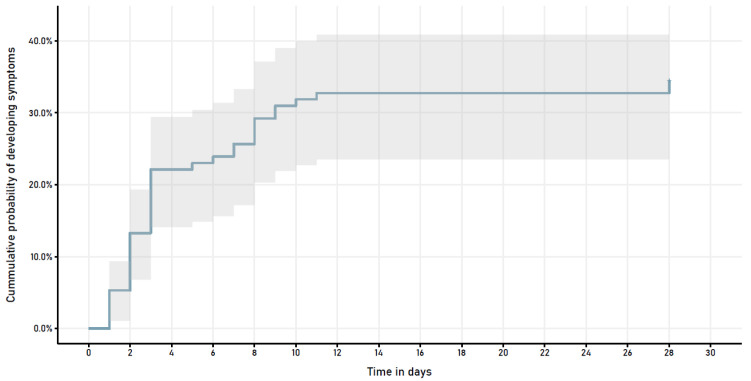
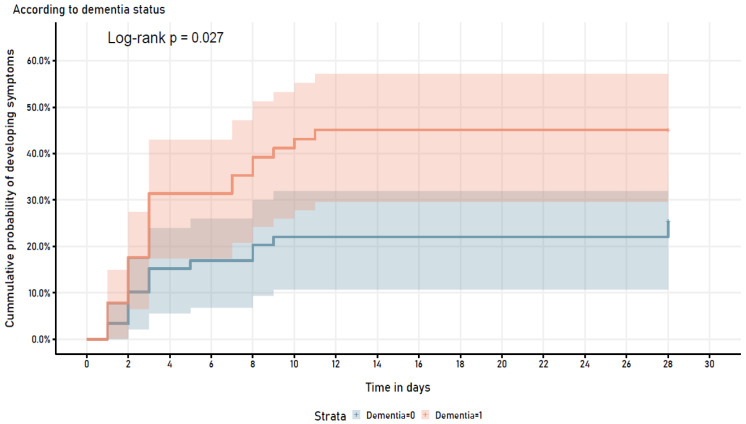
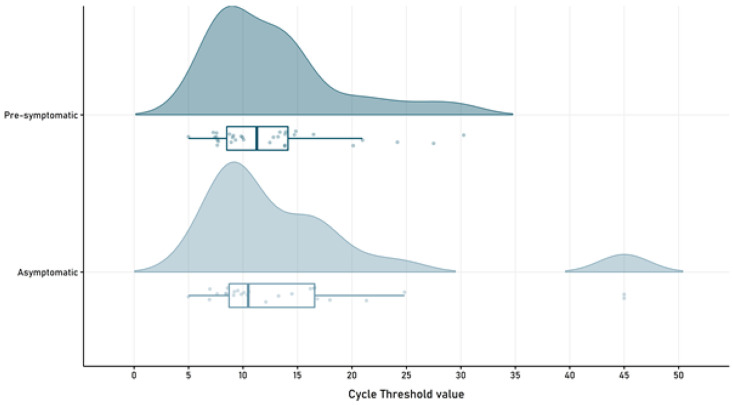
Results: After 28 days of follow-up, 74/113(65%) SARS-CoV-2-infected elders remained asymptomatic. 54% of pre-symptomatic patients developed hypoxemia and ten pre-symptomatic patients died. Dementia was the only clinical risk factor associated with disease(OR 2.41(95%CI=1.08, 5.39). In a multivariable logistic regression model, dementia remained as risk factor for COVID-19 severe disease. Furthermore, dementia status showed a statistically significant different trend when assessing the cumulative probability of developing COVID-19 symptoms(log-rank p=0.027). On day 15, SARS-CoV-2 was detectable in 30% of the asymptomatic group while in 61% of the pre-symptomatic(p=0.012). No differences were observed among groups in RT-PCR mean cycle threshold at enrollment(p=0.391) and in the rates of antibody seropositivity(IgM and IgG against SARS-CoV-2).
Conclusions: In summary, 2/3 of our cohort of SARS-CoV-2 infected elders from vulnerable communities in Argentina remained asymptomatic after 28 days of follow-up with high mortality among those developing symptoms. Dementia and persistent SARS-CoV-2 shedding were associated with progression from asymptomatic to symptomatic infection.
Keywords: COVID-19; asymptomatic; dementia; elders; geriatric institutions; long-term facilities; pre-symptomatic; risk factors.
Copyright: © 2022 Esteban I et al.
Conflict of interest statement
Competing interests: Declaration of interests: I.E., G.B., C.A., M.B., V.Z., C.J.W., M.T.C., D.W., R.L., and G.P.M. declare no conflict of interest. FPP reports grants and non-financial support from Novavax; personal fees from Medimmune, grants and personal fees from Janssen, personal fees from Sanofi, personal fees from Bavarian Nordic, personal fees from Pfizer, personal fees from Merck, personal fees from ArkBio, personal fees from VirBio, personal fees from Regeneron, personal fees from Daiichi Sankyo, all outside the submitted work.
Figures
References
Associated data
LinkOut - more resources
Full Text Sources
Miscellaneous