


How informal healthcare providers improve uptake of HIV testing: qualitative results from a randomized controlled trial
- PMID: 35442219
- PMCID: PMC9262827
- DOI: 10.1097/QAD.0000000000003227
How informal healthcare providers improve uptake of HIV testing: qualitative results from a randomized controlled trial
Abstract
Objective: Uganda is HIV-endemic with a prevalence of 5.7%. Lack of epidemic control has been attributed to low engagement with HIV testing. Collaborating with informal healthcare providers, such as traditional healers, has been proposed as a strategy to increase testing uptake. We explored acceptability and implementation of an HIV testing program where traditional healers delivered point-of-care testing and counseling to adults of unknown serostatus (clinicaltrials.gov NCT#03718871).
Methods: This study was conducted in rural, southwestern Uganda. We interviewed participating traditional healers ( N = 17) and a purposive sample of trial participants ( N = 107). Healers were practicing within 10 km of Mbarara township, and 18+ years old. Participants were 18+ years old; sexually active; had received care from participating healers; self-reported not receiving an HIV test in prior 12 months; and not previously diagnosed with HIV infection. Interviews explored perceptions of a healer-delivered HIV testing model and were analyzed following a content-analysis approach.
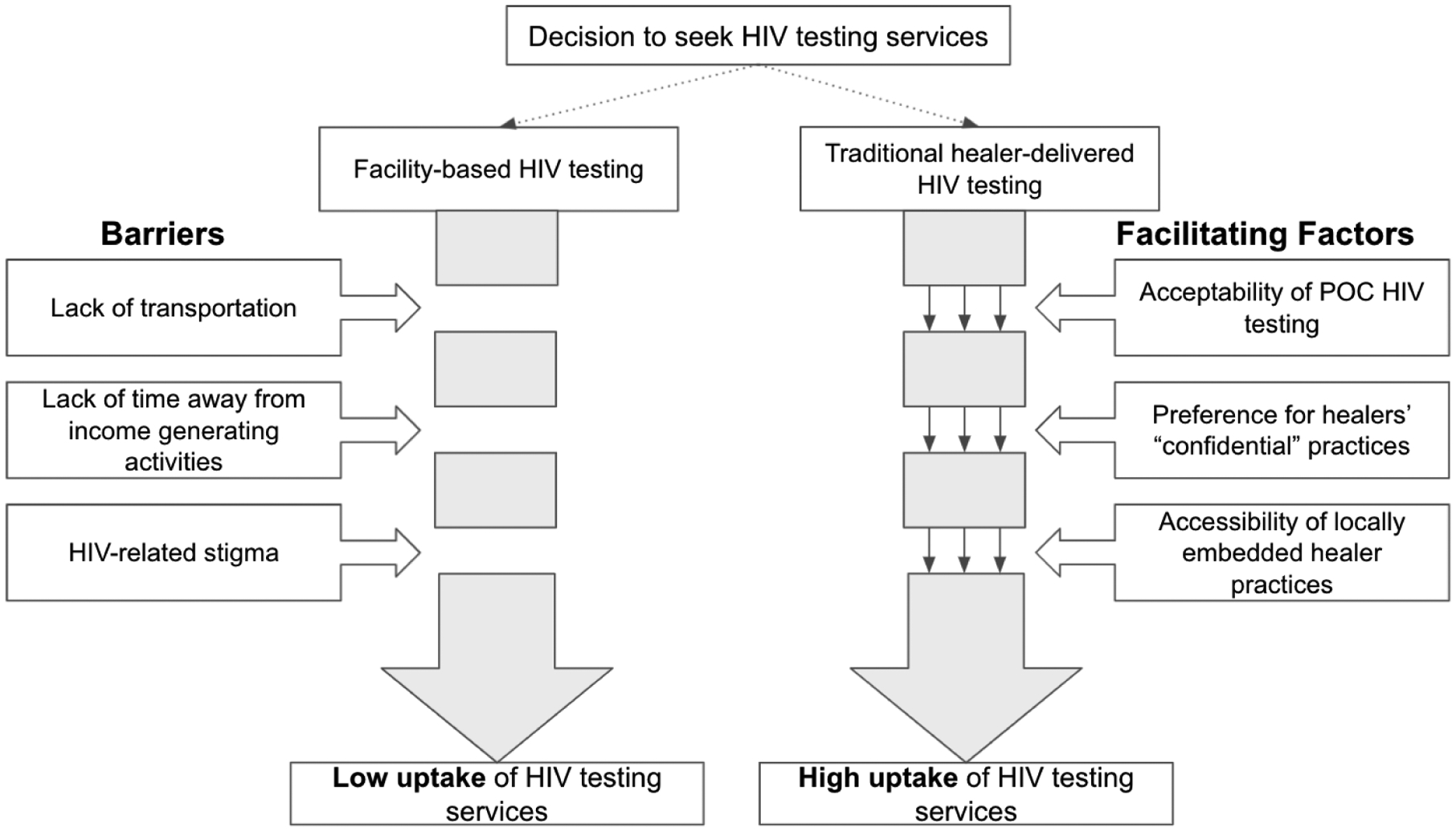
Results: Most participants were female individuals ( N = 68, 55%). Healer-delivered HIV testing overcame structural barriers, such as underlying poverty and rural locations that limited use, as transportation was costly and often prohibitive. Additionally, healers were located in villages and communities, which made services more accessible compared with facility-based testing. Participants also considered healers trustworthy and 'confidential'. These qualities explain some preference for healer-delivered HIV testing, in contrast to 'stigmatizing' biomedical settings.
Conclusion: Traditional healer-delivered HIV testing was considered more confidential and easily accessible compared with clinic-based testing. Offering services through traditional healers may improve uptake of HIV testing services in rural, medically pluralistic communities.
Copyright © 2022 The Author(s). Published by Wolters Kluwer Health, Inc.
Conflict of interest statement
Figures
References
-
- Health TLP. HIV 40: inequalities fuel pandemics. The Lancet Public Health. 2021. Jul 1;6(7):e434. - PubMed
-
- Ugandan Ministry of Health. Uganda Population-based HIV Impact Assessment (UPHIA) 2016–2017. https://www.afro.who.int/sites/default/files/2017-08/UPHIA%20Uganda%20fa.... 2017. Accessed April 30, 2021.
