


Smoking: a leading factor for the death of chronic respiratory diseases derived from Global Burden of Disease Study 2019
- PMID: 35443660
- PMCID: PMC9019969
- DOI: 10.1186/s12890-022-01944-w
Smoking: a leading factor for the death of chronic respiratory diseases derived from Global Burden of Disease Study 2019
Abstract
Background: Smoking is believed as one of the major risk factors resulting in a variety of non-communicable diseases, such as lung cancer and chronic respiratory diseases (CRDs). However, the global burden of CRDs attributed to smoking has not been systematically studied, particularly across different temporal and spatial scales.
Methods: We conducted a systematic analysis of the Global Burden of CRDs and related risk factors using data from the Global Burden of Disease Study 2019. Incidence, death, risk factors, and other parameters such as estimated annual percentage change have been analyzed. We also compared various risk factors across regions, countries, and genders.
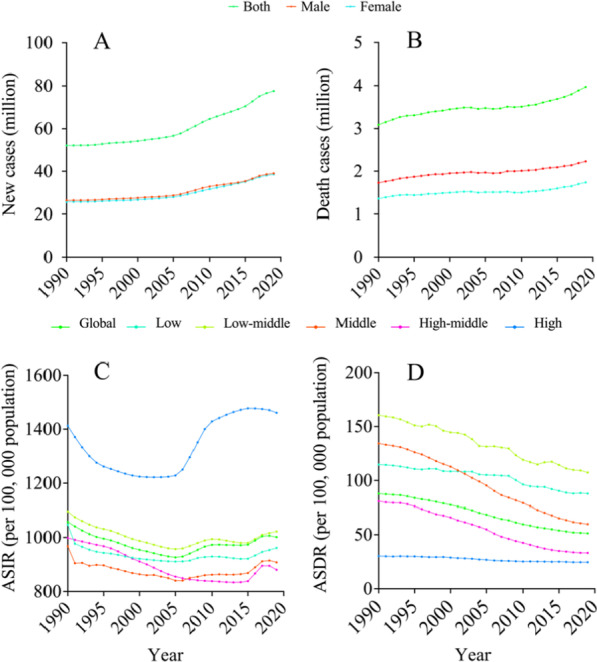
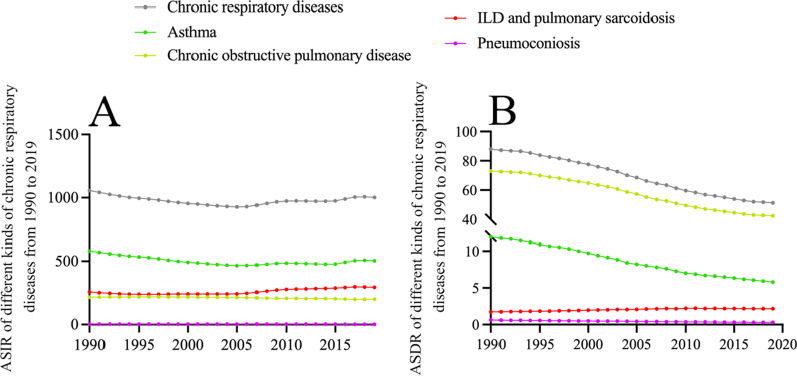
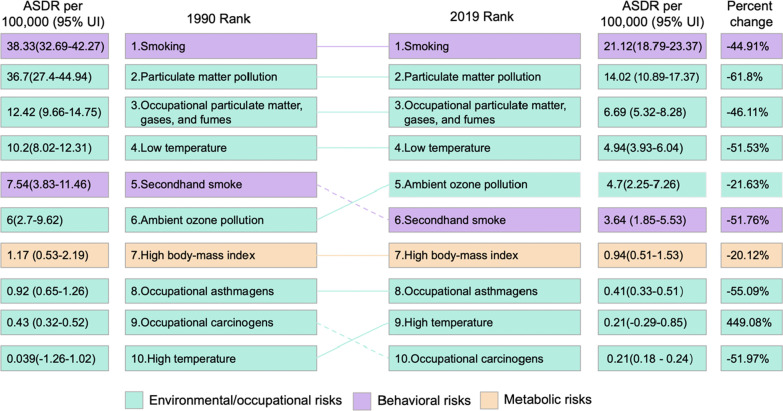
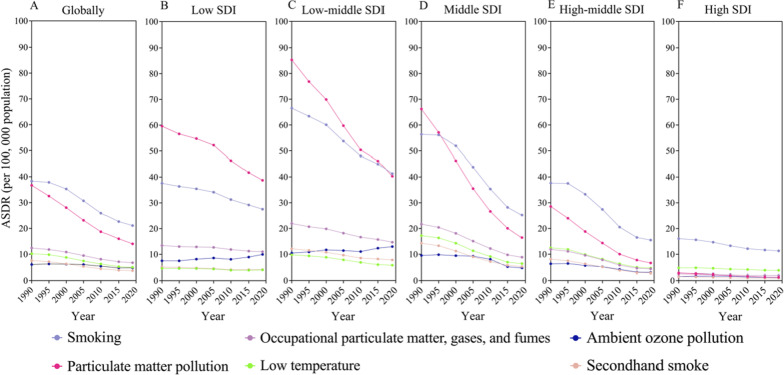
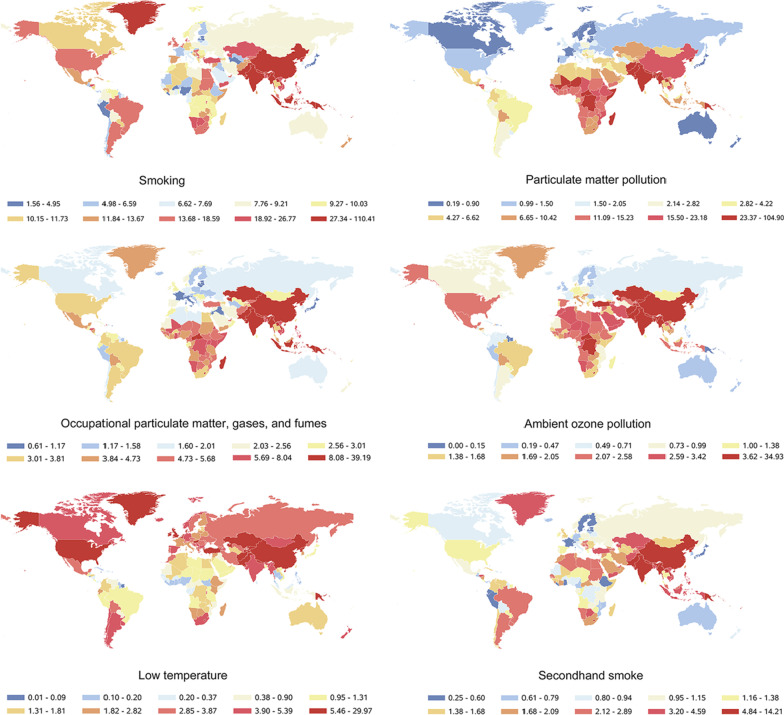
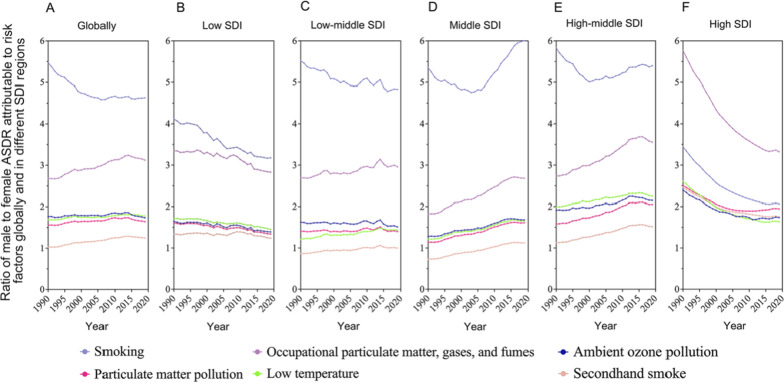
Results: Globally, the incidence of CRDs and deaths cases have increased in the last 30 years, while the corresponding age-standardized incidence rate (ASIR) and death rate (ASDR) have declined. Smoking was the leading risk factor for the death of CRDs all over the world. However, in low and low-middle Socio-demographic Index (SDI) areas, particulate matter pollution was the main risk factor leading to death from CRDs, while smoking was ranked first among the major risk factors in areas with middle, middle-high, or high SDI. Globally, gender differences in morbidity and mortality from CRDs were observed. Males had slightly more cases and ASIR of chronic respiratory diseases than females over the last 30 years. However, the mortality cases and ASDR in males were significantly higher than that of females. Furthermore, the ASDR of all major risk factors, specially smoking, was higher in men than in women.
Conclusions: CRDs were still major threats human health. The current study highlights the dominating roles of smoking for death risks resulting from CRDs, followed by PM pollution. Therefore, tobacco control and improving air quality are key to reducing deaths from CRDs.
Keywords: Chronic respiratory disease; Global disease burden; Particulate matter pollution; Smoking.
© 2022. The Author(s).
Conflict of interest statement
The authors declare that they have no competing interests.
Figures
References
-
- Sousa Pinto G, Bader L, Billberg K, Criddle D, Duggan C, El Bizri L, et al. Beating non-communicable diseases in primary health care: The contribution of pharmacists and guidance from FIP to support WHO goals. Res Social Adm Pharm. 2020;16(7):974–977. doi: 10.1016/j.sapharm.2019.10.008. - DOI - PubMed
MeSH terms
Grants and funding
LinkOut - more resources
Full Text Sources
