


Mitochondria Transfer to CD4+ T Cells May Alleviate Rheumatoid Arthritis by Suppressing Pro-Inflammatory Cytokine Production
- PMID: 35444834
- PMCID: PMC9017867
- DOI: 10.20900/immunometab20220009
Mitochondria Transfer to CD4+ T Cells May Alleviate Rheumatoid Arthritis by Suppressing Pro-Inflammatory Cytokine Production
Abstract
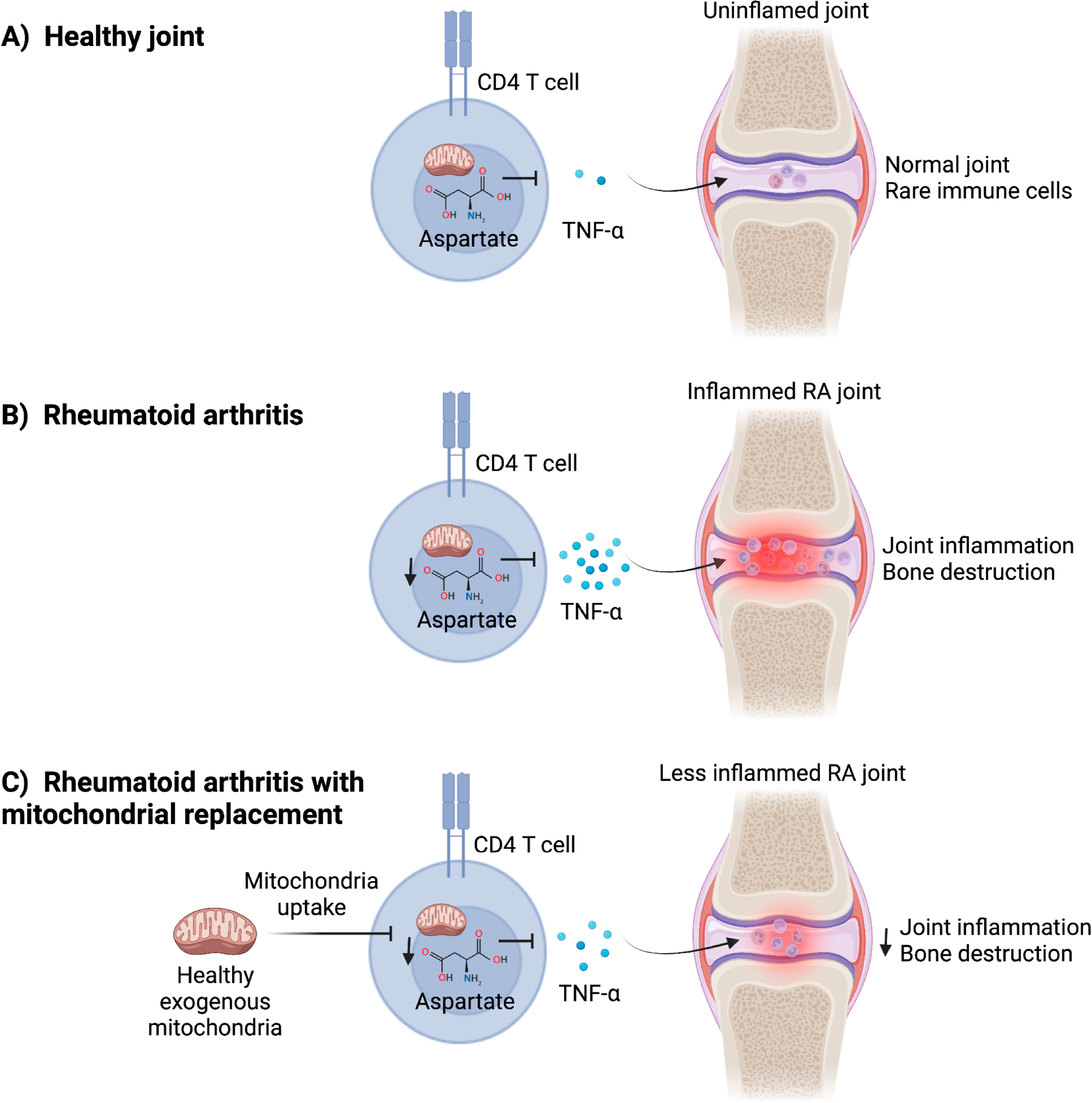
CD4+ T cells contribute to the pathogenesis of autoimmune diseases such as rheumatoid arthritis (RA). These cells infiltrate the joints of RA patients and produce cytokines, including Tumor necrosis factor (TNF)-α, that drive joint inflammation and bone destruction. Although biologic therapeutics targeting T cells and TNF-α have benefited patients suffering from RA, some patients are refractory to these therapies, develop antibodies that neutralize these biologics, or develop undesirable side effects. Recent studies indicate that CD4+ T cell cytokine production is regulated in part by specific metabolic modules, suggesting that immunometabolic pathways could represent a novel therapeutic strategy for T cell-mediated diseases such as RA. Wu et al. (2021) demonstrate that mitochondrial function is impaired in CD4+ T cells from RA patients, leading to reduced levels of various citric acid cycle metabolites (e.g., aspartate) that regulate TNF-α production. Treatment of RA-associated T cells with purified mitochondria was sufficient to restore these metabolic defects, limit production of numerous pro-inflammatory cytokines such as TNF-α and IL-17A, and reduce the development of RA-like disease in a humanized mouse model. These data suggest that T cells can be metabolically "re-engineered" ex vivo with exogenous mitochondria and that this mitochondria transfer approach confers anti-inflammatory properties that may reduce disease severity in RA and possibly other rheumatologic diseases. Increasing our understanding of how intercellular mitochondria transfer occurs may identify novel biological pathways that can be targeted therapeutically or harnessed to support cell engineering.
Keywords: CD4 T cells; mitochondria; rheumatoid arthritis.
Conflict of interest statement
CONFLICTS OF INTEREST JRB has a pending patent application related to mitochondria transfer and pending/issued patents related to obesity. He has received compensation for consulting for DeciBio and has received royalties from the publisher Springer. RG declares that she has no conflicts of interest.
Figures
Comment on
-
Mitochondrial aspartate regulates TNF biogenesis and autoimmune tissue inflammation.Nat Immunol. 2021 Dec;22(12):1551-1562. doi: 10.1038/s41590-021-01065-2. Epub 2021 Nov 22. Nat Immunol. 2021. PMID: 34811544 Free PMC article.
References
-
- Scherer HU, Haupl T, Burmester GR. The etiology of rheumatoid arthritis. J Autoimmun. 2020;110:102400. - PubMed
-
- Firestein GS. Evolving concepts of rheumatoid arthritis. Nature. 2003;423(6937):356–61. - PubMed
-
- Feldmann M Development of anti-TNF therapy for rheumatoid arthritis. Nat Rev Immunol. 2002;2(5):364–71. - PubMed
Publication types
Grants and funding
LinkOut - more resources
Full Text Sources
Research Materials