


Amantadine as a Potential Treatment for Marchiafava-Bignami Disease: Case Reports and a Possible Mechanism
- PMID: 35444836
- PMCID: PMC9015855
- DOI: 10.1155/2022/4585206
Amantadine as a Potential Treatment for Marchiafava-Bignami Disease: Case Reports and a Possible Mechanism
Abstract
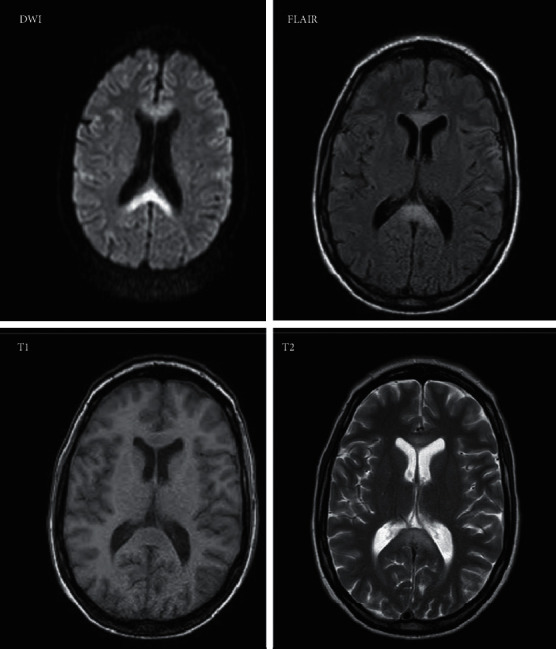
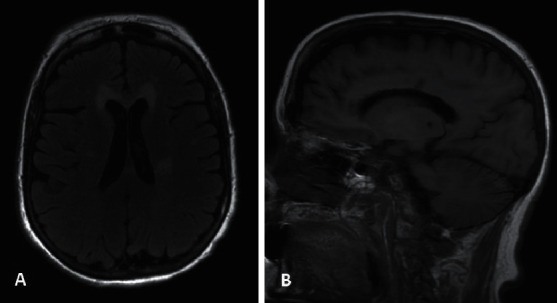
Introduction: Several reports have described the use of amantadine for managing symptoms in Marchiafava-Bignami disease (MBD); however, amantadine's role for the treatment of MBD symptoms is unclear. Here, we describe 2 patients with MBD who were treated with amantadine and hypothesize a potential mechanism responsible for clinical benefit. Case 1. A 38-year-old woman with excessive wine drinking presented with agitation, impaired speech, and a minimally conscious state. MRI revealed lesions in the splenium and genu. After being diagnosed with MBD, she was treated with intravenous thiamine, multivitamins, and 100 mg of amantadine twice a day for 2 weeks. She recovered to near baseline after 3 weeks. Case 2. A 54-year-old woman with years of heavy alcohol use presented with sudden bradyphrenia, acalculia, disinhibited behavior, weakness, and urinary incontinence. MRI revealed a large anterior callosal lesion. Two years after initial recovery from MBD, she noted that consuming "energy drinks" resulted in a transient, near-complete resolution of her residual behavioral, fatigue, and language symptoms. 100 mg of amantadine twice a day was trialled. After noted improvement, a further escalation to 200 mgs 3 times a day resulted in significant improvement in language and behavioral symptoms.
Conclusion: Amantadine in addition to vitamins may be beneficial in the treatment of MBD. It is possible that the dopaminergic effect of amantadine leads to improved recovery and function in dopamine-mediated pathways, including mesocortical and mesolimbic pathways during initial recovery, as well as improved speech, behavior, and fatigue in the following months. The role of amantadine in the treatment of MBD warrants further study.
Copyright © 2022 Leenil Noel et al.
Conflict of interest statement
The authors declare that they have no conflicts of interest.
Figures
References
-
- Bachar M., Fatakhov E., Banerjee C., Todnem N. Rapidly resolving nonalcoholic Marchiafava-Bignami disease in the setting of malnourishment after gastric bypass surgery. Journal of Investigative Medicine High Impact Case Reports . 2018;6 doi: 10.1177/2324709618784318.232470961878431 - DOI - PMC - PubMed
Publication types
LinkOut - more resources
Full Text Sources
