


The Influence of a School Social Network Intervention on Adolescent's Health Behaviors: A Gender-Specific Agent-Based Model
- PMID: 35444977
- PMCID: PMC9013940
- DOI: 10.3389/fpubh.2022.861743
The Influence of a School Social Network Intervention on Adolescent's Health Behaviors: A Gender-Specific Agent-Based Model
Abstract
Introduction: Adolescence is a crucial stage for health behavior development, which is associated with health in adulthood. School closures caused by the coronavirus disease 2019 (COVID-19) pandemic have exposed adolescents to an increased risk of obesity due to a lack of physical activity. Although social network interventions provide an effective approach for promoting health-related behavior, current practices neglect gender differences in adolescent behavioral patterns and emotional preferences. The aim of this study was to examine the effectiveness of centrality-based methods integrated with of gender contexts in a social network intervention to improve adolescent's health behavior.
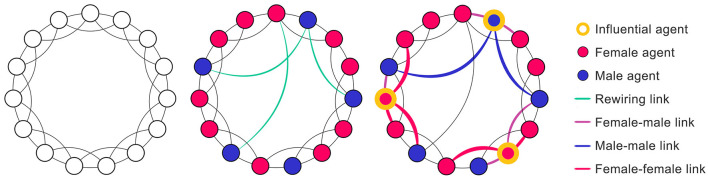
Methods: We developed an agent-based model (ABM) that supports the small-world characteristics of adolescent social networks. Health-related data for junior middle school students (n = 234, 48% girls) were collected in November 2018, 2019 and 2020 in Tianjin, China. We simulated multiple network-based interventions with different criteria for influential agents (i.e., betweenness centrality, closeness centrality, eigenvector centrality, and PageRank) and a random condition. The rules for generating peer influence and accelerating behavioral changes were based on the diffusion of innovations theory, with gender specifications.
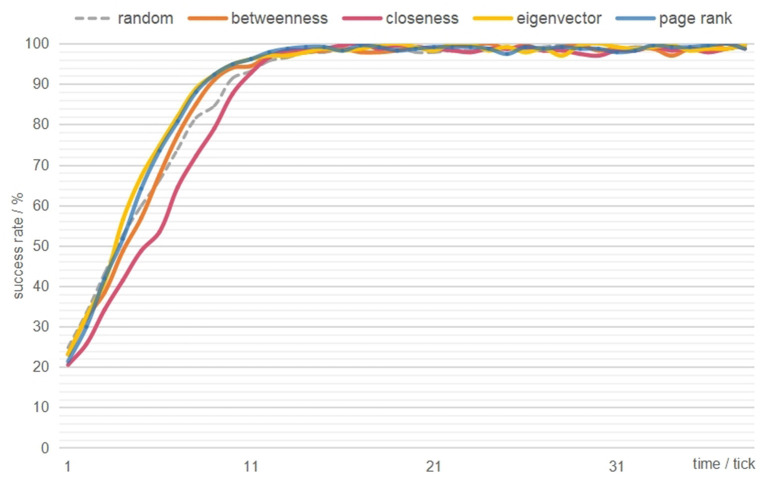
Results: After the school closures, there was a significant increase in the prevalence of overweight and obesity among adolescents, with a greater increase in girls than in boys (+8.85% vs. +1.65%, p < 0.001). Simulations showed that centrality-based network interventions were more effective than the random condition (average 6.17% per tick vs. 5.22% per tick, p < 0.05), with a higher efficiency in girls than boys (average 3.68% vs. 2.99% per tick, p < 0.05). PageRank outperformed other centrality conditions at the population level (6.37% per tick, p < 0.05). In girls, betweenness centrality was the best method (3.85% per tick, p < 0.05), while in boys, PageRank still had the greatest efficiency (3.21% per tick, p < 0.05).
Conclusions: We found evidence for gender differences in the negative impact of COVID-19-related school closures and the potential for centrality-based social network interventions to affect adolescent health behavior. Therefore, we emphasize the importance of gender-specific targeting strategies to further promote health-related school programs in the post-pandemic era.
Keywords: agent-based model (ABM); centrality measurement; gender differences; obesity; peer influence; small-world networks.
Copyright © 2022 Zhang, Xiao and He.
Conflict of interest statement
The authors declare that the research was conducted in the absence of any commercial or financial relationships that could be construed as a potential conflict of interest.
Figures

References
-
- Institute of Medicine (US) . Committee on Physical Activity and Physical Education in the School Environment. Educating the student body: Taking Physical Activity And Physical Education To School. National Academies Press; (2013). Available online at: https://www.nap.edu/catalog/18314/educating-the-student-body-taking-phys... (accessed March 17, 2022). - PubMed
Publication types
MeSH terms
LinkOut - more resources
Full Text Sources
Medical
