


Effectiveness of Platform-Based Robot-Assisted Rehabilitation for Musculoskeletal or Neurologic Injuries: A Systematic Review
- PMID: 35447689
- PMCID: PMC9029074
- DOI: 10.3390/bioengineering9040129
Effectiveness of Platform-Based Robot-Assisted Rehabilitation for Musculoskeletal or Neurologic Injuries: A Systematic Review
Abstract
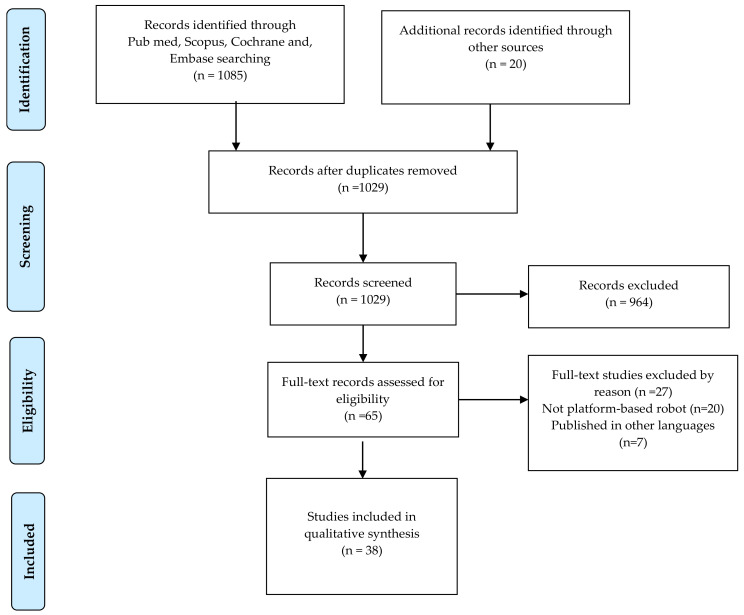
During the last ten years the use of robotic-assisted rehabilitation has increased significantly. Compared with traditional care, robotic rehabilitation has several potential advantages. Platform-based robotic rehabilitation can help patients recover from musculoskeletal and neurological conditions. Evidence on how platform-based robotic technologies can positively impact on disability recovery is still lacking, and it is unclear which intervention is most effective in individual cases. This systematic review aims to evaluate the effectiveness of platform-based robotic rehabilitation for individuals with musculoskeletal or neurological injuries. Thirty-eight studies met the inclusion criteria and evaluated the efficacy of platform-based rehabilitation robots. Our findings showed that rehabilitation with platform-based robots produced some encouraging results. Among the platform-based robots studied, the VR-based Rutgers Ankle and the Hunova were found to be the most effective robots for the rehabilitation of patients with neurological conditions (stroke, spinal cord injury, Parkinson's disease) and various musculoskeletal ankle injuries. Our results were drawn mainly from studies with low-level evidence, and we think that our conclusions should be taken with caution to some extent and that further studies are needed to better evaluate the effectiveness of platform-based robotic rehabilitation devices.
Keywords: Parkinson’s disease; clinical effectiveness; neurorehabilitation; orthopedic rehabilitation; platform-based robotic rehabilitation; robot-assisted training; spinal cord injuries; stroke.
Conflict of interest statement
The authors declare no conflict of interest.
Figures
References
Publication types
LinkOut - more resources
Full Text Sources
Miscellaneous
