


Physiological Effect of Deep Pressure in Reducing Anxiety of Children with ASD during Traveling: A Public Transportation Setting
- PMID: 35447717
- PMCID: PMC9030047
- DOI: 10.3390/bioengineering9040157
Physiological Effect of Deep Pressure in Reducing Anxiety of Children with ASD during Traveling: A Public Transportation Setting
Abstract
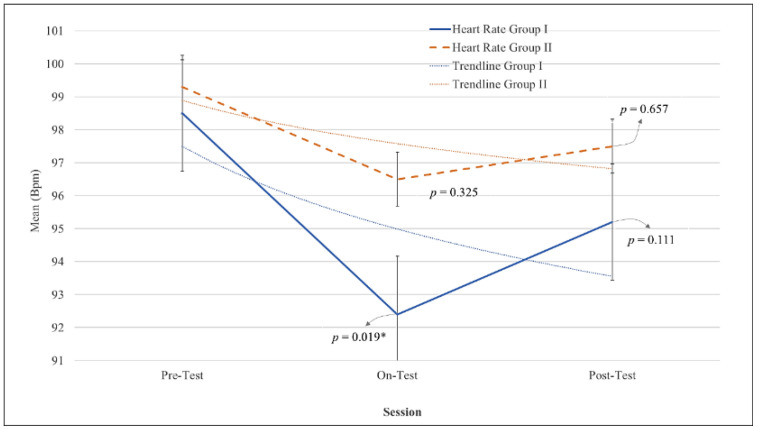
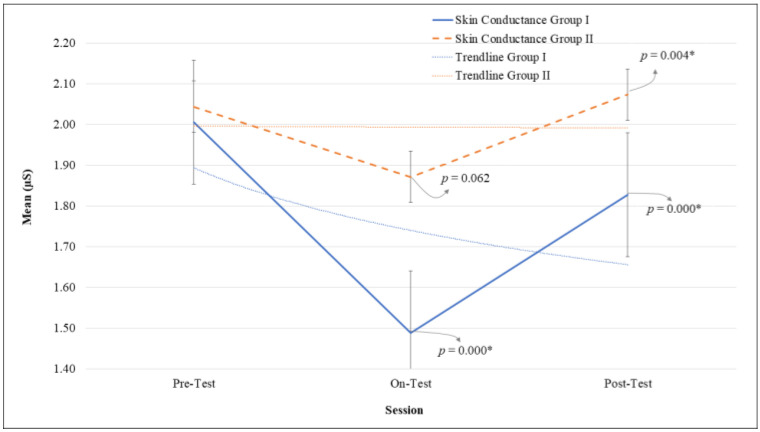
Traveling with children with autism can be very challenging for parents due to their reactions to sensory stimuli resulting in behavioral problems, which lead to self-injury and danger for themselves and others. Deep pressure was reported to have a calming effect on people with autism. This study was designed to investigate the physiological effect of deep pressure, which is an autism hug machine portable seat (AHMPS) in children with autism spectrum disorders (ASD) in public transportation settings. The study was conducted with 20 children with ASD (16 boys and 4 girls) at the Semarang Public Special School with an age ranging from 4 to 13 years (mean 10.9 ± 2.26 years), who were randomly assigned into two groups. The experiment consisted of group I who used the AHMPS inflatable wraps model and group II who used the AHMPS manual pull model. Heart rate (HR) and skin conductance (SC) were analyzed to measure the physiological calming effect using pulse oximeter oximetry and a galvanic skin response (GSR) sensor. Heart rate was significantly decreased during the treatment compared to the baseline (pre-test) session in group I (inflating wrap model) with p = 0.019, while no change of heart rate variability (HRV) was found in group II (manual pull model) with p = 0.111. There was no remaining effect of deep pressure using the HRV indicator after the treatment in both groups (group I with p = 0.159 and group II with p = 0.566). GSR captured the significant decrease in skin conductance during the treatment with p < 0.0001 in group I, but no significant decrease was recorded in group II with p = 0.062. A skin conductance indicator captured the remaining effect of deep pressure (after the treatment); it was better in group I (p = 0.003) than in group II (p = 0.773). In conclusion, the deep pressure of the AHMPS inflating wrap decreases physiological arousal in children with ASD during traveling.
Keywords: arousal; autism spectrum disorder; deep pressure; heart rate; skin conductance; traveling.
Conflict of interest statement
All author declares there is no conflict of interest.
Figures
References
-
- American Psychiatric Association . Diagnostic and Statistical Manual of Mental Disorders (DSM-5) 5th ed. American Psychiatric Pub; Washington, DC, USA: 2013.
-
- World Health Organization International Statistical Classification of Diseases and Related Health Problems (ICD-11) [(accessed on 6 January 2021)]. Available online: https://icd.who.int/
-
- Ministry of Women’s Empowerment and Child Protection of the Republic of Indonesia Hari Peduli Autisme Sedunia: Kenali Gejalanya, Pahami Keadaannya (World Autism Care Day: Recognize the Symptoms, Understand the Conditions) [(accessed on 27 October 2020)]; Available online: https://www.kemenpppa.go.id/index.php/page/read/31/1682/hari-peduli-auti....
-
- Emberti Gialloreti L., Mazzone L., Benvenuto A., Fasano A., Garcia Alcon A., Kraneveld A., Moavero R., Raz R., Riccio M.P., Siracusano M., et al. Risk and Protective Environmental Factors Associated with Autism Spectrum Disorder: Evidence-Based Principles and Recommendations. J. Clin. Med. 2019;8:217. doi: 10.3390/jcm8020217. - DOI - PMC - PubMed
LinkOut - more resources
Full Text Sources
