


Physiological and Population Responses of Nilaparvata lugens after Feeding on Drought-Stressed Rice
- PMID: 35447797
- PMCID: PMC9028574
- DOI: 10.3390/insects13040355
Physiological and Population Responses of Nilaparvata lugens after Feeding on Drought-Stressed Rice
Abstract
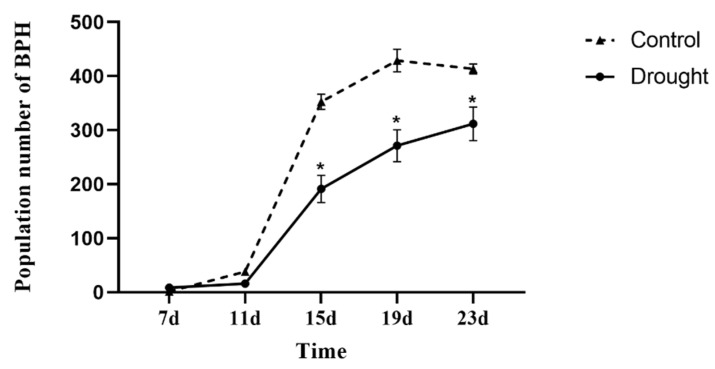
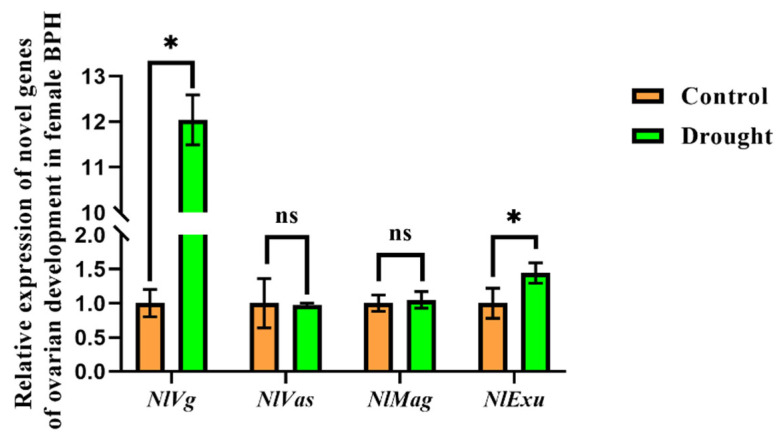
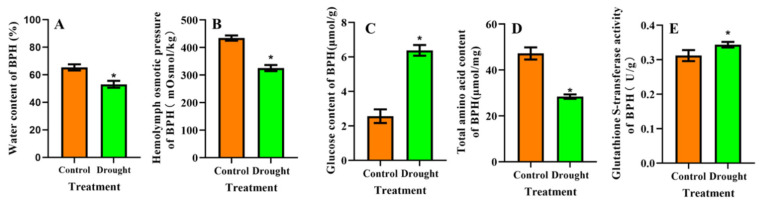
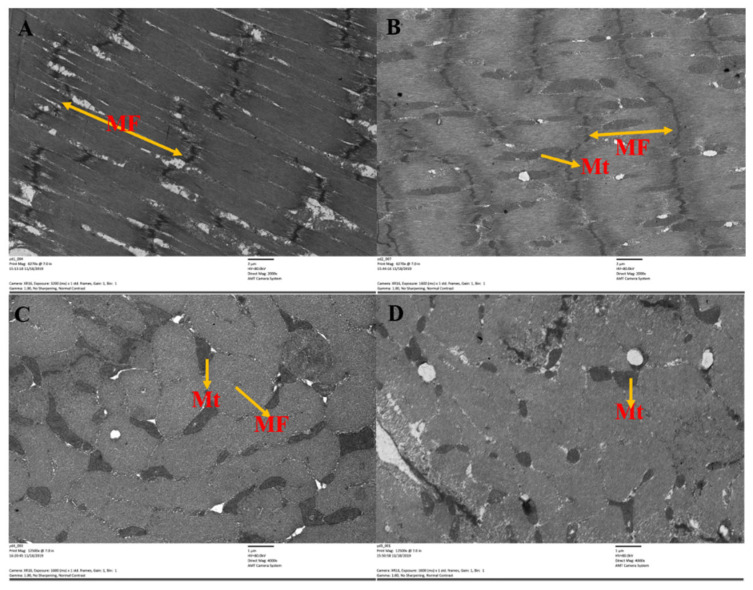
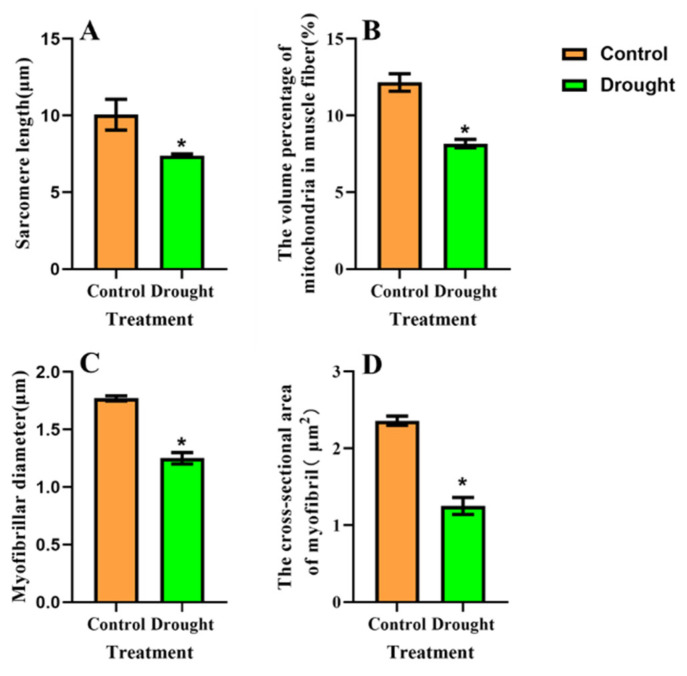
Drought stress greatly impacts insect development and population growth. Some studies have demonstrated increased reproductive capacity in drought-stressed insects; however, physiological changes in the brown planthopper (BPH), Nilaparvata lugens (Stål), during periods of drought are unclear. In this study, BPH fed on drought- stressed rice had lower population numbers than BPH feeding on non-stressed rice. Water content, osmotic pressure of hemolymph and total amino acid content of BPH were significantly lower when BPH fed on drought-stressed rice compared to the non-stressed control; however, glucose content and glutathione S-transferase (GST) activity were significantly higher in BPH fed on drought-stressed rice. The expression of Vitellogenin and Exuperantia in BPH fed on drought-stressed rice was higher than that in BPH feeding on non-stressed control plants. The size of myofibrils and the abundance of mitochondria in BPH flight muscles were significantly lower in BPH fed on drought-stressed rice compared to non-stressed plants. These results indicate that water management impacts the physiology of BPH, which may be useful in understanding the relationship between drought stress and this damaging herbivore.
Keywords: Nilaparvata lugens; biochemistry; drought stress; physiology; rice; ultrastructure of flight muscles.
Conflict of interest statement
The authors declare that they have no conflict of interest.
Figures
References
-
- Hill C.B., Chirumamilla A., Hartman G.L. Resistance and virulence in the soybean-Aphis glycines interaction. Euphytica. 2012;186:635–646. doi: 10.1007/s10681-012-0695-z. - DOI
Grants and funding
LinkOut - more resources
Full Text Sources
Research Materials
