Review
. 2022 Apr 8;12(4):222.
doi: 10.3390/bios12040222.

Smart Electronic Textiles for Wearable Sensing and Display

Affiliations
Review

Smart Electronic Textiles for Wearable Sensing and Display

Seungse Cho et al. Biosensors (Basel). .

Abstract

Increasing demand of using everyday clothing in wearable sensing and display has synergistically advanced the field of electronic textiles, or e-textiles. A variety of types of e-textiles have been formed into stretchy fabrics in a manner that can maintain their intrinsic properties of stretchability, breathability, and wearability to fit comfortably across different sizes and shapes of the human body. These unique features have been leveraged to ensure accuracy in capturing physical, chemical, and electrophysiological signals from the skin under ambulatory conditions, while also displaying the sensing data or other immediate information in daily life. Here, we review the emerging trends and recent advances in e-textiles in wearable sensing and display, with a focus on their materials, constructions, and implementations. We also describe perspectives on the remaining challenges of e-textiles to guide future research directions toward wider adoption in practice.

Keywords: ambulatory health monitoring; electronic textiles; smart clothing; textile engineering; wearable sensing and display.


Conflict of interest statement

The authors declare no conflict of interest.

Figures
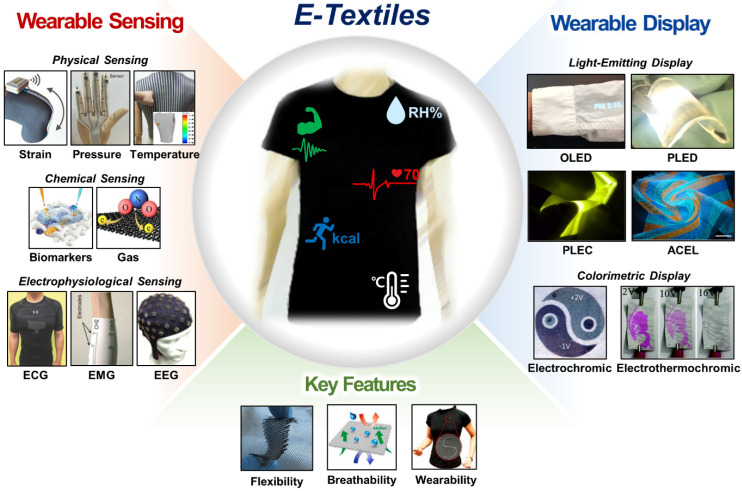
Figure 1
Figure 1
E-textiles for wearable sensing and display. Physical sensing—strain: reprinted with permission from [25]. Copyright 2015 American Chemical Society. Pressure: reprinted with permission from [26]. Copyright 2017 Wiley-VCH. Temperature: reprinted with permission from [27]. Copyright 2020 American Chemical Society. Chemical sensing—biomarkers: reprinted with permission from [28]. Copyright 2020 Springer Nature. Gas: reprinted with permission from [29]. Copyright 2021 American Chemical Society. Electrophysiological sensing—electrocardiogram (ECG): reprinted with permission from [30]. Copyright 2018 Wiley-VCH. electromyogram (EMG): reprinted with permission from [31]. Copyright 2017 Wiley-VCH. Electroencephalogram (EEG): reprinted with permission from [32]. Copyright 2015 Springer Nature. Light-emitting device (LED)—organic light-emitting diode (OLED): reprinted with permission from [33]. Copyright 2020 Springer Nature. Polymer light-emitting diode (PLED): reprinted with permission from [34]. Copyright 2016 Elsevier B.V. Polymer light-emitting electrochemical cell (PLEC): reprinted with permission from [35]. Copyright 2016 IOP Publishing. Alternating current (AC)-driven electroluminescent device (ACEL): reprinted with permission from [36]. Copyright 2021 Springer Nature. Colorimetric device—electrochromic: reprinted with permission from [37]. Copyright 2021 Wiley-VCH. Electro-thermochromic: reprinted with permission from [38]. Copyright 2020 Royal Society of Chemistry. Key Features—flexibility: reprinted with permission from [39]. Copyright 2011 Wiley-VCH. Breathability: reprinted with permission from [40]. Copyright 2021 Elsevier B.V. Wearability: reprinted with permission from [41]. Copyright 2018 American Chemical Society.
Figure 2
Figure 2
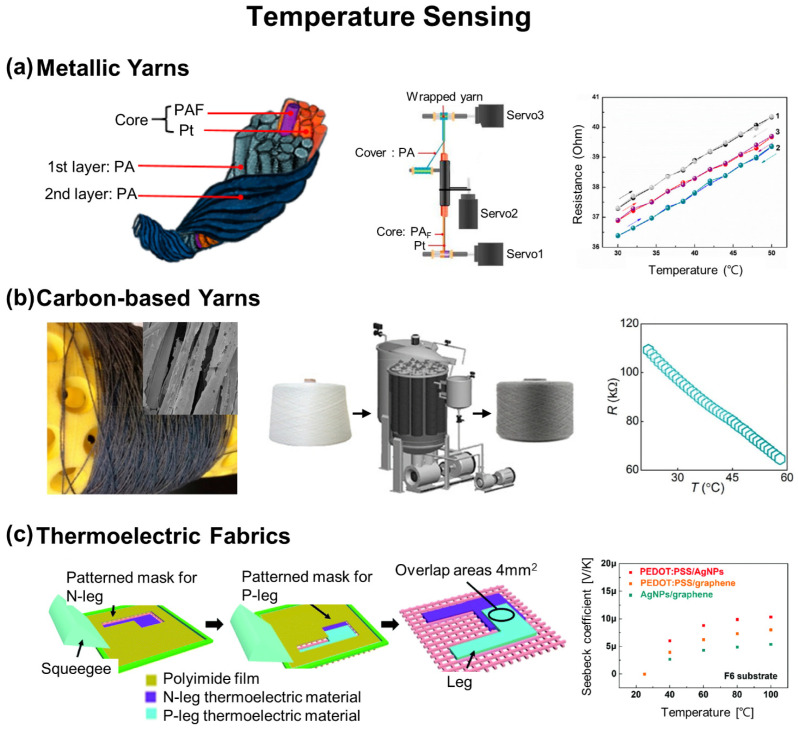
E-textiles for temperature sensing. (a) Metallic yarn-based sensing. Reprinted with permission from [70]. Copyright 2019 MDPI. (b) Carbon-based yarn-based sensing. Reprinted with permission from [72]. Copyright 2019 American Chemical Society. (c) Thermoelectric fabric-based sensing. Reprinted with permission from [48]. Copyright 2018 Royal Society of Chemistry.
Figure 3
Figure 3
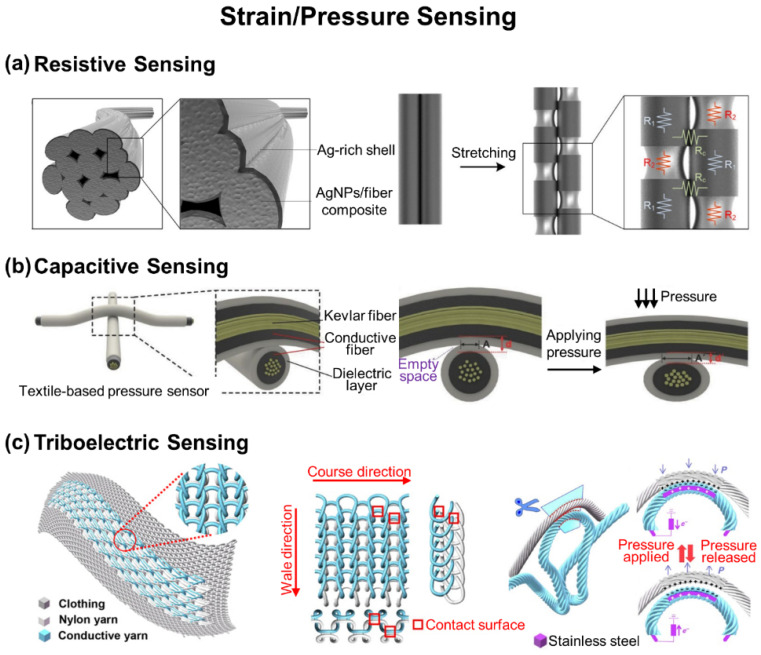
E-textiles for strain and pressure sensing. (a) Resistive sensing with an Ag NP/fiber composite/Ag-rich shell fiber. Reprinted with permission from [75]. Copyright 2018 American Chemical Society. (b) Capacitive sensing with an Ag NP/SBS/Kevlar fiber. Reprinted with permission from [63]. Copyright 2015 Wiley-VCH. (c) Triboelectric sensing with a Terylene-twisted stainless-steel/nylon yarn. Reprinted with permission from [68]. Copyright 2020 American Association for the Advancement of Science.
Figure 4
Figure 4
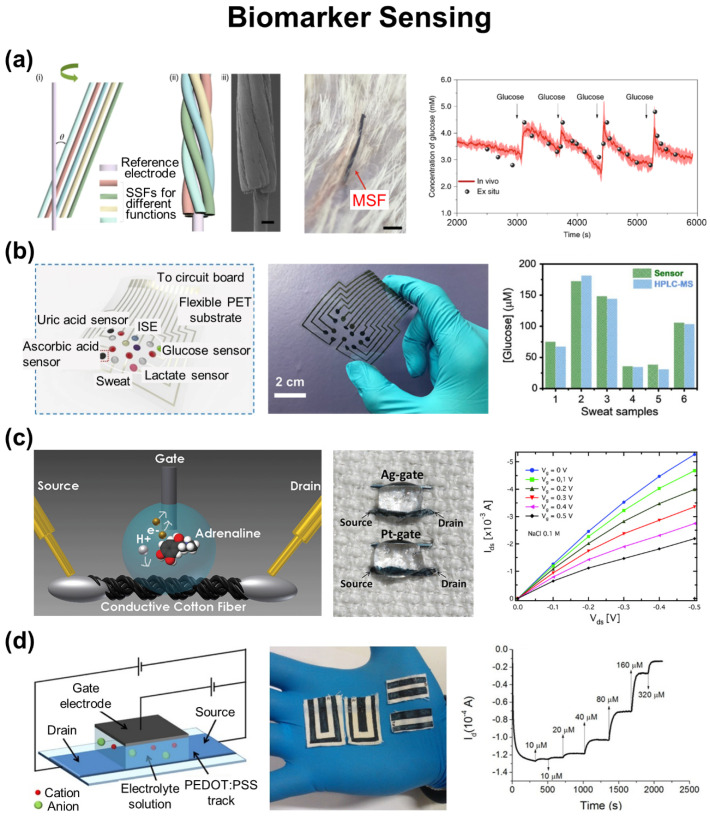
E-textiles for biomarker sensing. (a) Multi-ply electrochemical sensing fiber (MSF) with helical CNT bundles. Reprinted with permission from [110]. Copyright 2019 Springer Nature. (b) Electrochemical SilkNCT-based wearable sweat analysis patch. Reprinted with permission from [112]. Copyright 2019 American Association for the Advancement of Science. (c) OECTs fiber with PEDOT:PSS. Reprinted with permission from [113]. Copyright 2014 Royal Society of Chemistry. (d) OECTs fabric with PEDOT:PSS. Reprinted with permission from [114]. Copyright 2016 Springer Nature.
Figure 5
Figure 5
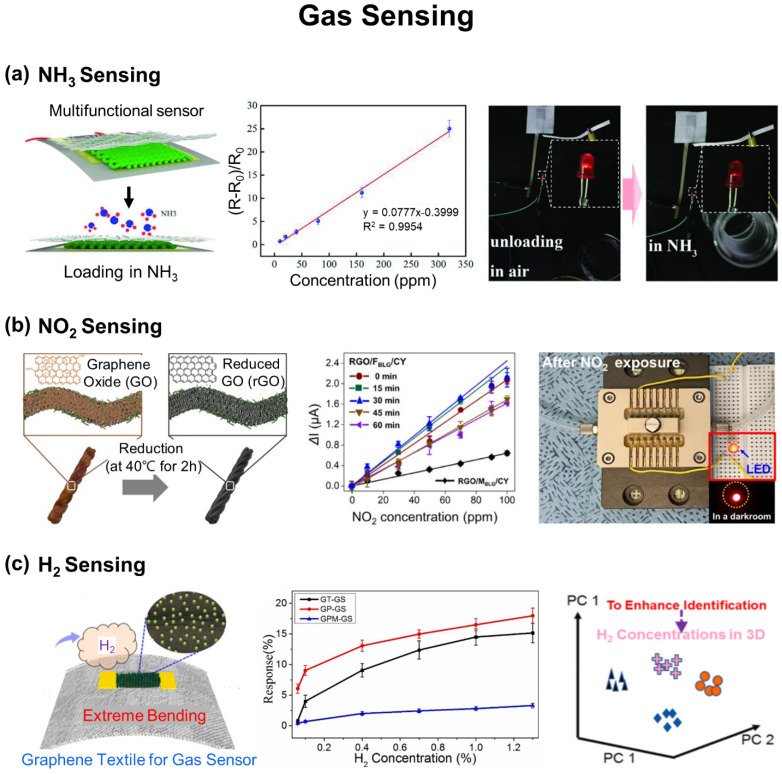
E-textiles for gas sensing. (a) NH3 sensing with the polyaniline@textile. Reprinted with permission from [104]. Copyright 2018 Wiley-VCH. (b) NO2 sensing with Amyloid/rGO yarns. Reprinted with permission from [117]. Copyright 2020 American Chemical Society. (c) H2 sensing with rGO/Pd NP-coated fabrics. Reprinted with permission from [94]. Copyright 2021 Elsevier B.V.
Figure 6
Figure 6
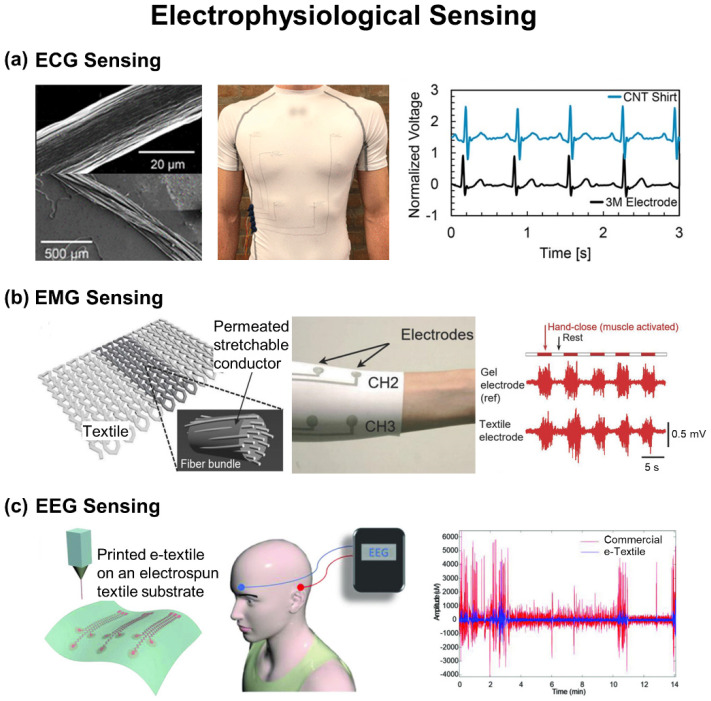
E-textiles for electrophysiological sensing. (a) ECG sensing with solution-spun CNT threads. Reprinted with permission from [127]. Copyright 2021 American Chemical Society. (b) EMG sensing with Ag flake-printed fabrics. Reprinted with permission from [31]. Copyright 2017 Wiley-VCH. (c) EEG sensing with Ag particle/fluoropolymer composite ink-printed electrospun fabrics. Reprinted with permission from [143]. Copyright 2018 Wiley-VCH.
Figure 7
Figure 7
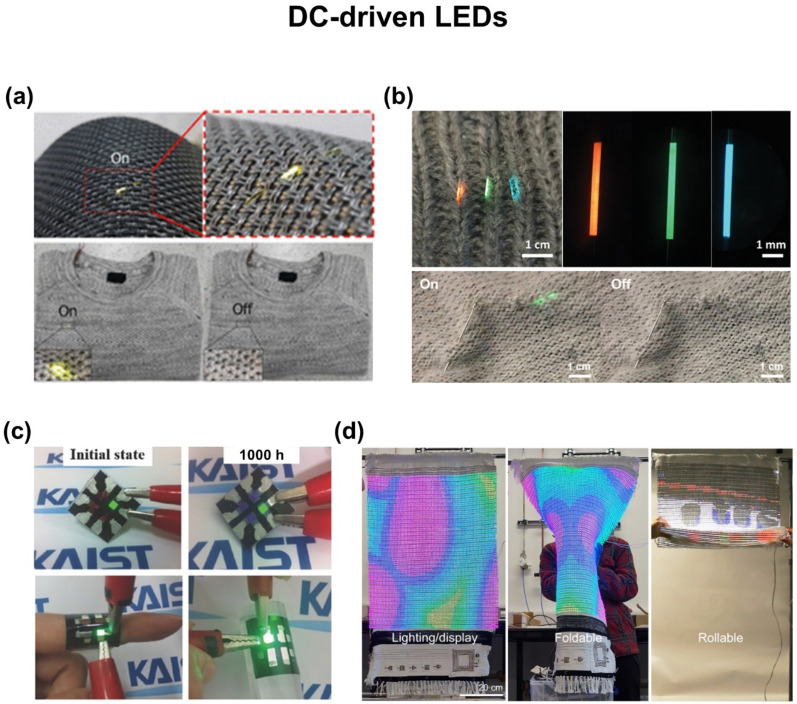
E-textiles for DC-driven LEDs. (a) Fiber-shaped OLEDs hand-woven into garments. Reprinted with permission from [183]. Copyright 2017 American Chemical Society. (b) Fiber-shaped multicolor phOLEDs woven into daily clothes. Reprinted with permission from [162]. Copyright 2021 Wiley-VCH. (c) Fabric-based OLED based on the PU planarization layer and multilayers of barrier/capping films. Reprinted with permission from [184]. Copyright 2016 Wiley-VCH. (d) Fabric-based large-scale RGB-colored LEDs. Reprinted with permission from [185]. Copyright 2022 Springer Nature.
Figure 8
Figure 8
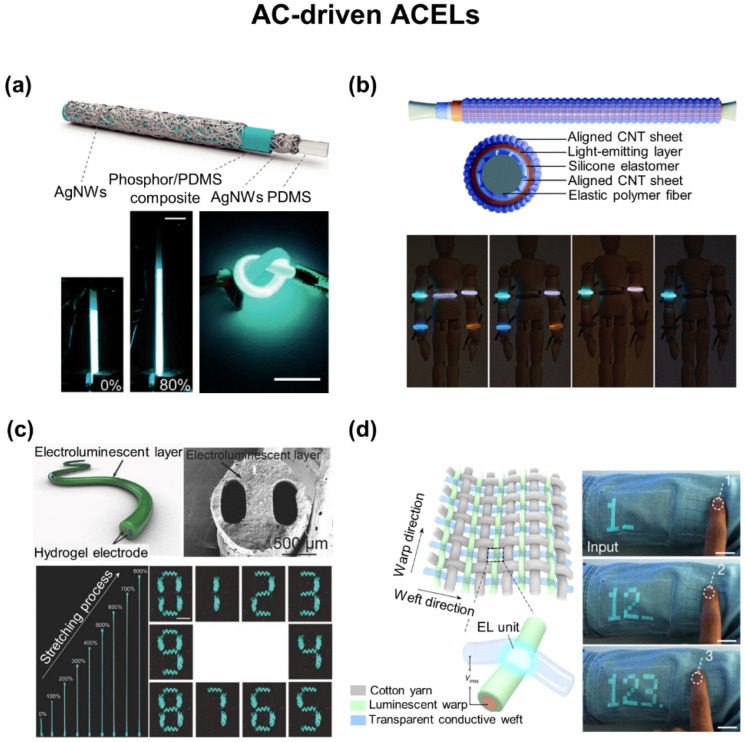
E-textiles for AC-driven ACELs. (a) Stretchable ACEL fiber with Ag NW electrodes. Reprinted with permission from [186]. Copyright 2018 MDPI. (b) Color-programmable ACEL fiber with aligned CNT sheets. Reprinted with permission from [187]. Copyright 2018 Royal Society of Chemistry. (c) Stretchable ACEL fiber with ionic hydrogel electrodes. Reprinted with permission from [188]. Copyright 2018 Wiley-VCH. (d) ACEL fabric with transparent conducting wefts and luminescent warps. Reprinted with permission from [36]. Copyright 2021 Springer Nature.
Figure 9
Figure 9
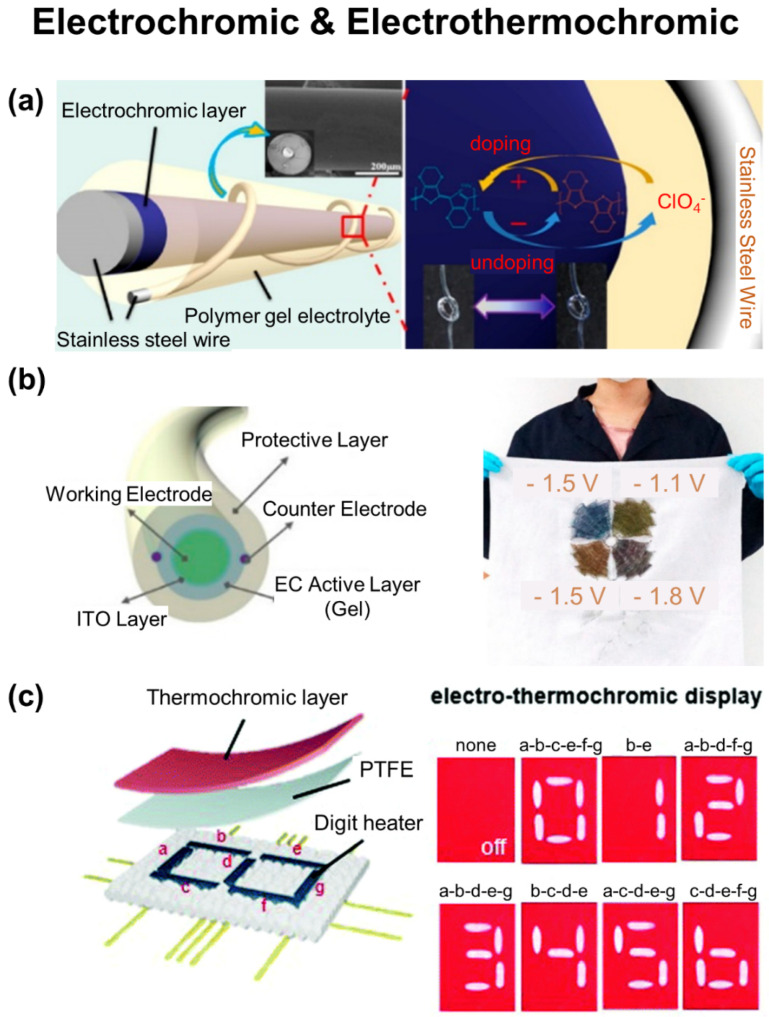
E-textiles for electrochromic and electrothermochromic display. (a) RGB-colored electrochromic fiber based on PEDOT and stainless-steel wire. Reprinted with permission from [179]. Copyright 2014 American Chemical Society. (b) Multicolor electrochromic fiber based on dual-counter-electrodes of Cu@Ni wires. Reprinted with permission from [180]. Copyright 2020 American Chemical Society. (c) Electrothermochromic textile based on the PEDOT:PSS/Ag NWs-based Joule heater and thermochromic layer. Reprinted with permission from [181]. Copyright 2019 Royal Society of Chemistry.

References

    1. Wearable Technology Market Size, Share & Trends Analysis Report by Product (Wrist-Wear, Eye-Wear & Head-Wear, Foot-Wear, Neck-Wear, Body-Wear), by Application, by Region, and Segment Forecasts, 2021–2028. [(accessed on 27 February 2022)]. Available online: https://www.grandviewresearch.com/industry-analysis/wearable-technology-....
    1. Shi Q., Dong B., He T., Sun Z., Zhu J., Zhang Z., Lee C. Progress in Wearable Electronics/Photonics-Moving Toward the Era of Artificial Intelligence and Internet of Things. InfoMat. 2020;2:1131–1162. doi: 10.1002/inf2.12122. - DOI
    1. Mamdiwar S.D., Akshith R., Shakruwala Z., Chadha U., Srinivasan K., Chang C.-Y. Recent Advances on IoT-Assisted Wearable Sensor Systems for Healthcare Monitoring. Biosensors. 2021;11:372. doi: 10.3390/bios11100372. - DOI - PMC - PubMed
    1. Zhang J., Xu J., Lim J., Nolan J.K., Lee H., Lee C.H. Wearable Glucose Monitoring and Implantable Drug Delivery Systems for Diabetes Management. Adv. Healthcare Mater. 2021;10:2100194. doi: 10.1002/adhm.202100194. - DOI - PubMed
    1. Park H., Park W., Lee C.H. Electrochemically Active Materials and Wearable Biosensors for the in Situ Analysis of Body Fluids for Human Healthcare. NPG Asia Mater. 2021;13:23. doi: 10.1038/s41427-020-00280-x. - DOI

LinkOut - more resources