


Serum Metabolites Associated with Blood Pressure in Chronic Kidney Disease Patients
- PMID: 35448468
- PMCID: PMC9027690
- DOI: 10.3390/metabo12040281
Serum Metabolites Associated with Blood Pressure in Chronic Kidney Disease Patients
Abstract
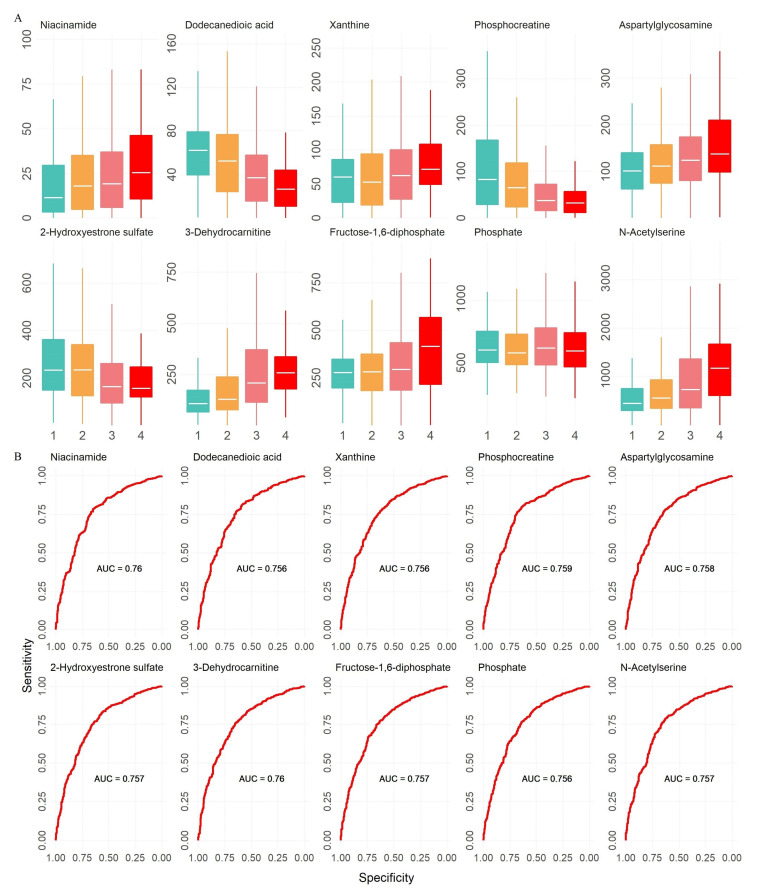
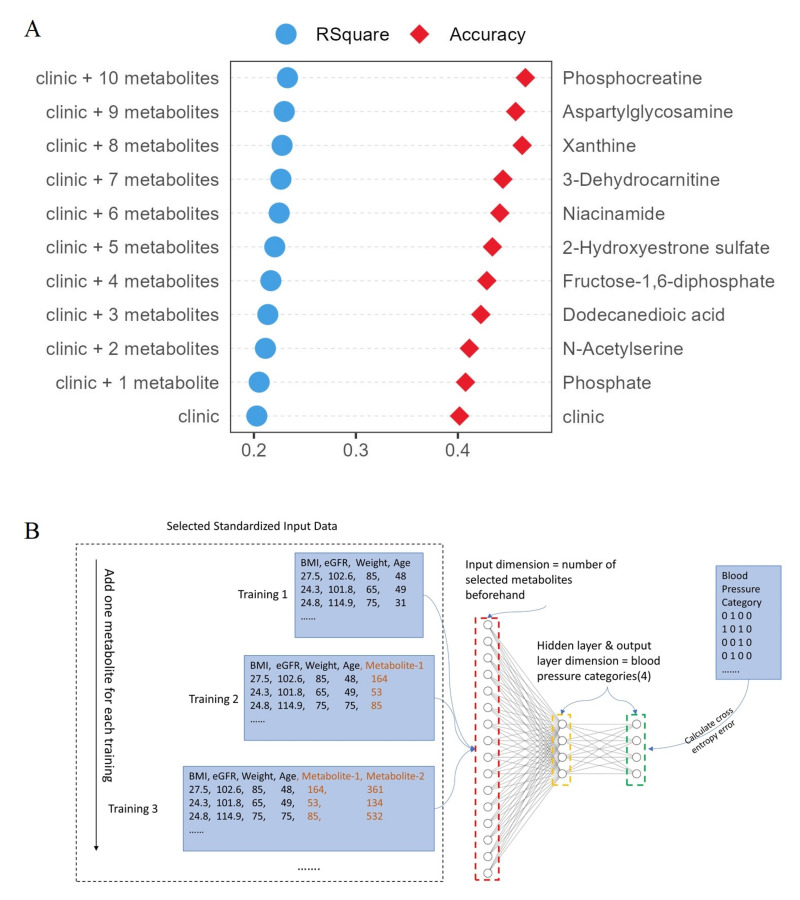
Blood pressure is one of the most basic health screenings and it has a complex relationship with chronic kidney disease (CKD). Controlling blood pressure for CKD patients is crucial for curbing kidney function decline and reducing the risk of cardiovascular disease. Two independent CKD cohorts, including matched controls (discovery n = 824; validation n = 552), were recruited. High-throughput metabolomics was conducted with the patients' serum samples using mass spectrometry. After controlling for CKD severity and other clinical hypertension risk factors, we identified ten metabolites that have significant associations with blood pressure. The quantitative importance of these metabolites was verified in a fully connected neural network model. Of the ten metabolites, seven have not previously been associated with blood pressure. The metabolites that had the strongest positive association with blood pressure were aspartylglycosamine (p = 4.58 × 10⁻⁵), fructose-1,6-diphosphate (p = 1.19 × 10⁻⁴) and N-Acetylserine (p = 3.27 × 10⁻⁴). Three metabolites that were negatively associated with blood pressure (phosphocreatine, p = 6.39 × 10⁻³; dodecanedioic acid, p = 0.01; phosphate, p = 0.04) have been reported previously to have beneficial effects on hypertension. These results suggest that intake of metabolites as supplements may help to control blood pressure in CKD patients.
Keywords: blood pressure; chronic kidney disease; hypertension.
Conflict of interest statement
The authors declare no conflict of interest.
Figures
References
-
- Bourne R.R.A., GBD 2015 Risk Factors Collaborators Global, regional, and national comparative risk assessment of 79 behavioural, environmental and occupational, and metabolic risks or clusters of risks, 1990–2015: A systematic analysis for the global burden of disease study 2015. Lancet. 2016;388:1659–1724. - PMC - PubMed
-
- Hamrahian S.M., Falkner B. Hypertension in chronic kidney disease. Adv. Exp. Med. Biol. 2017;956:307–325. - PubMed
-
- Muntner P., Anderson A., Charleston J., Chen Z., Ford V., Makos G., O’Connor A., Perumal K., Rahman M., Steigerwalt S., et al. Hypertension awareness, treatment, and control in adults with ckd: Results from the chronic renal insufficiency cohort (cric) study. Am. J. Kidney Dis. 2010;55:441–451. doi: 10.1053/j.ajkd.2009.09.014. - DOI - PMC - PubMed
LinkOut - more resources
Full Text Sources
