Insights into the Chemical Diversity of Selected Fungi from the Tza Itzá Cenote of the Yucatan Peninsula
- PMID: 35449929
- PMCID: PMC9016812
- DOI: 10.1021/acsomega.2c00544
Insights into the Chemical Diversity of Selected Fungi from the Tza Itzá Cenote of the Yucatan Peninsula
Abstract
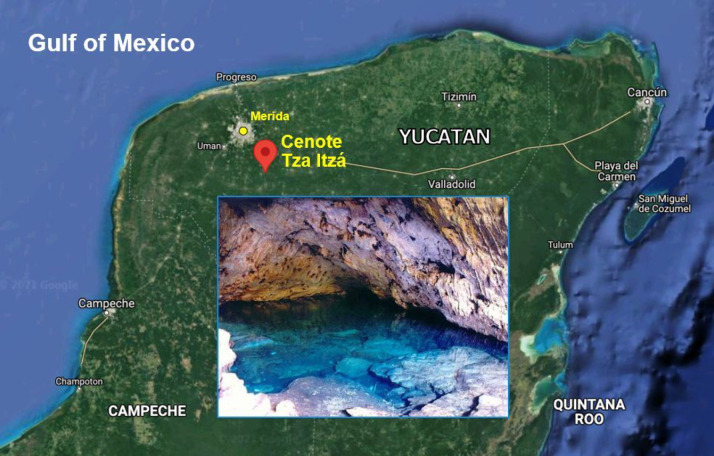
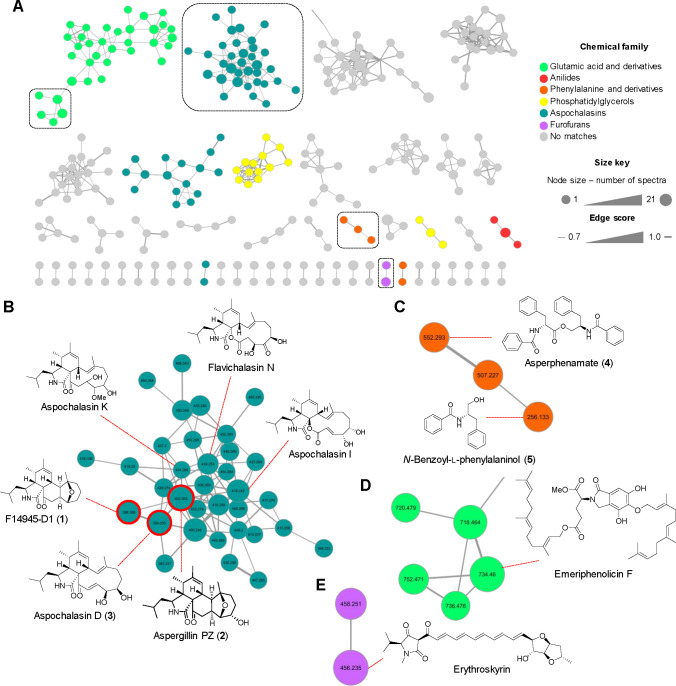
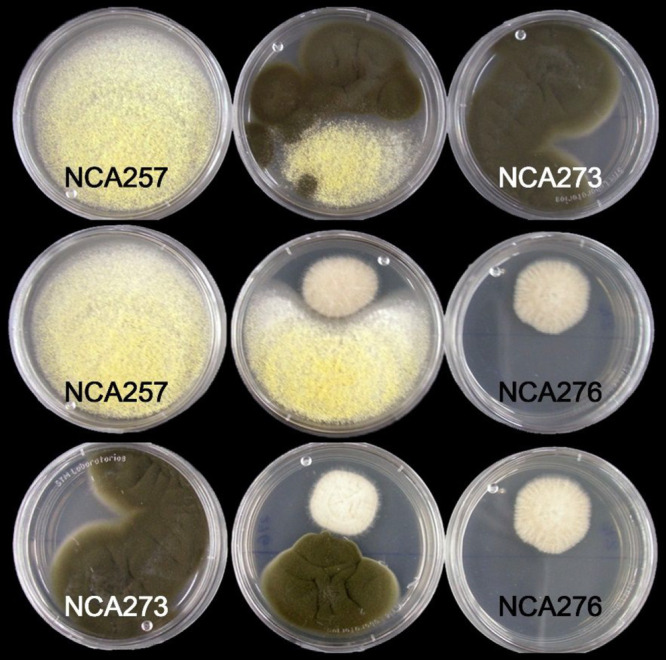
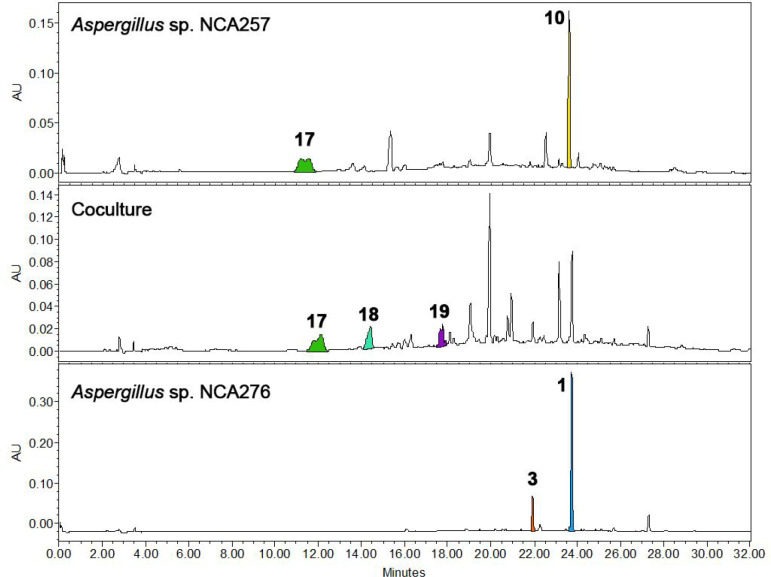
Cenotes are habitats with unique physical, chemical, and biological features. Unexplored microorganisms from these sinkholes represent a potential source of bioactive molecules. Thus, a series of cultivable fungi (Aspergillus spp. NCA257, NCA264, and NCA276, Stachybotrys sp. NCA252, and Cladosporium sp. NCA273) isolated from the cenote Tza Itzá were subjected to chemical, coculture, and metabolomic analyses. Nineteen compounds were obtained and tested for their antimicrobial potential against ESKAPE pathogens, Mycobacterium tuberculosis, and nontuberculous mycobacteria. In particular, phenylspirodrimanes from Stachybotrys sp. NCA252 showed significant activity against MRSA, MSSA, and mycobacterial strains. On the other hand, the absolute configuration of the new compound 17-deoxy-aspergillin PZ (1) isolated from Aspergillus sp. NCA276 was established via single-crystal X-ray crystallography. Also, the chemical analysis of the cocultures between Aspergillus and Cladosporium strains revealed the production of metabolites that were not present or were barely detected in the monocultures. Finally, molecular networking analysis of the LC-MS-MS/MS data for each fungus was used as a tool for the annotation of additional compounds, increasing the chemical knowledge on the corresponding fungal strains. Overall, this is the first systematic chemical study on fungi isolated from a sinkhole in Mexico.
© 2022 The Authors. Published by American Chemical Society.
Conflict of interest statement
The authors declare no competing financial interest.
Figures





References
-
- Schmitter-Soto J. J.; Comín F. A.; Escobar-Briones E.; Herrera-Silveira J.; Alcocer J.; Suárez-Morales E.; Elías-Gutiérrez M.; Díaz-Arce V.; Marín L. E.; Steinich B. Hydrogeochemical and biological characteristics of cenotes in the Yucatan peninsula (SE Mexico). Hydrobiol. 2002, 467 (1–3), 215–228. 10.1023/A:1014923217206. - DOI
-
- Hildebrand A. R.; Pilkington M.; Connors M.; Ortiz-Aleman C.; Chavez R. E. Size and structure of the Chicxulub crater revealed by horizontal gravity gradients and cenotes. Nature 1995, 376 (6539), 415–417. 10.1038/376415a0. - DOI
-
- Lian B.; Yuan D.; Liu Z. Effect of microbes on karstification in karst ecosystems. Chin. Sci. Bull. 2011, 56, 3743–3747. 10.1007/s11434-011-4648-z. - DOI
-
- Stoessell R. K.; Moore Y. H.; Coke J. G. The occurrence and effect of sulfate reduction and sulfide oxidation on coastal limestone dissolution in Yucatan cenotes. Groundwater 1993, 31 (4), 566–575. 10.1111/j.1745-6584.1993.tb00589.x. - DOI
LinkOut - more resources
Full Text Sources
Other Literature Sources
Molecular Biology Databases
Miscellaneous