


Hyperthermia Treatment as a Promising Anti-Cancer Strategy: Therapeutic Targets, Perspective Mechanisms and Synergistic Combinations in Experimental Approaches
- PMID: 35453310
- PMCID: PMC9030926
- DOI: 10.3390/antiox11040625
Hyperthermia Treatment as a Promising Anti-Cancer Strategy: Therapeutic Targets, Perspective Mechanisms and Synergistic Combinations in Experimental Approaches
Abstract
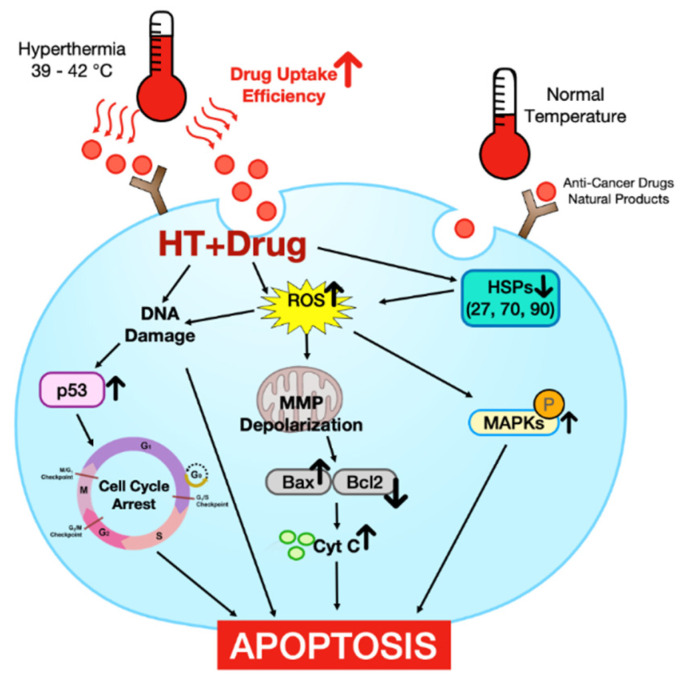
Despite recent developments in diagnosis and treatment options, cancer remains one of the most critical threats to health. Several anti-cancer therapies have been identified, but further research is needed to provide more treatment options that are safe and effective for cancer. Hyperthermia (HT) is a promising treatment strategy for cancer because of its safety and cost-effectiveness. This review summarizes studies on the anti-cancer effects of HT and the detailed mechanisms. In addition, combination therapies with anti-cancer drugs or natural products that can effectively overcome the limitations of HT are reviewed because HT may trigger protective events, such as an increase of heat shock proteins (HSPs). In the 115 reports included, the mechanisms related to apoptosis, cell cycle, reactive oxygen species, mitochondrial membrane potential, DNA damage, transcription factors and HSPs were considered important. This review shows that HT is an effective inducer of apoptosis. Moreover, the limitations of HT may be overcome using combined therapy with anti-cancer drugs or natural products. Therefore, appropriate combinations of such agents with HT will exert maximal effects to treat cancer.
Keywords: cancer; chemotherapy; combination therapy; heat shock protein; hyperthermia; natural product; reactive oxygen species; synergistic effect.
Conflict of interest statement
The authors declare no conflict of interest.
Figures
References
-
- Sankaranarayanan R., Swaminathan R., Jayant K., Brenner H. An overview of cancer survival in Africa, Asia, the Caribbean and Central America: The case for investment in cancer health services. IARC Sci. Publ. 2011;162:257–291. - PubMed
Publication types
Grants and funding
LinkOut - more resources
Full Text Sources
