


The Utility of Laboratory Parameters for Cardiac Inflammation in Heart Failure Patients Hospitalized with SARS-CoV-2 Infection
- PMID: 35453871
- PMCID: PMC9026832
- DOI: 10.3390/diagnostics12040824
The Utility of Laboratory Parameters for Cardiac Inflammation in Heart Failure Patients Hospitalized with SARS-CoV-2 Infection
Abstract
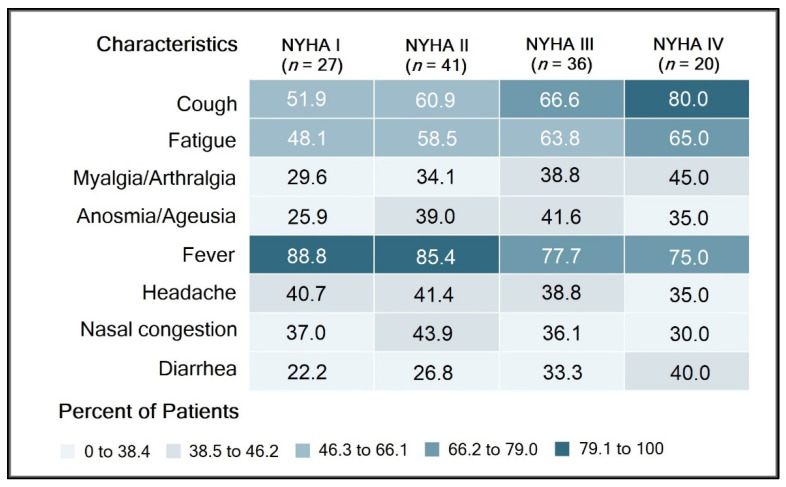
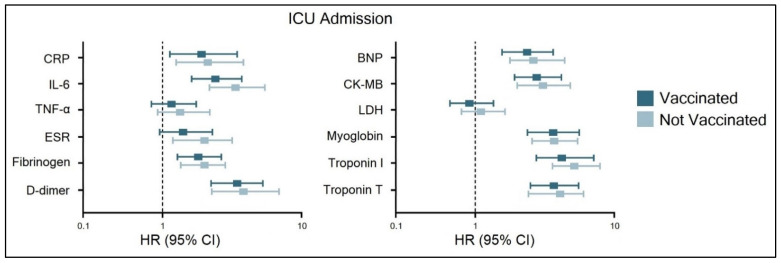
COVID-19 has been associated with cardiovascular consequences, including myocardial infarction, thromboembolic events, arrhythmia, and heart failure. Numerous overlapping mechanisms, such as the IL-6 dependent cytokine storm and unopposed angiotensin II stimulation, could be responsible for these consequences. Cardiac damage is hypothesized to be a consequence of the direct viral infection of cardiomyocytes, resulting in increased metabolic demand, immunological activation, and microvascular dysfunction. Patients with pre-existing chronic heart failure are therefore at increased risk of decompensation, further heart damage, and significant health deterioration. Based on the aforementioned assumptions, we developed a study aiming to provide a detailed description of changes in biological parameters and cardiac injury markers of patients with heart failure and SARS-CoV-2 infection by correlating them with the clinical presentation and COVID-19 vaccination status, to predict the probability of ICU admission based on their initial hospital presentation. A two-year retrospective study was performed on heart failure patients with a history of SARS-CoV-2 infection and detailed records of biological biomarkers; a total of 124 eligible patients with COVID-19 and 236 without COVID-19 were recruited. Patients with heart failure and SARS-CoV-2 infection had significantly elevated baseline biological parameters and cardiac markers compared to those without COVID-19. Several cardiac injury markers were identified as significant independent risk factors for ICU admission: CK-MB (HR = 4.1, CI [2.2-6.9]), myoglobin (HR = 5.0, CI [2.3-7.8]), troponin-I (HR = 7.1 [4.4-9.6]), troponin-T (HR = 4.9, CI [1.7-7.4]). The elevation of a basic panel of acute inflammation markers (CRP, IL-6, fibrinogen), D-dimers, and BNP was also a significant risk factor. The follow-up of survivors at four weeks after viral clearance determined a worsened clinical picture by NYHA classification, worsened cardiac ultrasound findings, and a mild improvement in cardiac and inflammatory markers. Increased levels of myocardial damage parameters in association with cardiac ultrasound findings and basic inflammatory markers may enable early risk assessment and triage in hospitalized heart failure patients infected with SARS-CoV-2.
Keywords: COVID-19; SARS-CoV-2; heart failure; inflammatory markers; mortality risk.
Conflict of interest statement
The authors declare no conflict of interest.
Figures
References
LinkOut - more resources
Full Text Sources
Research Materials
Miscellaneous
