


COVID-19 Pandemic Effects on Cervical Cancer Diagnosis and Management: A Population-Based Study in Romania
- PMID: 35453955
- PMCID: PMC9031697
- DOI: 10.3390/diagnostics12040907
COVID-19 Pandemic Effects on Cervical Cancer Diagnosis and Management: A Population-Based Study in Romania
Abstract
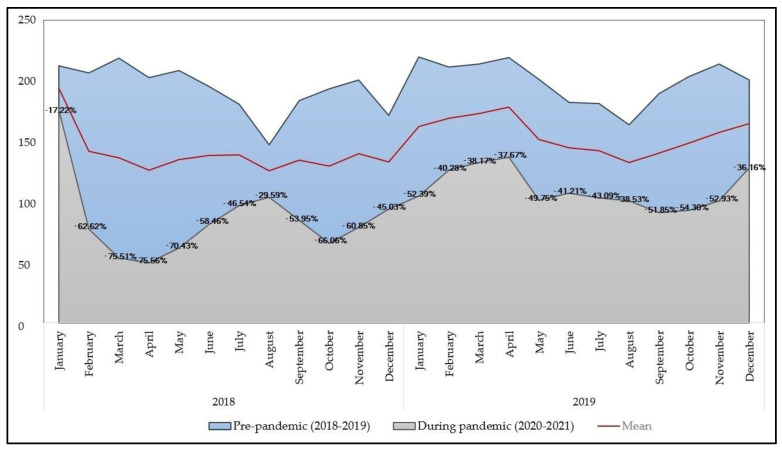
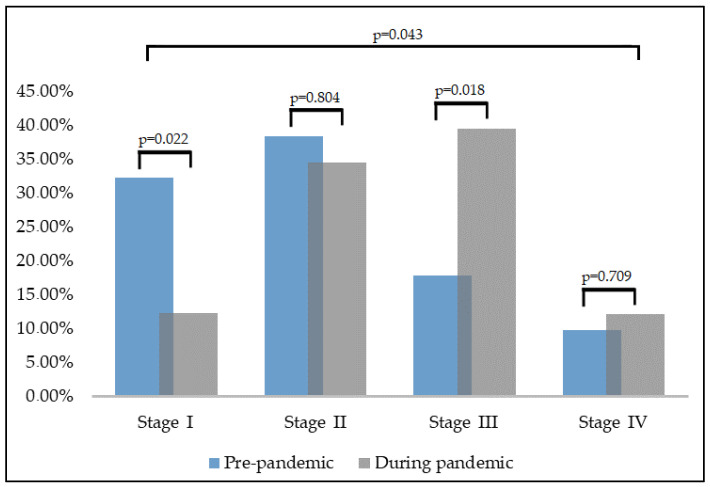
The Pap test plays a significant role worldwide in the early diagnosis of and high curability rates for cervical cancer. However, the coronavirus disease 2019 (COVID-19) pandemic necessitated the use of multiple drastic measures to stop the spread of the severe acute respiratory syndrome coronavirus 2 (SARS-CoV-2) virus, limiting women's access to essential invasive and non-invasive investigations for cervical cancer diagnosis. Therefore, we aimed to determine the impact the COVID-19 pandemic had on cancer diagnosis and management in western Romania. A retrospective study design allowed us to compare the last 24 months of the pre-pandemic period with the first 24 months of the COVID-19 pandemic to determine the change in volume of cervical screening tests, the number of newly diagnosed cases and their severity, and the access to cancer care. A drastic 75.5% decrease in the volume of tests was observed in April 2020 during the first lockdown, after which the volume of cases decreased by up to 36.1% in December 2021. The total volume loss of tests during the first 24 months of the pandemic was 49.9%. The percentage of late-stage cervical cancers (III-IV) rose by 17%, while the number of newly diagnosed cancers in our outpatient clinic was significantly lower than the baseline, with a 45% drop. The access to cancer care was negatively influenced, with 9.2% more patients waiting longer to receive test results over four weeks, while taking longer to seek cancer care after diagnosis (6.4 months vs. 4.1 months pre-pandemic) and missing significantly more appointments. The COVID-19 pandemic had a significantly negative impact on cervical cancer diagnosis and management during the first 24 months compared with the same period before the pandemic. Although the numbers are now recovering, there is still a big gap, meaning that many cervical cancer cases were potentially missed. We recommend further interventions to reduce the gap between the pre-pandemic and pandemic period.
Keywords: COVID-19; SARS-CoV-2; cancer diagnosis; cervical cancer.
Conflict of interest statement
The authors declare no conflict of interest.
Figures
References
-
- Memon A., Bannister P. Epidemiology of Cervical Cancer. In: Farghaly S., editor. Uterine Cervical Cancer. Springer; Cham, Switzerland: 2019.
-
- The Surveillance, Epidemiology, and End Results (SEER) Program. [(accessed on 21 January 2022)]; Available online: http://seer.cancer.gov.
-
- Cancer Research UK. [(accessed on 21 January 2022)]. Available online: http://info.cancerresearchuk.org.
LinkOut - more resources
Full Text Sources
Research Materials
Miscellaneous
