Review
. 2022 Apr 16;12(4):1006.
doi: 10.3390/diagnostics12041006.

Imaging of the Temporomandibular Joint

Affiliations
Review

Imaging of the Temporomandibular Joint

Seyed Mohammad Gharavi et al. Diagnostics (Basel). .

Abstract

Temporomandibular disorder (TMD) is a common musculoskeletal condition that causes pain and disability for patients and imposes a high financial burden on the healthcare system. The most common cause of TMD is internal derangement, mainly secondary to articular disc displacement. Multiple other pathologies such as inflammatory arthritis, infection, and neoplasm can mimic internal derangement. MRI is the modality of choice for evaluation of the TMJ. Radiologists need to be familiar with the normal anatomy and function of the TMJ and MR imaging of the internal derangement and other less common pathologies of the TMJ.

Keywords: TMJ; arthritis; imaging; internal derangement; neoplasm; radiologist; temporomandibular disorder; temporomandibular joint.


Conflict of interest statement

The authors declare that they have no conflict of interest.

Figures
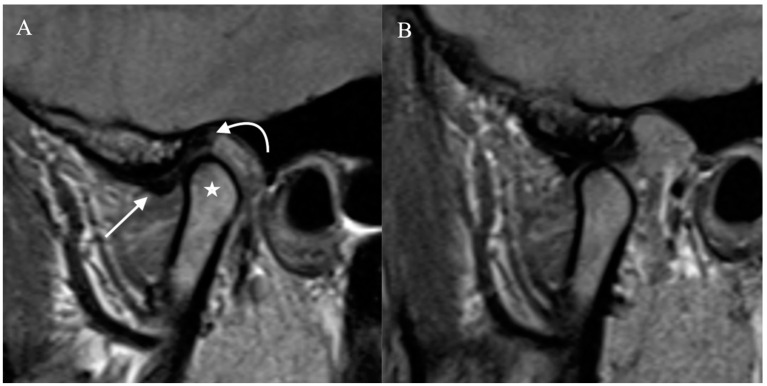
Figure 1
Figure 1
Normal Temporomandibular joint MRI. Proton density sagittal image of the TMJ in closed mouth (A) position shows normal location and bow-tie appearance of the articular disc with anterior (straight arrow) and posterior bands (curved arrow). The mandibular condyle (star) is in an anatomic location within the mandibular fossa. On open mouth images (B), normal condylar rotation and anterior translation are noted.
Figure 2
Figure 2
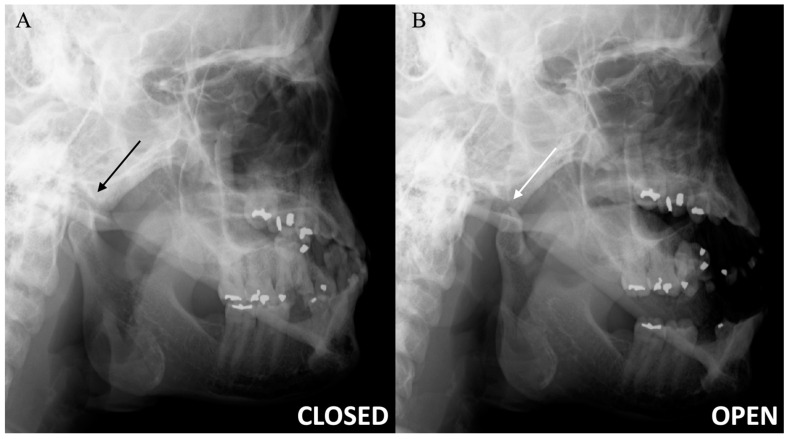
Temporomandibular joint radiographs. Axiolateral TMJ views in the closed mouth (A) and open mouth (B) positions demonstrate the normal location of the mandibular condyle within the mandibular fossa (black arrow) and normal condylar rotation and anterior translation (white arrow), respectively.
Figure 3
Figure 3
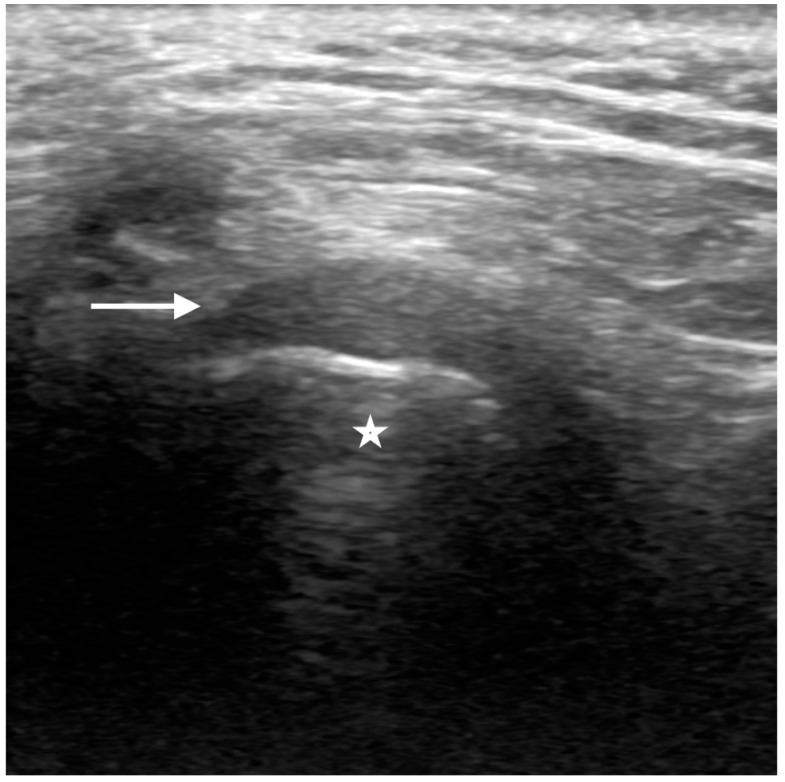
Normal ultrasound of the articular disc. Sonographic images of the TMJ with the probe longitudinal to the articular disc on closed mouth views demonstrate the normal hypoechoic appearance of the mandibular condyle (star), with a rim of the hyperechoic cortex. The articular disc (straight arrow) demonstrates the normal inverted c-shaped morphology and hypoechogenicity, situated just superior to the condylar cortex.
Figure 4
Figure 4
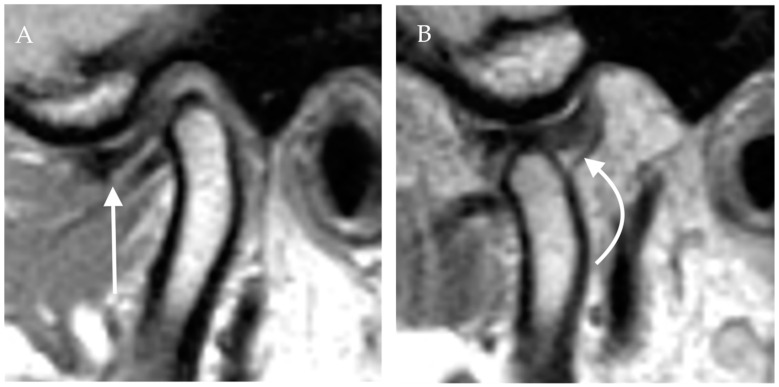
Anterior disc displacement with recapture. Proton density sagittal image of the TMJ in closed mouth (A) position shows anterior displacement of the articular disc with otherwise normal bow-tie appearance (straight arrow). The mandibular condyle is situated in an anatomic location within the mandibular fossa. On open mouth images (B), normal condylar rotation and anterior translation are noted. Note the recapture of the articular disc, which is now in the normal position (curved arrow). The bow-tie appearance of the articular disc is preserved.
Figure 5
Figure 5
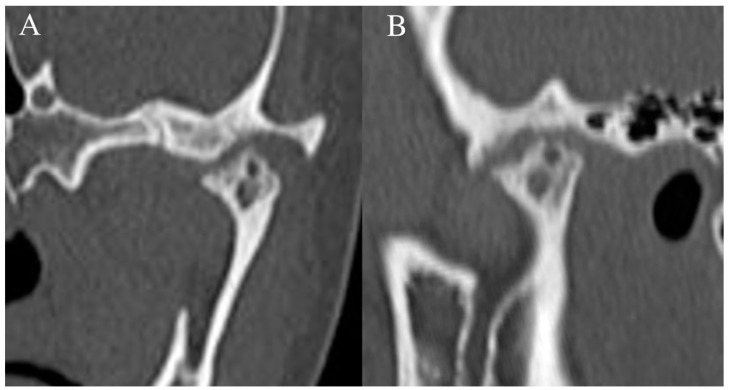
Idiopathic condylar resorption. Sagittal (A) and coronal (B) images through the TMJ in bone windows demonstrate extensive loss of the mandibular condyle and additional erosive changes of the underlying mandibular fossa and articular eminence.
Figure 6
Figure 6
Juvenile idiopathic arthritis. Post-contrast T1W fat-saturated sagittal (A) and coronal (B) images of the TMJ demonstrate flattening and irregularity of the condyle with erosions (long tail arrows), resulting in an irregular foreshortened appearance from chronic inflammation. Joint effusion is noted with surrounding synovial enhancement (short tail arrows), consistent with an acute JIA flair.
Figure 7
Figure 7
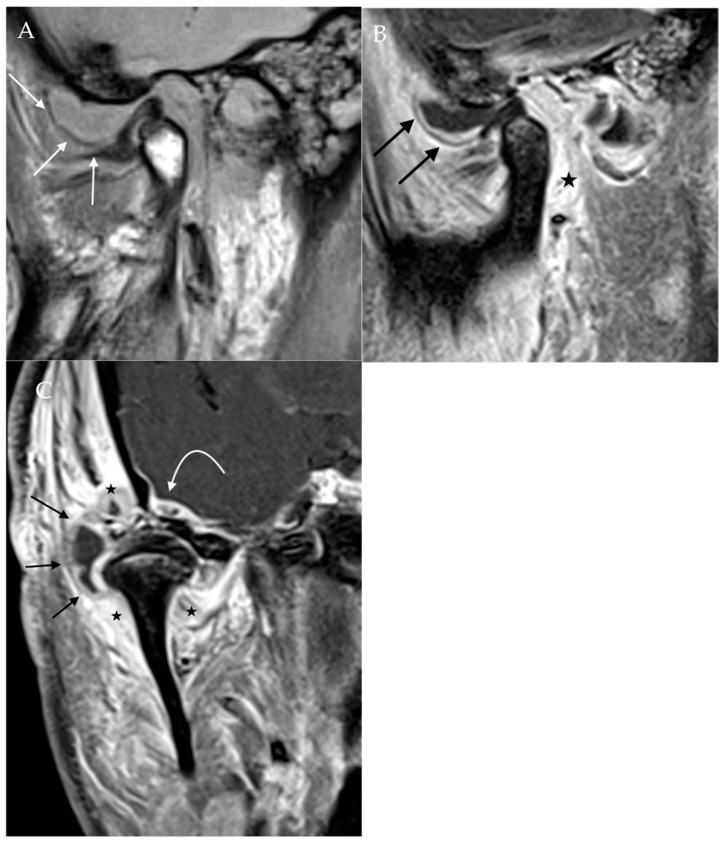
Septic arthritis. Proton density sagittal image of the TMJ (A) demonstrates a large joint effusion expanding the space between the articular disc and articular tubercle (straight white arrow). Post-contrast T1Wfat-saturated sagittal (B) and coronal (C) images demonstrate extensive surrounding synovial enhancement (black arrows) and soft tissue enhancement (star). Also noted is enhancement along the dura of the right temporal lobe (curved arrow), indicating the intracranial extension of infection.
Figure 8
Figure 8
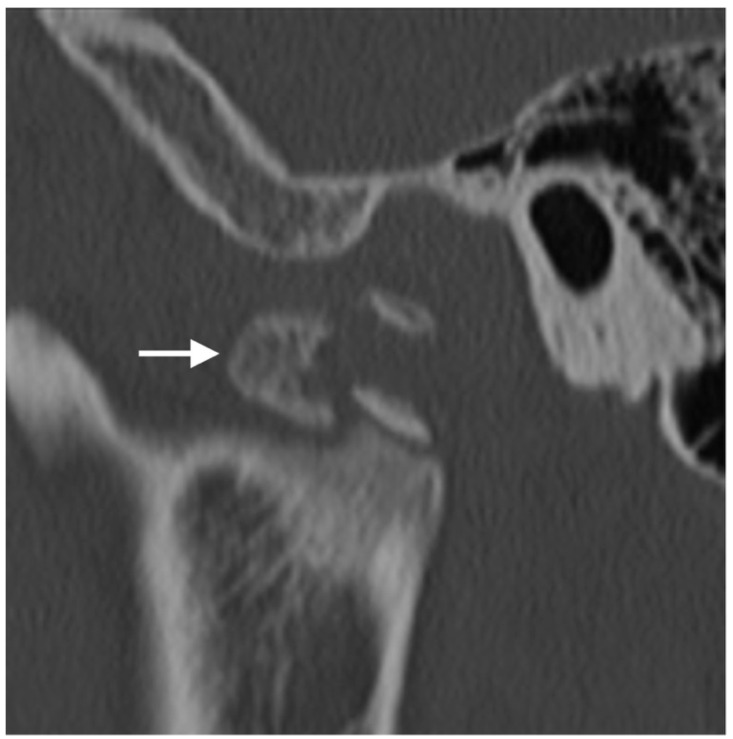
Trauma. Sagittal CT image of the TMJ demonstrates comminuted fracture of the condylar neck with a displacement of the fracture fragments. Mild sclerosis around the fracture lines suggests a component of interval healing. The tip of the mandibular condyle (arrow) is displaced antero-inferiorly.
Figure 9
Figure 9
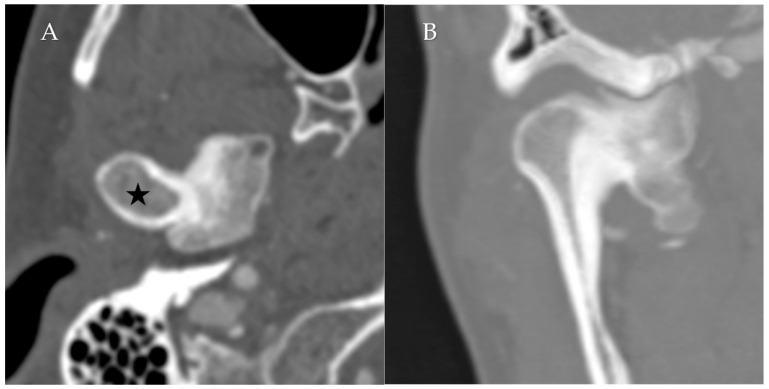
Condylar Osteochondroma. Axial (A) CT in bone windows and reformatted coronal (B) image demonstrates a prominent bony mass arising along the medial aspect of the mandibular condyle (star), with a well-corticated appearance and no aggressive features.
Figure 10
Figure 10
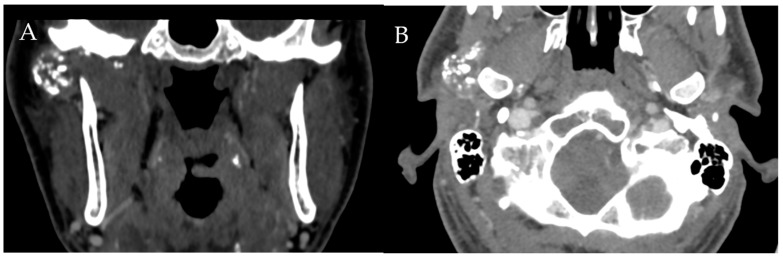
Synovial Chondromatosis. Coronal (A) and axial (B) CT shows multiple calcified loose bodies in the right TMJ consistent with synovial chondromatosis.
Figure 11
Figure 11
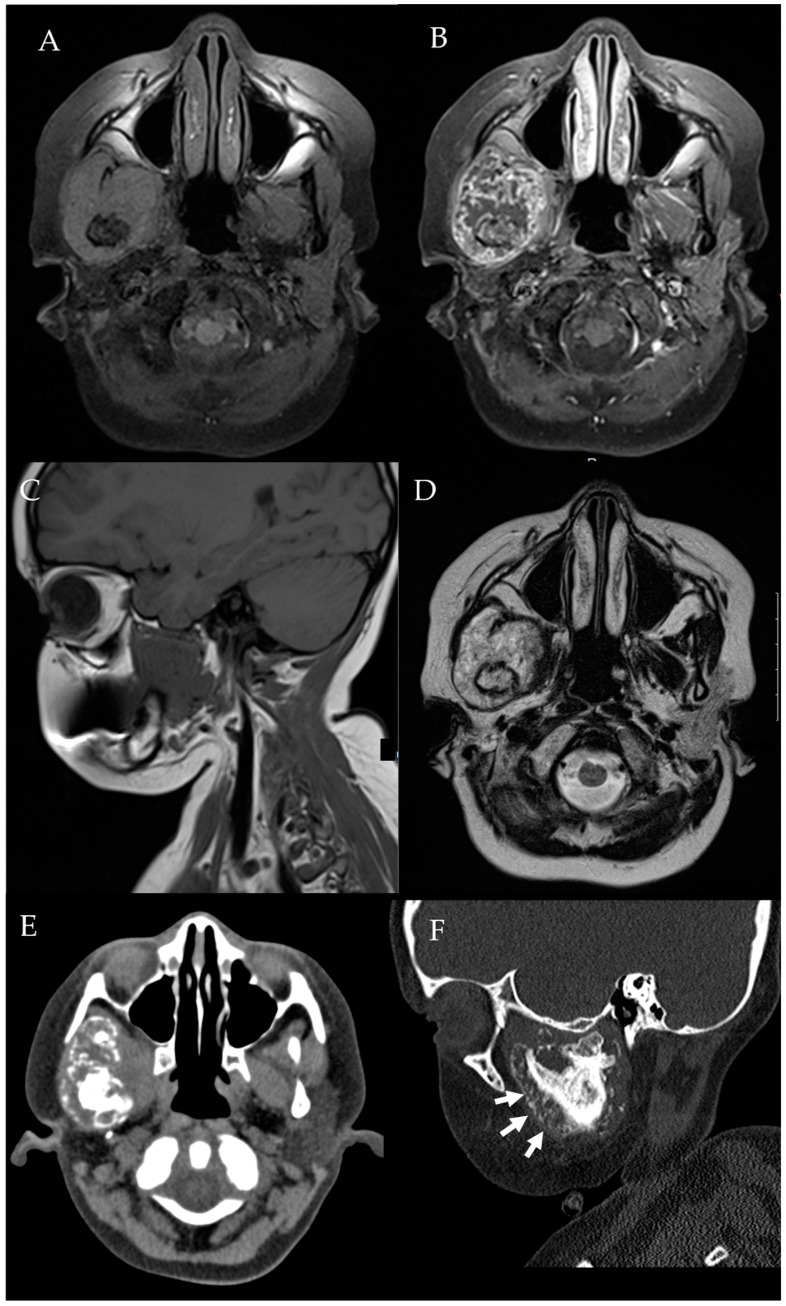
Condylar chondroblastic osteosarcoma. Axial pre-contrast (A) and post-contrast T1W (B), sagittal pre-contrast T1W (C), and axial T2W (D) images demonstrate a heterogeneously enhancing and T2-hyperintense right condylar mass in a nine-year-old patient. Axial (E) and sagittal (F) CT images show a soft tissue mass with mineralized matrix and aggressive periosteal reaction (small arrows) at the TMJ. Biopsy confirmed chondroblastic osteosarcoma.

References

    1. Valesan L.F., Da-Cas C.D., Réus J.C., Denardin A.C.S., Garanhani R.R., Bonotto D., Januzzi E., de Souza B.D.M. Prevalence of Temporomandibular Joint Disorders: A Systematic Review and Meta-Analysis. Clin. Oral Investig. 2021;25:441–453. doi: 10.1007/s00784-020-03710-w. - DOI - PubMed
    1. Slade G.D., Fillingim R.B., Sanders A.E., Bair E., Greenspan J.D., Ohrbach R., Dubner R., Diatchenko L., Smith S.B., Knott C., et al. Summary of Findings from the OPPERA Prospective Cohort Study of Incidence of First-Onset Temporomandibular Disorder: Implications and Future Directions. J. Pain. 2013;14:T116–T124. doi: 10.1016/j.jpain.2013.09.010. - DOI - PMC - PubMed
    1. Morales H., Cornelius R. Imaging Approach to Temporomandibular Joint Disorders. Clin. Neuroradiol. 2016;26:5–22. doi: 10.1007/s00062-015-0465-0. - DOI - PubMed
    1. Bagis B., Ayaz E.A., Turgut S., Durkan R., Özcan M. Gender Difference in Prevalence of Signs and Symptoms of Temporomandibular Joint Disorders: A Retrospective Study on 243 Consecutive Patients. Int. J. Med. Sci. 2012;9:539–544. doi: 10.7150/ijms.4474. - DOI - PMC - PubMed
    1. Manfredini D., Chiappe G., Bosco M. Research Diagnostic Criteria for Temporomandibular Disorders (RDC/TMD) Axis I Diagnoses in an Italian Patient Population. J. Oral Rehabil. 2006;33:551–558. doi: 10.1111/j.1365-2842.2006.01600.x. - DOI - PubMed

LinkOut - more resources