


Formulation Challenges and Strategies to Develop Pediatric Dosage Forms
- PMID: 35455532
- PMCID: PMC9027946
- DOI: 10.3390/children9040488
Formulation Challenges and Strategies to Develop Pediatric Dosage Forms
Abstract
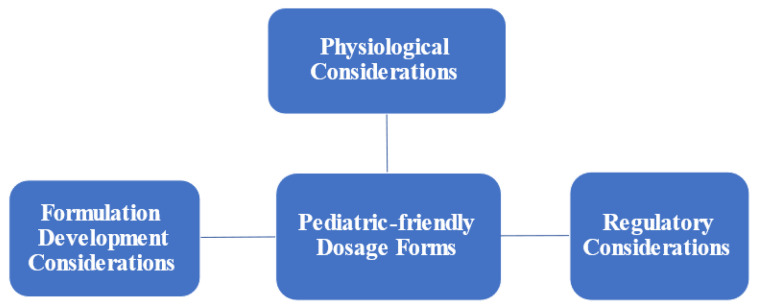
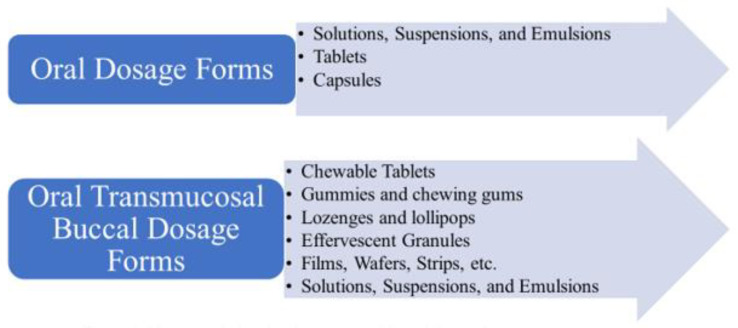
The development of pediatric-specific dose forms is particularly difficult due to a variety of factors relating to pediatric population differences from adult populations. The buccal dosage form is considered a good alternative to oral dosage form if the latter cannot be used in pediatric patients. Both oral and buccal dosage formulations uphold great application qualities for pediatric patients. This review sheds light on both oral and buccal, as they are the most convenient dosage forms for pediatrics. The use of adult drugs to treat children is a legislation concern, as it may result in incorrect dose, safety, and efficacy. The Best Pharmaceuticals for Children Act (BPCA) and the Pediatric Research Equity Act (PREA) are two key pieces of legislation that encourage and regulate pediatric medication research. Both contribute to a well-balanced approach to emphasizing critical safety and efficacy warnings for the of medications within pediatric populations. These contributions are what enable companies to continue making significant investments in pediatric drug developments. Despite the importance of investigating medicines for children, there is still a demand for pediatric-specific formulations and dosage forms. Many formulations and dosage forms can be designed, among which the buccal drug delivery seems a good modality for pediatric-friendly dosage forms. The main issues associated with these pediatric dosage forms development, particularly clinical and physiological factors, are discussed in this review. In addition, formulation developments and regulatory expectations are highlighted. In turn, suggestions are made to potentially improve future pediatric formulation development.
Keywords: buccal; dosage form; excipients; formulation development; oral; pediatrics; regulatory.
Conflict of interest statement
The authors declare no conflict of interest.
Figures
References
Publication types
LinkOut - more resources
Full Text Sources
Other Literature Sources
