


Advanced Glycation End-Products (AGEs): Formation, Chemistry, Classification, Receptors, and Diseases Related to AGEs
- PMID: 35455991
- PMCID: PMC9029922
- DOI: 10.3390/cells11081312
Advanced Glycation End-Products (AGEs): Formation, Chemistry, Classification, Receptors, and Diseases Related to AGEs
Abstract
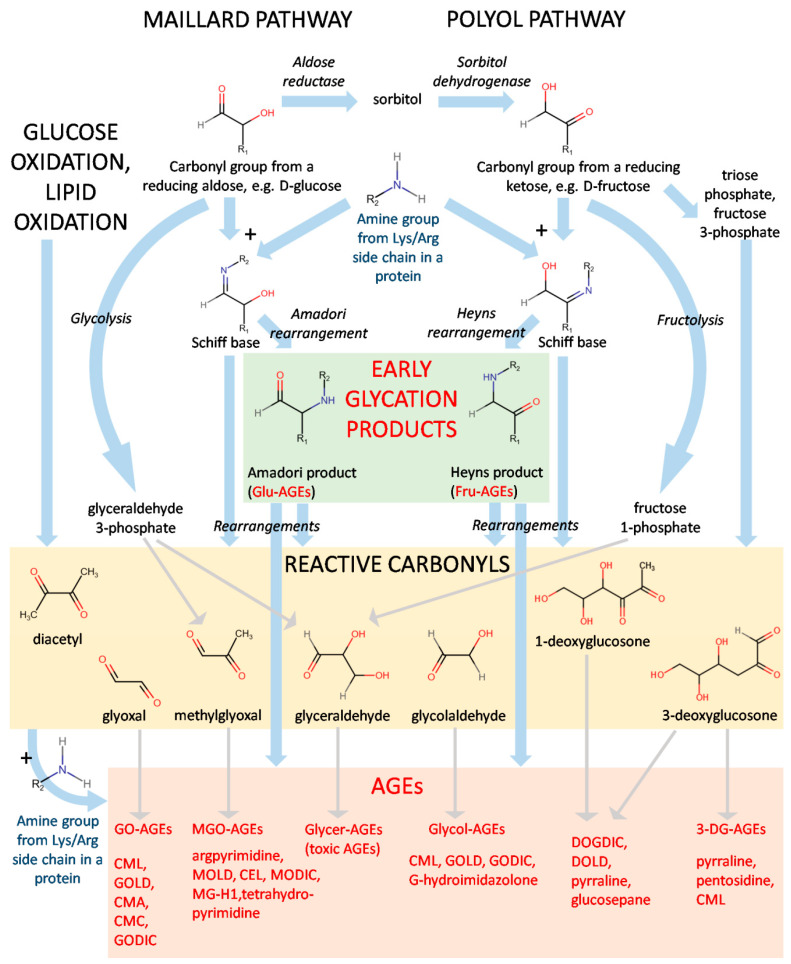
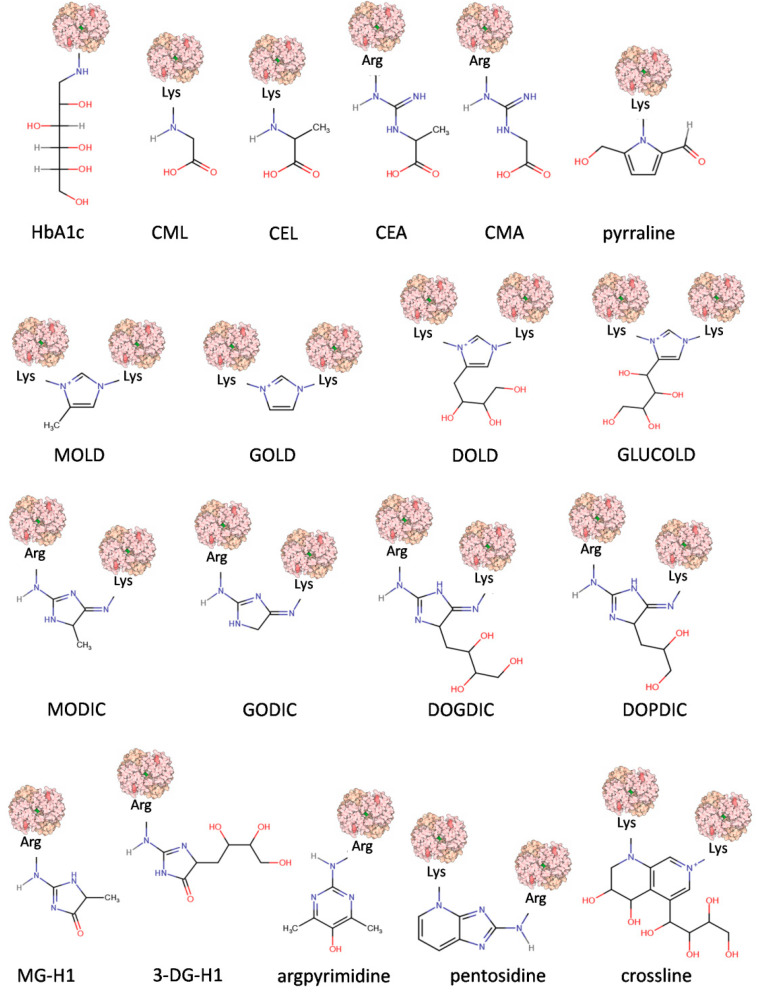
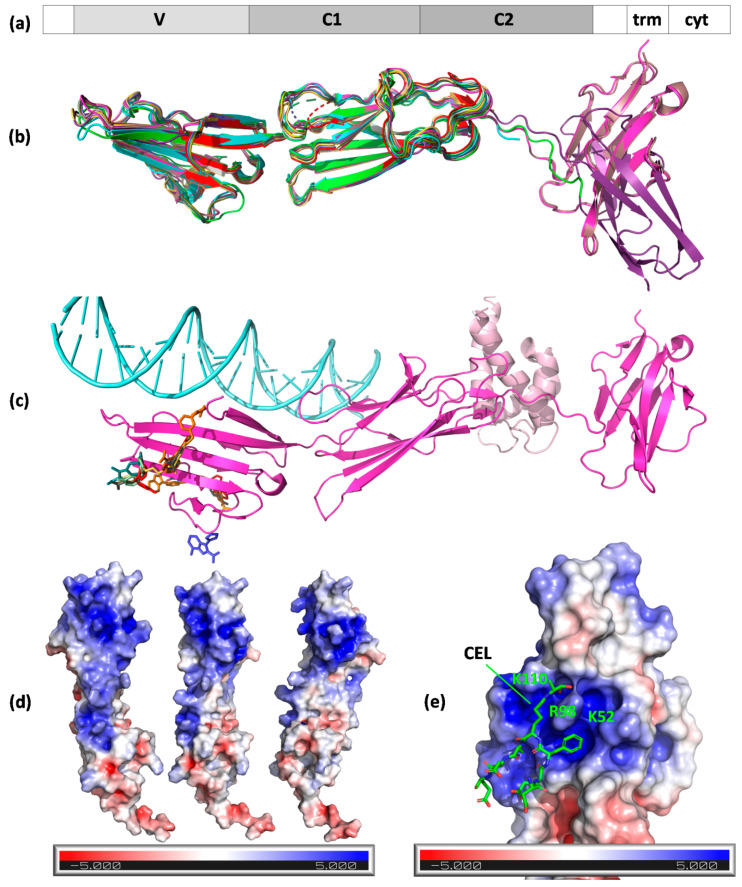
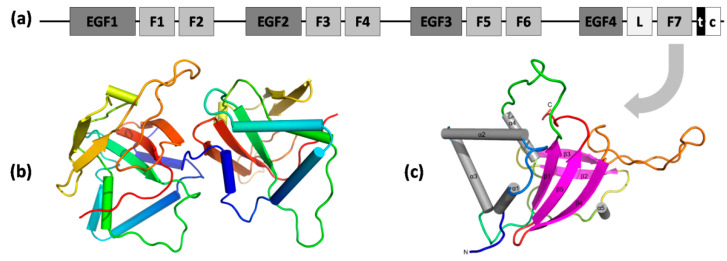
Advanced glycation end-products (AGEs) constitute a non-homogenous, chemically diverse group of compounds formed either exogeneously or endogeneously on the course of various pathways in the human body. In general, they are formed non-enzymatically by condensation between carbonyl groups of reducing sugars and free amine groups of nucleic acids, proteins, or lipids, followed by further rearrangements yielding stable, irreversible end-products. In the last decades, AGEs have aroused the interest of the scientific community due to the increasing evidence of their involvement in many pathophysiological processes and diseases, such as diabetes, cancer, cardiovascular, neurodegenerative diseases, and even infection with the SARS-CoV-2 virus. They are recognized by several cellular receptors and trigger many signaling pathways related to inflammation and oxidative stress. Despite many experimental research outcomes published recently, the complexity of their engagement in human physiology and pathophysiological states requires further elucidation. This review focuses on the receptors of AGEs, especially on the structural aspects of receptor-ligand interaction, and the diseases in which AGEs are involved. It also aims to present AGE classification in subgroups and to describe the basic processes leading to both exogeneous and endogeneous AGE formation.
Keywords: AGE classification; AGE formation; AGE receptors; AGE-related diseases; AGEs; RAGE; Stab2; advanced glycation end-products.
Conflict of interest statement
The authors declare no conflict of interest. The funders had no role in the design of the study; in the collection, analyses, or interpretation of data; in the writing of the manuscript; or in the decision to publish the results.
Figures
References
-
- Maillard L.-C. Action Des Acides Aminés Sur Les Sucres: Formation Des Melanoidines Par Voie Méthodique. CR Acad. Sci. 1912;154:66–68.
-
- Shen C.Y., Lu C.H., Wu C.H., Li K.J., Kuo Y.M., Hsieh S.C., Yu C.L. The Development of Maillard Reaction, and Advanced Glycation End Product (Age)-Receptor for Age (Rage) Signaling Inhibitors as Novel Therapeutic Strategies for Patients with Age-Related Diseases. Molecules. 2020;25:5591. doi: 10.3390/molecules25235591. - DOI - PMC - PubMed
Publication types
MeSH terms
Substances
LinkOut - more resources
Full Text Sources
Medical
Miscellaneous
