


Antimicrobial Synergy between Aminoglycosides and Licorice Extract in Listeria monocytogenes
- PMID: 35456115
- PMCID: PMC9031314
- DOI: 10.3390/pathogens11040440
Antimicrobial Synergy between Aminoglycosides and Licorice Extract in Listeria monocytogenes
Abstract
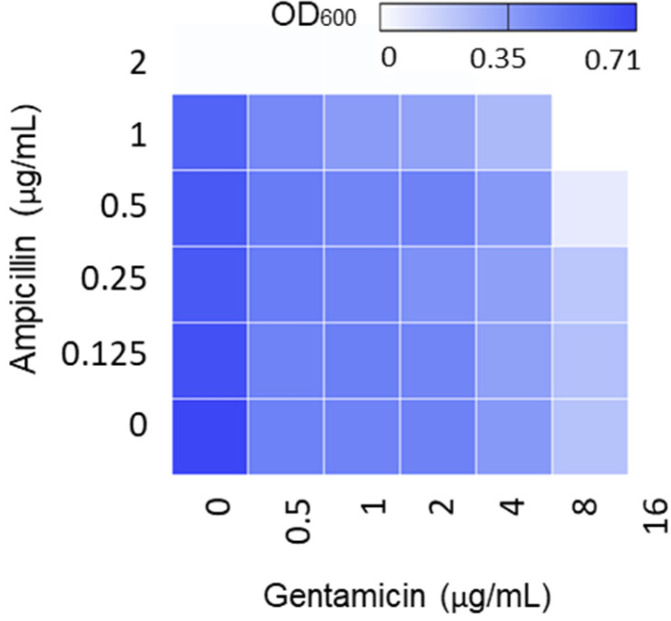
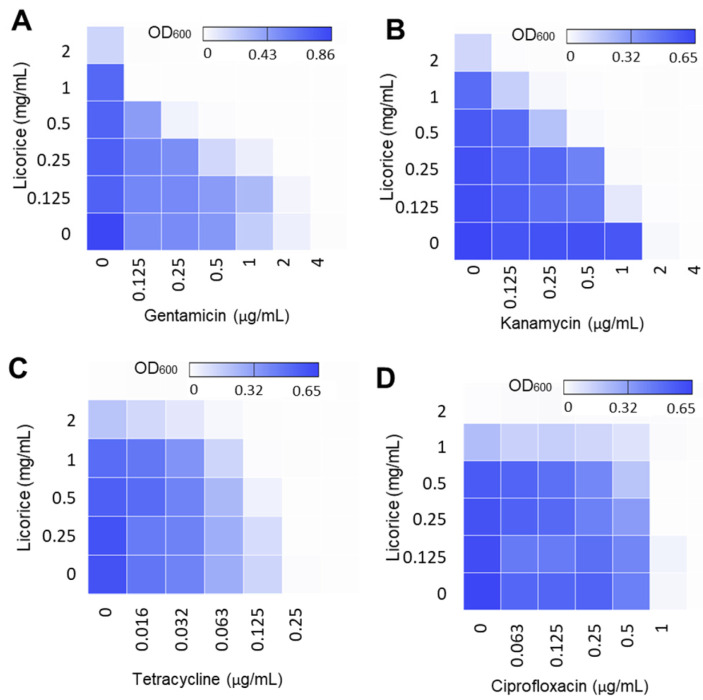
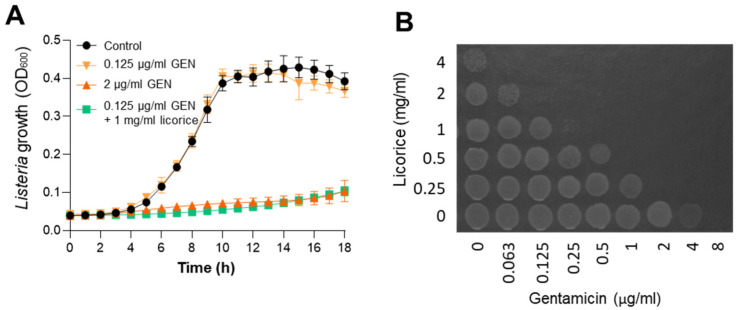
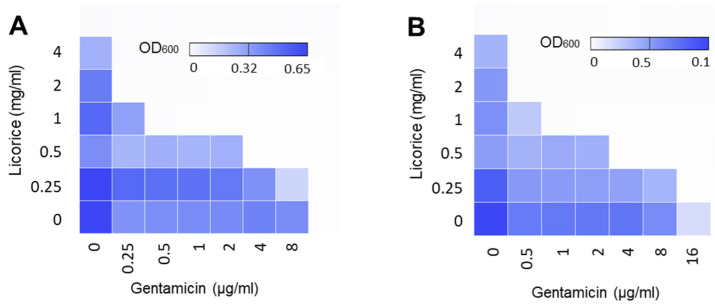
Listeria monocytogenes is a foodborne pathogen that can develop serious invasive infections. Among foodborne pathogens, L. monocytogenes exhibits the highest case fatality despite antibiotic treatment, suggesting the current therapy should be improved. Although ampicillin and gentamicin are used as a combination therapy to treat listeriosis, our results showed there is no synergy between the two antibiotics. We discovered that aqueous extract of licorice generated significant antimicrobial synergy when combined with aminoglycosides, such as gentamicin, in L. monocytogenes. In the presence of 1 mg/mL licorice extract, for instance, the minimum inhibitory concentration (MIC) of gentamicin was reduced by 32-fold. Moreover, antimicrobial synergy with licorice extract made gentamicin-resistant clinical isolates of L. monocytogenes susceptible to gentamicin. Given the common use of licorice as a food sweetener in Western countries and a herb in Oriental medicine, our findings suggest that licorice extract can be potentially used as an antibiotic adjuvant to improve the efficacy of antimicrobial treatment of listeriosis.
Keywords: Listeria; aminoglycosides; antimicrobial synergy; drug potentiation; plant extract.
Conflict of interest statement
The authors declare no conflict of interest.
Figures
References
-
- Barton Behravesh C., Jones T.F., Vugia D.J., Long C., Marcus R., Smith K., Thomas S., Zansky S., Fullerton K.E., Henao O.L., et al. Deaths associated with bacterial pathogens transmitted commonly through food: Foodborne diseases active surveillance network (FoodNet), 1996–2005. J. Infect. Dis. 2011;204:263–267. doi: 10.1093/infdis/jir263. - DOI - PubMed
-
- Van Walle I., Björkman J.T., Cormican M., Dallman T., Mossong J., Moura A., Pietzka A., Ruppitsch W., Takkinen J. Retrospective validation of whole genome sequencing-enhanced surveillance of listeriosis in Europe, 2010 to 2015. Eurosurveillance. 2018;23:1700798. doi: 10.2807/1560-7917.ES.2018.23.33.1700798. - DOI - PMC - PubMed
Grants and funding
LinkOut - more resources
Full Text Sources
