


Treatment of Transthyretin Amyloid Cardiomyopathy: The Current Options, the Future, and the Challenges
- PMID: 35456241
- PMCID: PMC9031576
- DOI: 10.3390/jcm11082148
Treatment of Transthyretin Amyloid Cardiomyopathy: The Current Options, the Future, and the Challenges
Abstract
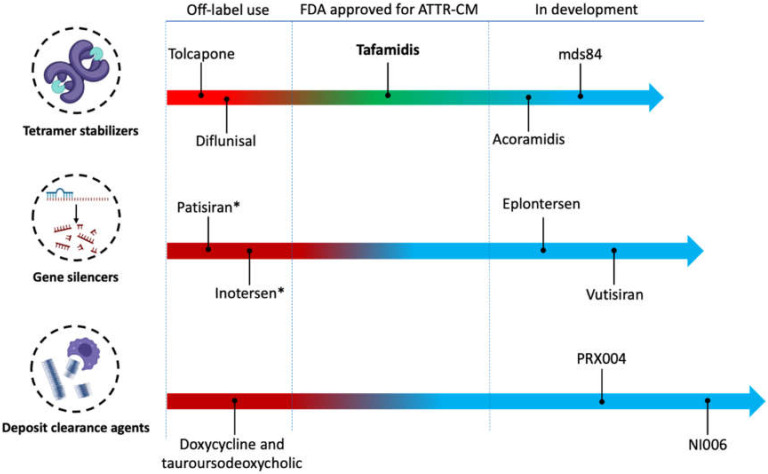
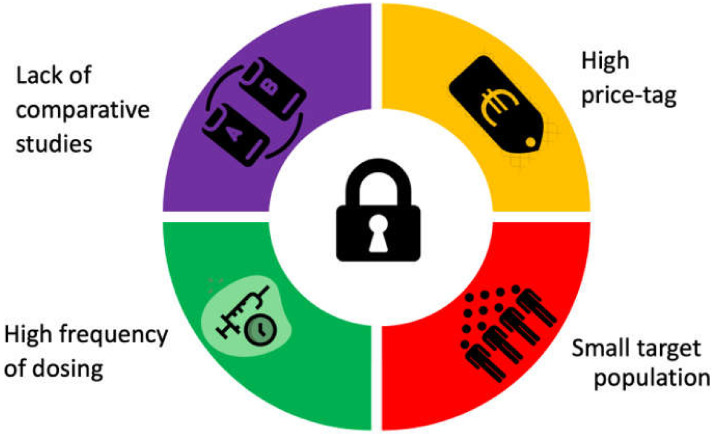
Transthyretin amyloid cardiomyopathy (ATTR-CM) is a progressively debilitating, rare disease associated with high mortality. ATTR-CM occurs when TTR amyloid protein builds up in the myocardium along with different organs, most commonly the peripheral and the autonomic nervous systems. Managing the cardiac complications with standard heart failure medications is difficult due to the challenge to maintain a balance between the high filling pressure associated with restricted ventricular volume and the low cardiac output. To date, tafamidis is the only agent approved for ATTR-CM treatment. Besides, several agents, including green tea, tolcapone, and diflunisal, are used off-label in ATTR-CM patients. Novel therapies using RNA interference also offer clinical promise. Patisiran and inotersen are currently approved for ATTR-polyneuropathy of hereditary origin and are under investigation for ATTR-CM. Monoclonal antibodies in the early development phases carry hope for amyloid deposit clearance. Despite several drug candidates in the clinical development pipeline, the small ATTR-CM patient population raises several challenges. This review describes current and future therapies for ATTR-CM and sheds light on the clinical development hurdles facing them.
Keywords: TTR amyloid; cardiac amyloidosis; clinical development; tafamidis; transthyretin amyloid cardiomyopathy.
Conflict of interest statement
C.T. has received speaker fees and/or contributions to congresses from Abbott, Abiomed, Astra Zeneca, Bayer, Böhringer-Ingelheim, Novartis, and Pfizer.
Figures
References
Publication types
LinkOut - more resources
Full Text Sources
Other Literature Sources
Research Materials
Miscellaneous
