


Co-design and evaluation of a patient-centred transition programme for stroke patients, combining case management and access to an internet information platform: study protocol for a randomized controlled trial - NAVISTROKE
- PMID: 35459183
- PMCID: PMC9027042
- DOI: 10.1186/s12913-022-07907-5
Co-design and evaluation of a patient-centred transition programme for stroke patients, combining case management and access to an internet information platform: study protocol for a randomized controlled trial - NAVISTROKE
Abstract
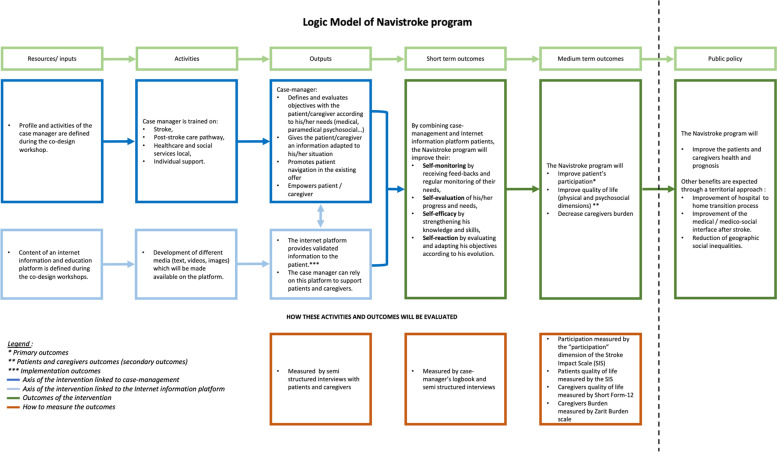
Background: Stroke affects many aspects of life in stroke survivors and their family, and returning home after hospital discharge is a key step for the patient and his or her relatives. Patients and caregivers report a significant need for advice and information during this transition period. Our hypothesis is that, through a comprehensive, individualised and flexible support for patients and their caregivers, a patient-centred post-stroke hospital/home transition programme, combining an Internet information platform and telephone follow-up by a case manager, could improve patients' level of participation and quality of life.
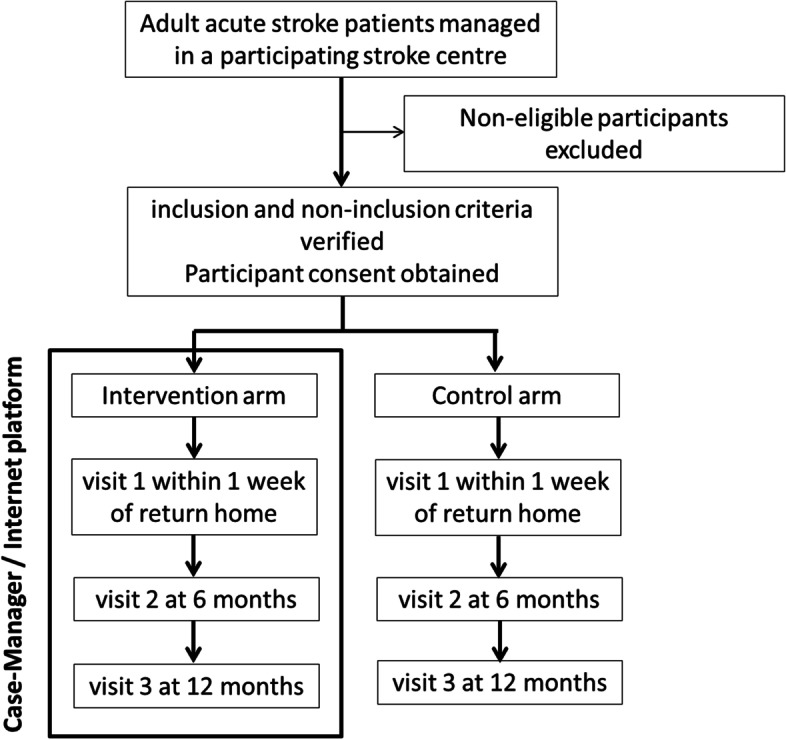
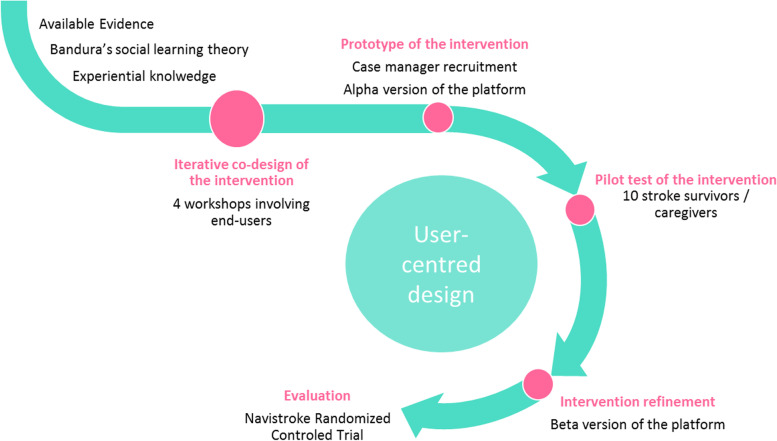
Methods: An open parallel-group randomized trial will be conducted in two centres in France. We will recruit 170 adult patients who have had a first confirmed stroke, and were directly discharged home from the stroke unit with a modified Rankin score ≤3. Intervention content will be defined using a user-centred approach involving patients, caregivers, health-care professionals and social workers. Patients randomized to the intervention group will receive telephonic support by a trained case manager and access to an interactive Internet information platform during the 12 months following their return home. Patients randomized to the control group will receive usual care. The primary outcome is patient participation, measured by the "participation" dimension score of the Stroke Impact Scale 6 months after discharge. Secondary outcomes will include, for patients, quality of life, activation, care consumption, as well as physical, mental and social outcomes; and for caregivers, quality of life and burden. Patients will be contacted within one week after discharge, at 6 and 12 months for the outcomes collection. A process evaluation alongside the study is planned.
Discussion: Our patient-centred programme will empower patients and their carers, through individualised and progressive follow-up, to find their way around the range of available healthcare and social services, to better understand them and to use them more effectively. The action of a centralised case manager by telephone and the online platform will make it possible to disseminate this intervention to a large number of patients, over a wide area and even in cases of geographical isolation.
Trial registration: ClinicalTrials NCT03956160 , Posted: May-2019 and Update: September-2021.
Keywords: Hospital discharge; Patient-centred transition programme; Stroke.
© 2022. The Author(s).
Conflict of interest statement
The authors declare that they have no competing interests.
Figures
References
-
- Hankey GJ. Stroke. Lancet Lond Engl. 2017 11;389(10069):641–54. - PubMed
-
- Gabet A, de Peretti C, Woimant F, Giroud M, Bejot Y, Schnitzler A, Olie V. Évolution de l’admission en soins de suite et de réadaptation des patients hospitalisés pour accident vasculaire cérébral en France, 2010-2014. Bull Epidémiologique Hebd. 2017 2017(11):196–207.
Publication types
MeSH terms
Associated data
Grants and funding
LinkOut - more resources
Full Text Sources
Medical
