. 2022 Apr 22;7(1):45.
doi: 10.1038/s41541-022-00467-z.

An adjuvanted zoster vaccine elicits potent cellular immune responses in mice without QS21

Affiliations

An adjuvanted zoster vaccine elicits potent cellular immune responses in mice without QS21

Hyo Jung Nam et al. NPJ Vaccines. .

Abstract

Herpes zoster (HZ) is caused by reactivation of latent varicella-zoster virus (VZV) when VZV-specific cellular immunity is insufficient to control reactivation. Currently, Shingrix, which contains the VZV gE protein and GSK's AS01B adjuvant composed of liposomes formulated with cholesterol, monophosphoryl lipid A (MPL) and QS21, is used for prevention of HZ. However, reactogenicity to Shingrix is common leading to poor patient compliance in receiving one or both shots. Here, we evaluated the immunogenicity of a newly formulated gE protein-based HZ vaccine containing Second-generation Lipid Adjuvant (SLA), a synthetic TLR4 ligand, formulated in an oil-in-water emulsion (SLA-SE) without QS21 (gE/SLA-SE). In VZV-primed mouse models, gE/SLA-SE-induced gE-specific humoral and cellular immune responses at comparable levels to those elicited by Shingrix in young mice, as both gE/SLA-SE and Shingrix induce polyfunctional CD4+ T-cell responses. In aged mice, gE/SLA-SE elicited more robust gE-specific T-cell responses than Shingrix. Furthermore, gE/SLA-SE-induced T-cell responses were sustained until 5 months after immunization. Thus, QS21-free, gE/SLA-SE is a promising candidate for development of gE-based HZ vaccines with high immunogenicity-particularly when targeting an older population.


Conflict of interest statement

H.J.N., S.G.R., and S.J.H. are inventors on a current patent application entitled, “Herpes Zoster Vaccine Composition.” D.C. and S.G.R. are inventors on the patent families related to GLA and SLA. No other authors declare any competing interests.

Figures
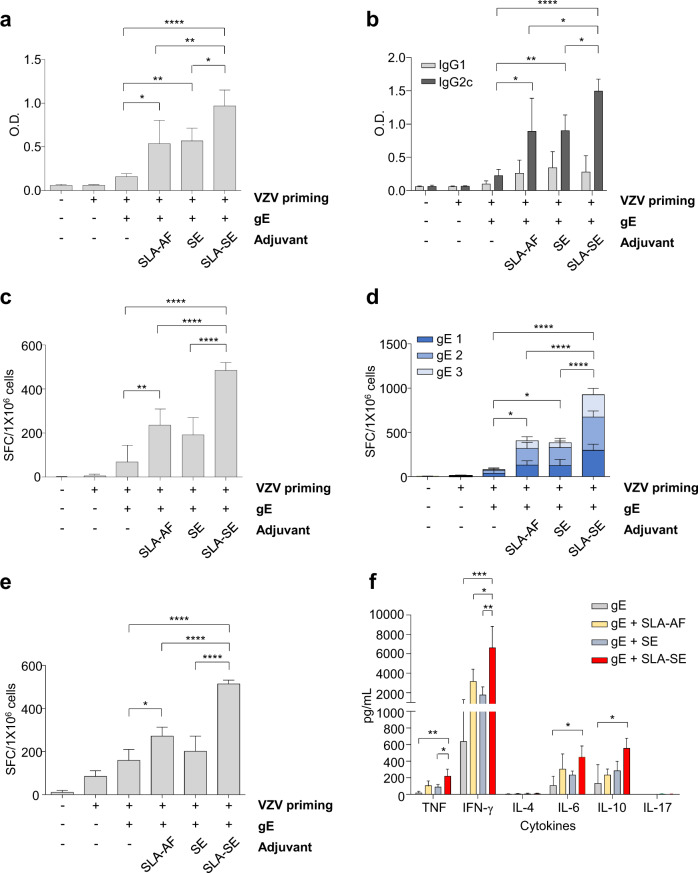
Fig. 1
Fig. 1. gE- and VZV-specific immune responses induced by gE/SLA-AF, gE/SE, or gE/SLA-SE.
C57BL/6 mice were primed with live attenuated VZV, and then immunized once with gE (5 µg), gE (5 µg)/SLA in aqueous formulation (SLA-AF, 5 µg of SLA), gE (5 µg)/oil-in-water emulsion (SE, 2% oil), or gE (5 µg)/SLA-SE (5 µg SLA in 2% oil) 4 weeks later. Two weeks after immunization, serum was obtained from immunized mice to examine humoral immunity and spleen cells prepared to examine cell-mediated immunity. a gE-specific total IgG antibody response by IgG ELISA using 100,000-fold diluted serum samples from immunized mice. b gE-specific IgG1 and IgG2c antibody response by IgG ELISA using 100,000-fold diluted serum from immunized mice. ce Antigen-specific, IFN-γ-producing T-cell populations were detected by mouse IFN-γ ELISPOT assay using spleen cells from immunized mice upon antigenic stimulation with c gE protein, d three pools of 62 gE OLPs (15-mer, 5-mer overlap): gE 1 (20 peptides), gE 2 (20 peptides), and gE 3 (22 peptides) or e VZV-infected cell lysate. f Measurement of cytokine secretion upon re-stimulation with gE OLP by cytometric bead array assay. Data are presented as means and standard deviations. *P < 0.05, **P < 0.01, ***P < 0.005, ****P < 0.001 (ordinary one-way ANOVA). n = 4 mice per group.
Fig. 2
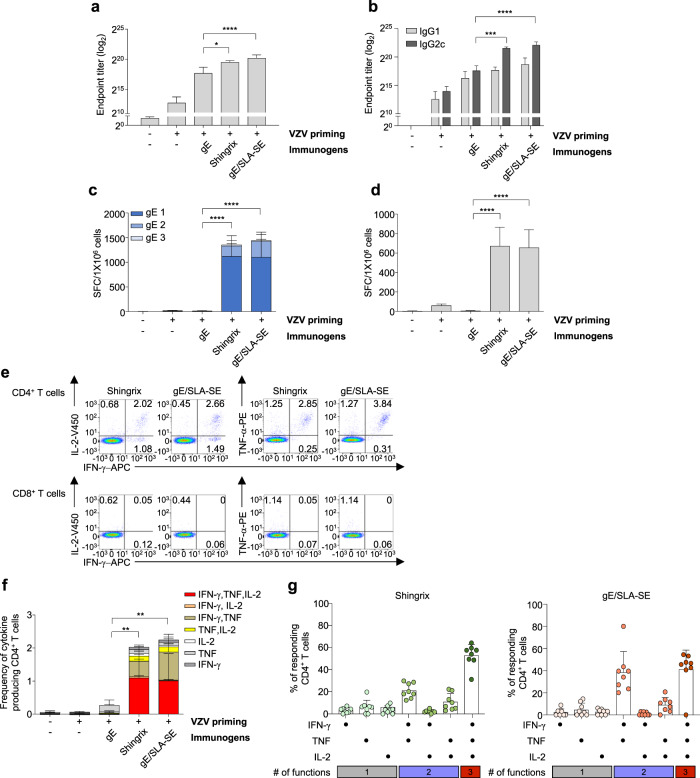
Fig. 2. Comparison of gE- or VZV-specific immune responses of gE/SLA-SE with Shingrix in young mice.
Six-week-old C57BL/6 mice were primed with live attenuated VZV, and then immunized twice with gE (5 µg), gE (5 µg)/SLA-SE (10 µg SLA in 2% oil), or Shingrix (1/10 of human dose, gE [5 µg]/AS01B [5 µg MPL and 5 µg QS21]) at a 4-week interval. Four weeks after the second immunization, serum was obtained from immunized mice to examine humoral immunity and spleen cells prepared to examine cell-mediated immunity. a gE-specific total IgG endpoint antibody titer (log2 transformed) using serum from immunized mice. b gE-specific IgG1 and IgG2c antibody titer (log2 transformed) using serum from immunized mice. c, d IFN-γ-producing T-cell populations by mouse IFN-γ ELISPOT assay using spleen cells from immunized mice upon antigenic stimulation with (c) three pools of 62 gE OLPs (15-mer, 5-mer overlap): gE 1 (20 peptides), gE 2 (20 peptides), and gE 3 (22 peptides) or (d) VZV-infected cell lysate. e Representative FACS plots of cytokine-secreting CD4+ and CD8+ T-cell populations in Shingrix or gE/SLA-SE immunized mice upon gE OLP stimulation. f Measurement of the frequency of cytokine-producing CD4+ T cells for IFN-γ, TNF, and IL-2 upon gE OLP stimulation. g CD4+ T-cell polyfunctionality analyzed by every possible combination of functions using Boolean analyses in spleen cells from either Shingrix immunized mice or gE/SLA-SE immunized mice upon gE OLP stimulation. Data are representative of two independent experiments, and data are presented as means and standard deviations. *P < 0.05, **P < 0.01, ****P < 0.001 (ordinary one-way ANOVA). n = 4 (control), 8 mice per group.
Fig. 3
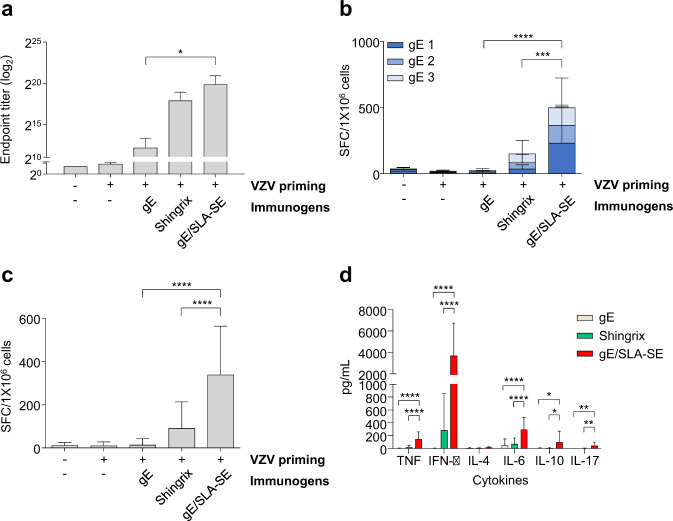
Fig. 3. gE- or VZV-specific immune responses induced by gE/SLA-SE or Shingrix in elderly mice.
Eighteen-month-old mice were primed with live attenuated VZV and immunized twice with gE (5 µg), gE (5 µg)/SLA-SE (10 µg SLA in 2% oil), or Shingrix (1/10 human dose, gE [5 µg]/AS01B [5 µg MPL and 5 µg QS21]) at a 4-week interval. Four weeks after the second immunization, serum was obtained from immunized mice to examine humoral immunity and spleen cells prepared to examine antigen-specific cell-mediated immunity. a gE-specific total IgG endpoint antibody titer (log2 transformed) using serum from immunized mice. b, c Detection of antigen-specific IFN-γ-secreting T-cell numbers by mouse IFN-γ ELISPOT assay using spleen cells from immunized mice upon ex vivo stimulation with (b) three pools of 62 gE OLPs (15-mer, 5-mer overlap): gE 1 (20 peptides), gE 2 (20 peptides), and gE 3 (22 peptides) or (c) VZV-infected cell lysate. d Measurement of cytokine secretion upon stimulation with gE OLP by cytometric bead array assay. Data are pooled from two independent experiments and presented as individual data points with means and standard deviations. *P < 0.05, **P < 0.01, ***P < 0.005, ****P < 0.001 (ordinary one-way ANOVA). n = 4-6 (control), 8–10 mice per group.
Fig. 4
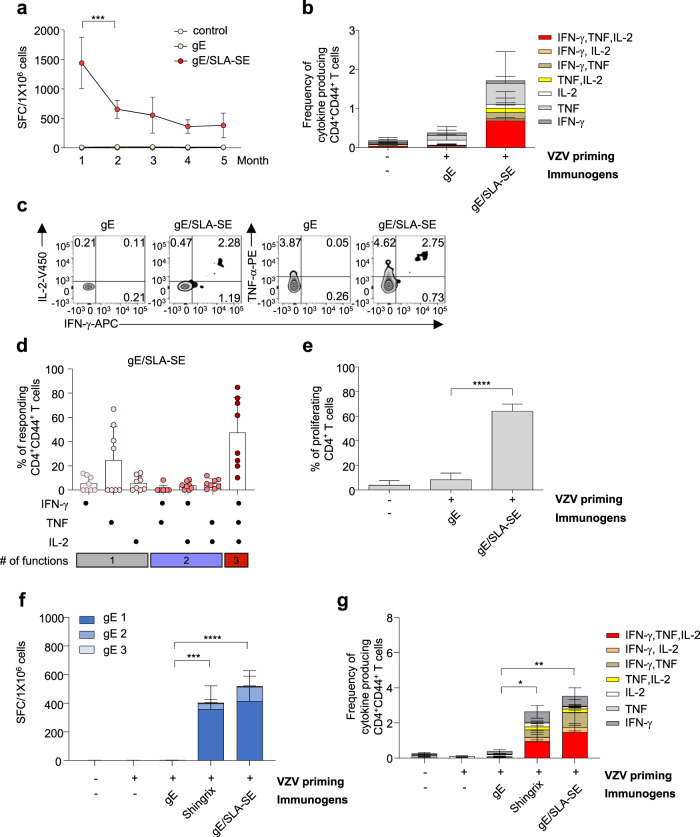
Fig. 4. The durability and functionality of gE-specific T-cell responses by immunization of gE/SLA-SE.
Six-week-old mice were primed and immunized twice with either gE (5 µg) or gE (5 µg)/SLA-SE (10 µg SLA in 2% oil) at a 4-week interval. a Detection of gE-specific IFN-γ-secreting T-cell numbers by mouse IFN-γ ELISPOT assay upon stimulation with three pools of 62 gE OLPs (15-mer, 5-mer overlap): gE 1 (20 peptides), gE 2 (20 peptides), and gE 3 (22 peptides). Mice (n = 4 (control), 8 (group) per each month) were sacrificed each month from 1 to 5 months after the second immunization to examine the durability of the antigen-specific T-cell responses. b Measurement of the frequency of cytokine-secreting T cells among CD4+ CD44hi T cells by intracellular cytokine assay upon gE OLP stimulation 5 months after the second immunization. c Representative FACS plots of IFN-γ, TNF, and/or IL-2-secreting CD4+CD44+ T-cell populations 5 months after the second immunization in gE or gE/SLA-SE immunized mice. d CD4+ T-cell polyfunctionality analyzed by every possible combination of functions using Boolean analysis in spleen cells from gE/SLA-SE immunized mice 5 months after the second immunization upon gE OLP stimulation. e The percentage of proliferating gE-specific CD4+ T cells using Violet Proliferation Dye 450 in spleen cells from either gE or gE/SLA-SE immunized mice 5 months after the second immunization upon 6-day stimulation with gE OLP. f, g Comparison of the durability and functionality of gE-specific T-cell responses induced by gE/SLA-SE or Shingrix. Six-week-old mice were primed and immunized twice with gE (5 µg), gE (5 µg)/SLA-SE (10 µg SLA in 2% oil), or Shingrix (1/10 human dose, gE [5 µg]/AS01B [5 µg MPL and 5 µg QS21]). Three months after the second immunization, spleen cells were prepared to examine cell-mediated immunity. f Detection of gE-specific IFN-γ-secreting T-cell numbers by mouse IFN-γ ELISPOT assay using spleen cells from immunized mice upon ex vivo stimulation with three pools of 62 gE OLPs (15-mer, 5-mer overlap): gE 1 (20 peptides), gE 2 (20 peptides), and gE 3 (22 peptides). g CD4+ T-cell polyfunctionality analyzed by every possible combination of functions using Boolean analysis in spleen cells from immunized mice upon ex vivo gE OLP stimulation. Data are representative of two independent experiments, and data are presented as means and standard deviations. ***P < 0.005, ****P < 0.001 (ordinary one-way ANOVA).

References

    1. Steiner I, Kennedy PG, Pachner AR. The neurotropic herpes viruses: herpes simplex and varicella-zoster. Lancet Neurol. 2007;6:1015–1028. doi: 10.1016/S1474-4422(07)70267-3. - DOI - PubMed
    1. Gershon AA, et al. Varicella zoster virus infection. Nat. Rev. Dis. Prim. 2015;1:15016. doi: 10.1038/nrdp.2015.16. - DOI - PMC - PubMed
    1. Dworkin RH, et al. Recommendations for the management of herpes zoster. Clin. Infect. Dis. 2007;44:S1–S26. doi: 10.1086/510206. - DOI - PubMed
    1. Mitchell BM, Bloom DC, Cohrs RJ, Gilden DH, Kennedy PG. Herpes simplex virus-1 and varicella-zoster virus latency in ganglia. J. Neurovirol. 2003;9:194–204. doi: 10.1080/13550280390194000. - DOI - PubMed
    1. Gilden DH, Kleinschmidt-DeMasters BK, LaGuardia JJ, Mahalingam R, Cohrs RJ. Neurologic complications of the reactivation of varicella-zoster virus. N. Engl. J. Med. 2000;342:635–645. doi: 10.1056/NEJM200003023420906. - DOI - PubMed