


The cultural differences in the effects of carbon emissions - an EKC analysis
- PMID: 35460481
- PMCID: PMC9034262
- DOI: 10.1007/s11356-022-20154-9
The cultural differences in the effects of carbon emissions - an EKC analysis
Abstract
The postmodernism stance critiques the current discourse of modern consumption-based societies. These societies legitimize their embedded beliefs and actions based on their lifestyle reflected through their consumption patterns. Their consumption patterns relate to carbon footprints that are yet to be explored in the current body of knowledge at the macro level. The legitimacy of their lifestyle and consumption patterns rely on their conscious efforts in reducing carbon footprints. This study uses the environmental Kuznets curve model and explores the impact of household lifestyle and household consumption patterns on CO2 emissions across different cultures and societies worldwide. 49 countries were taken to assess how different cultures define consumption patterns related to CO2 emission. The results showed that the curvilinear relationship between consumption and CO2 depends on the country's national cultural orientation.
Keywords: Carbon emissions; Climate change; Environment stability; National culture.
© 2022. The Author(s), under exclusive licence to Springer-Verlag GmbH Germany, part of Springer Nature.
Conflict of interest statement
Not applicable
Figures
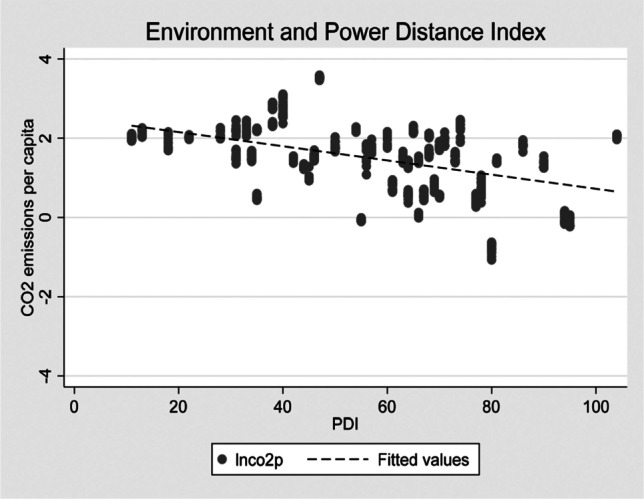
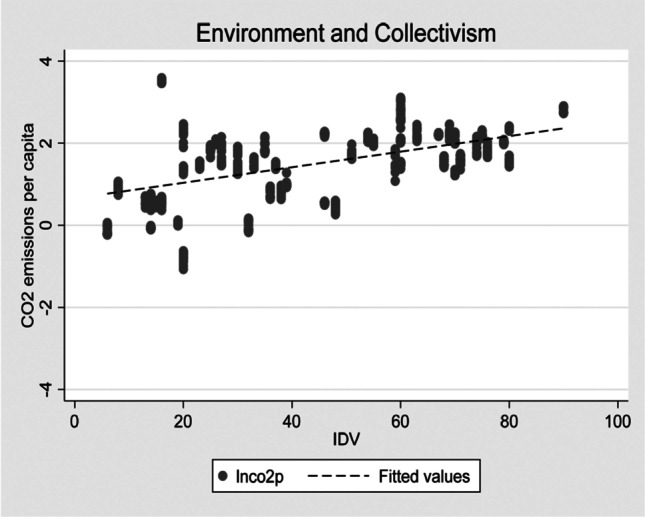
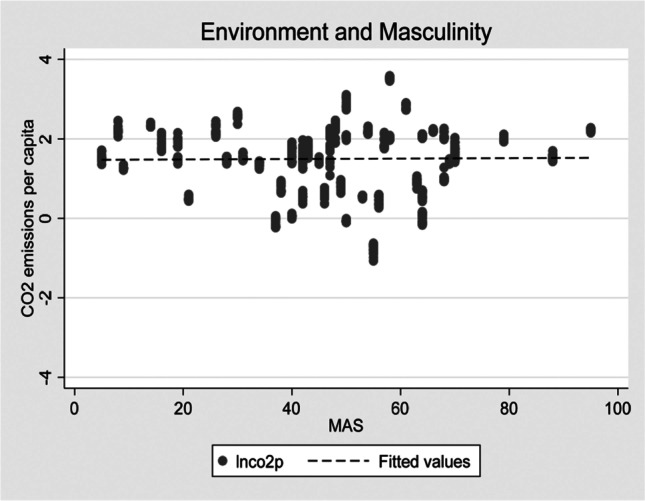


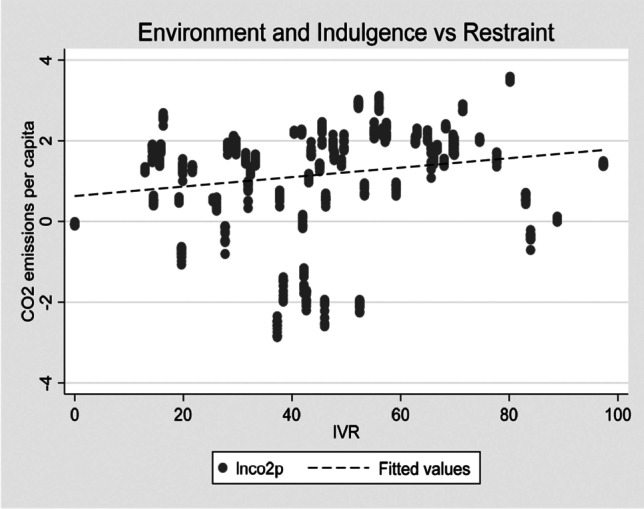


References
-
- Al-Mulali U, Sab CNBC, Fereidouni HG. Exploring the bi-directional long run relationship between urbanization, energy consumption, and carbon dioxide emission. Energy. 2012;46(1):156–167. doi: 10.1016/j.energy.2012.08.043. - DOI
-
- Alfredsson EC. “Green” consumption—no solution for climate change. Energy. 2004;29(4):513–524. doi: 10.1016/j.energy.2003.10.013. - DOI
-
- Ali UM, Gong Z, Ali MU, Asmi F. CO2 emissions, economic development, fossil fuel consumption and population density in India, Pakistan and Bangladesh: a panel investigation. Intl J Finance Econ. 2022;27(1):18–31. doi: 10.1002/ijfe.2134. - DOI
-
- Ameyaw B, Yao L. Analyzing the impact of GDP on CO2 emissions and forecasting Africa’s total CO2 emissions with non-assumption driven bidirectional long short-term memory. Sustainability. 2018;10(9):3110. doi: 10.3390/su10093110. - DOI
-
- Arshed N, Anwar A, Kousar N, Bukhari S. Education enrollment level and income inequality: a case of SAARC economies. Social Indicators Research. 2018;140(3):1211–1224. doi: 10.1007/s11205-017-1824-9. - DOI
MeSH terms
Substances
LinkOut - more resources
Full Text Sources
