


Non-starch polysaccharide degradation in the gastrointestinal tract of broiler chickens fed commercial-type diets supplemented with either a single dose of xylanase, a double dose of xylanase, or a cocktail of non-starch polysaccharide-degrading enzymes
- PMID: 35462208
- PMCID: PMC9048112
- DOI: 10.1016/j.psj.2022.101846
Non-starch polysaccharide degradation in the gastrointestinal tract of broiler chickens fed commercial-type diets supplemented with either a single dose of xylanase, a double dose of xylanase, or a cocktail of non-starch polysaccharide-degrading enzymes
Abstract
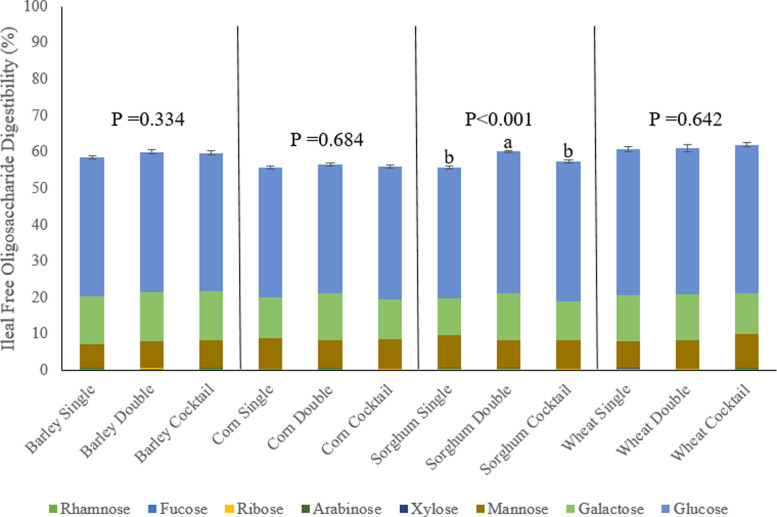
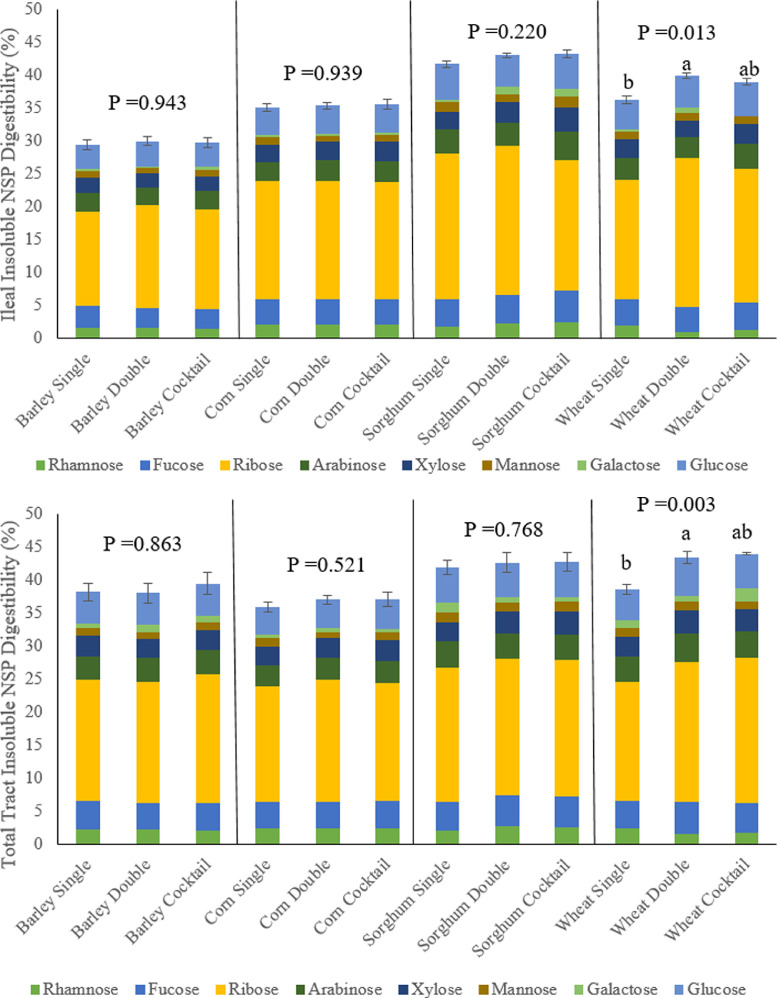
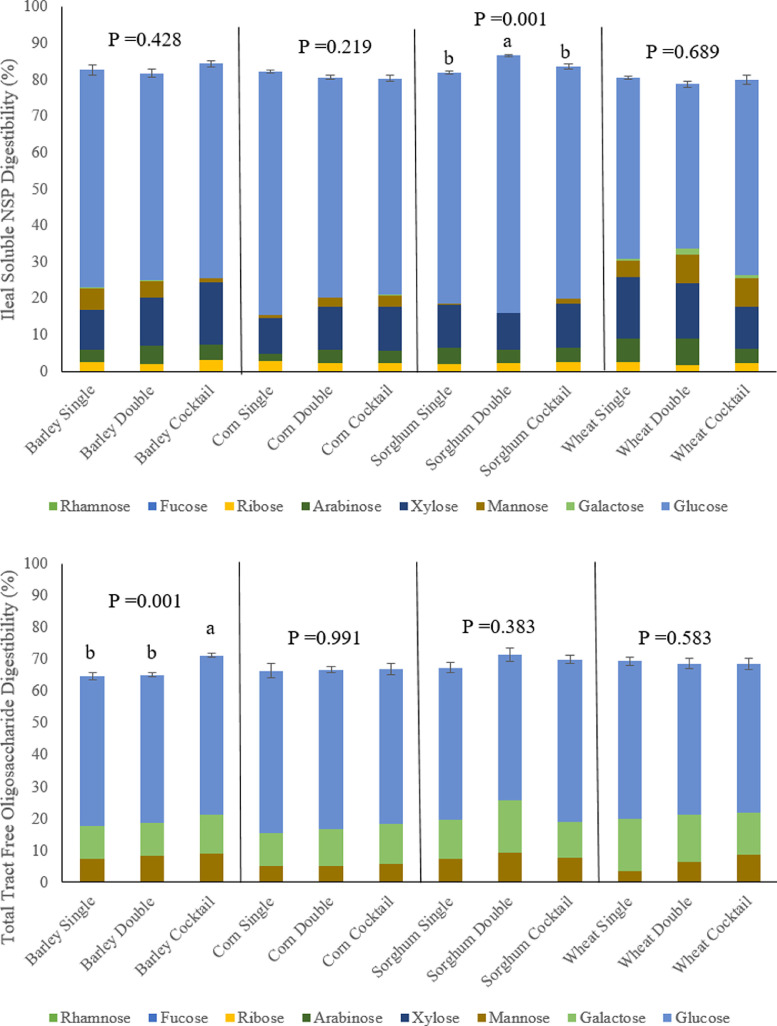
The aim of this study was to examine non-starch polysaccharide (NSP) degradation in the gastrointestinal tract of chickens fed a range of commercial-type diets supplemented with a commercial dose of xylanase, a double dose of xylanase or a cocktail of NSP - degrading enzymes. Cobb 500 broilers (n = 1,080) were fed 12 dietary treatments; 4 diets with differing primary grain sources (barley, corn, sorghum, and wheat) and three different enzyme treatments (commercial recommended dose of xylanase (16,000 BXU/kg), a double dose of xylanase (32,000 BXU/kg) or an NSP-degrading enzyme cocktail (xylanase, β-glucanase, cellulase, pectinase, mannanase, galactanase, and arabinofuranosidase at recommended commercial levels). There were 108 pens, approximately 10 birds per pen, 9 replicates per dietary treatment. The diets were fed as 3 phases, starter (d 0-12), grower (d 12-23), and finisher (d 23-35). On bird age d 12, 23, and 35, performance (total pen body weight, feed intake, and feed conversion ratio corrected for mortality [cFCR]), litter and excreta dry matter content, and ileal and total tract soluble and insoluble NSP degradability and free oligosaccharide digestibility was determined. On d 35, the quantity of NSP in the gizzard, jejunum, ileum and excreta was determined. Results from this study showed that the double xylanase dose and NSP-ase cocktail had positive impacts on starter phase performance in birds fed the corn- and wheat-based diets. In the grower phase in birds fed the barley-based diet, these enzyme treatments improved cFCR and increased litter dry matter content. The NSP-ase cocktail had a negative impact on finisher phase cFCR in birds fed the sorghum-based diet. The double xylanase dose induced a positive impact on NSP degradability and free oligosaccharide digestibility. In conclusion, there appears to be advantages to feeding broilers a double xylanase dose, but lack of consistency when using an NSP-ase cocktail containing many enzymes.
Keywords: enzyme cocktail; grains; non-starch polysaccharide; xylanase.
Copyright © 2022 The Authors. Published by Elsevier Inc. All rights reserved.
Figures


References
-
- Aftab U., Bedford M.R. The use of NSP enzymes in poultry nutrition: myths and realities. World. Poult. Sci. J. 2018;74:277–286.
-
- Bach Knudsen K.E. The nutritional significance of dietary fibre analysis. Anim. Feed. Sci. Tech. 2001;90:3–20.
-
- Bautil A., Verspreet J., Buyse J., Goos P., Bedford M.R., Courtin C.M. Age-related arabinoxylan hydrolysis and fermentation in the gastrointestinal tract of broilers fed wheat-based diets. Poult. Sci. 2019;98:4606–4621. - PubMed
-
- Bedford M.R. Exogenous enzymes in monogastric nutrition-their current value and future benefits. Anim. Feed Sci. Tech. 2000;86:1–13.
MeSH terms
Substances
LinkOut - more resources
Full Text Sources
